



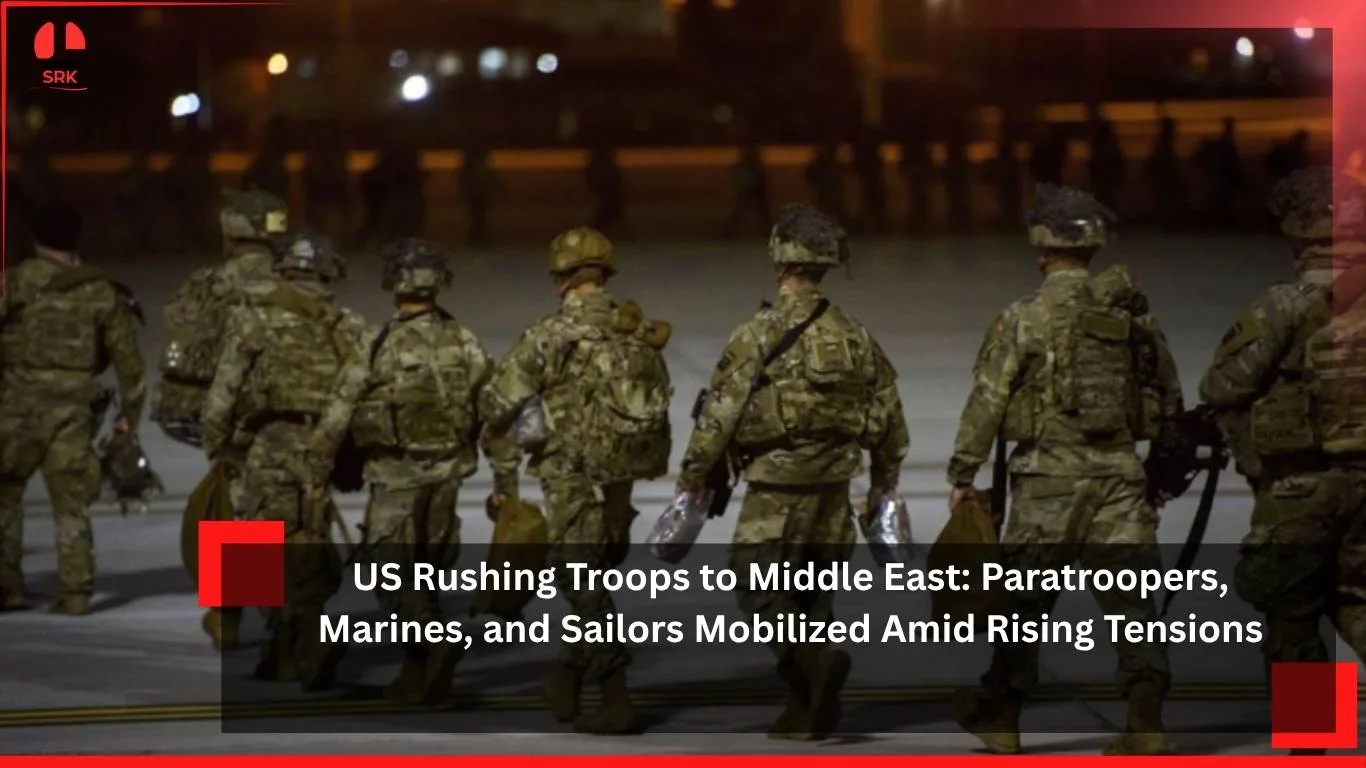
The United States has dramatically increased its military footprint in the Middle East, deploying paratroopers, marines, and sailors in what officials describe as a rapid response to escalating tensions. This surge of forces is being interpreted by analysts as preparation for a potential “final blow” in the region, signaling Washington’s determination to safeguard its strategic interests and allies.
Escalating Tensions in the Middle East
The Middle East has long been a volatile theater of geopolitical rivalry, but recent developments have heightened concerns of a wider conflict. The deployment of elite units such as paratroopers and marines underscores the seriousness of the situation. These forces are trained for rapid insertion, high-intensity combat, and securing critical infrastructure, making them ideal for scenarios where swift action is required.
- Paratroopers: Known for their ability to be deployed quickly behind enemy lines, they provide flexibility in unpredictable combat environments.
- Marines: Traditionally the first responders in crisis zones, marines are capable of amphibious assaults and securing coastal regions.
- Sailors: Their role ensures naval dominance, logistical support, and the safeguarding of maritime routes critical for global trade.
Strategic Objectives Behind the Deployment
The U.S. military buildup is not just symbolic; it reflects concrete strategic objectives:
- Deterrence: Demonstrating military readiness to discourage adversaries from escalating hostilities.
- Protection of Allies: Ensuring the safety of regional partners and U.S. bases.
- Securing Trade Routes: Safeguarding oil shipping lanes and maritime chokepoints like the Strait of Hormuz.
- Rapid Response Capability: Preparing for potential evacuation, humanitarian missions, or direct combat operations.
Historical Context of US Military Presence
The U.S. has maintained a significant military presence in the Middle East for decades. From the Gulf War to the Iraq invasion and counterterrorism operations, American forces have been central to shaping the region’s security landscape. However, the current mobilization appears more urgent, with officials hinting at the possibility of decisive action.
Regional Reactions
The deployment has triggered mixed reactions across the Middle East:
- Allies: Countries like Israel and Saudi Arabia have welcomed the move, viewing it as a reassurance of U.S. commitment.
- Adversaries: Iran and its allied militias have condemned the buildup, warning of retaliation if U.S. forces engage in offensive operations.
- Neutral States: Nations such as Qatar and Oman are urging restraint, emphasizing diplomacy over military escalation.
Military Readiness: A Comparative Overview
To understand the scale of U.S. mobilization, it is useful to compare troop deployments across different branches:
| Force Type | Primary Role | Deployment Readiness | Strategic Importance |
|---|---|---|---|
| Paratroopers | Rapid airborne assault | High | Flexible combat ops |
| Marines | Amphibious and ground combat | Very High | First responders |
| Sailors | Naval dominance, logistics, support | Moderate to High | Maritime security |
Potential Scenarios Ahead
Military experts outline several possible scenarios:
- Limited Engagement: U.S. forces may conduct targeted strikes to neutralize threats.
- Full-Scale Operation: A broader campaign involving ground, air, and naval forces.
- Deterrence Without Combat: The mere presence of troops may prevent escalation.
- Humanitarian Missions: Troops could be used to stabilize conflict zones and assist civilians.
Economic and Global Implications
The mobilization has far-reaching consequences beyond the battlefield:
- Oil Prices: Any disruption in Middle Eastern shipping lanes could spike global oil prices.
- Global Trade: Maritime security is crucial for uninterrupted trade flows.
- Defense Spending: Increased deployments may lead to higher U.S. defense expenditures.
- Diplomatic Relations: Allies may strengthen ties with Washington, while adversaries seek counterbalances through Russia or China.
Pivot Analysis: Deployment vs Strategic Goals
| Strategic Goal | Forces Deployed | Expected Outcome |
|---|---|---|
| Deterrence | Paratroopers | Rapid strike capability |
| Maritime Security | Sailors | Protect shipping lanes |
| Regional Stability | Marines | Ground presence and reassurance |
| Humanitarian Support | Mixed Units | Evacuation and aid operations |
Voices from Washington
Officials in Washington emphasize that the deployment is precautionary, aimed at preventing escalation rather than provoking it. However, the scale of mobilization suggests readiness for decisive action if required. Analysts argue that this dual messaging—deterrence coupled with preparation—reflects the complexity of U.S. strategy in the region.
Global Reactions
- Europe: NATO allies are closely monitoring developments, with some offering logistical support.
- Asia: China has called for restraint, highlighting the importance of stability for global trade.
- Russia: Moscow has criticized the deployment, framing it as aggressive posturing.
Conclusion
The U.S. rush to deploy paratroopers, marines, and sailors to the Middle East marks a significant escalation in military readiness. Whether this buildup leads to a “final blow” or serves as a deterrent remains uncertain. What is clear is that Washington is positioning itself for all possible outcomes, balancing diplomacy with military preparedness.
Disclaimer
This article is a journalistic analysis based on publicly available information and expert commentary. It does not represent official government statements or classified intelligence. Readers are advised to interpret the content as informational and not as definitive predictions of military action. The situation remains fluid, and developments may change rapidly.