
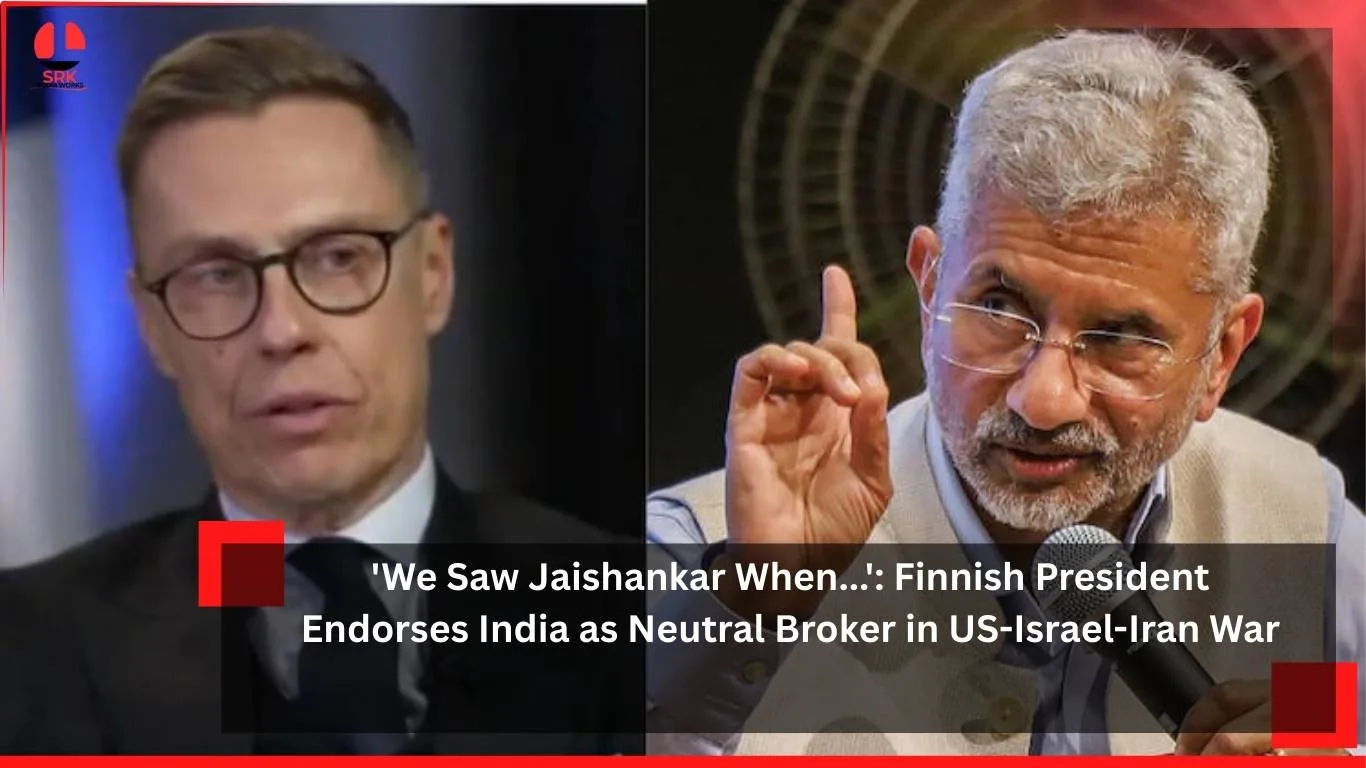
In a striking diplomatic endorsement, the President of Finland has publicly recognized India’s role as a potential neutral broker in the escalating conflict involving the United States, Israel, and Iran. Referring to Indian External Affairs Minister S. Jaishankar, the Finnish leader remarked, “We saw Jaishankar when India demonstrated its ability to balance complex global tensions.” This statement has amplified discussions about India’s emerging position as a mediator in international crises.
Background of the Endorsement
The US-Israel-Iran conflict has intensified in recent months, with military exchanges, sanctions, and diplomatic standoffs dominating headlines. Amid this turmoil, Finland’s president highlighted India’s credibility as a nation capable of engaging with all sides without bias.
India’s longstanding policy of strategic autonomy, coupled with its ability to maintain relations with diverse global powers, has positioned it uniquely in the current crisis. The endorsement from Finland underscores global recognition of India’s diplomatic maturity.
India’s Diplomatic Position
India has historically pursued a balanced foreign policy:
- With the US: Strong economic and defense ties.
- With Israel: Strategic cooperation in defense and technology.
- With Iran: Energy partnerships and cultural ties.
This multi-dimensional engagement allows India to act as a bridge between conflicting parties.
Finland’s Perspective
Finland, known for its emphasis on neutrality and diplomacy, sees India as a natural extension of these values on a global scale. The Finnish president’s statement reflects confidence in India’s ability to mediate without being swayed by ideological or military alliances.
Strategic Implications
For India
- Enhanced global credibility as a peace broker.
- Opportunity to strengthen its leadership role in international diplomacy.
- Increased influence in Middle Eastern affairs.
For the US, Israel, and Iran
- A neutral mediator could provide a platform for dialogue.
- Reduced risk of escalation if negotiations are facilitated.
- Potential for balanced agreements that respect all parties.
Comparative Analysis of India’s Diplomatic Role
| Dimension | India’s Approach | Global Perception | Impact |
|---|---|---|---|
| Neutrality | Strategic autonomy | Trusted broker | Builds credibility |
| Economic Ties | Balanced trade with all parties | Seen as pragmatic | Strengthens leverage |
| Military Relations | Cooperation without alliances | Viewed as independent | Avoids bias |
| Cultural Diplomacy | Shared heritage with multiple regions | Positive soft power | Enhances trust |
Pivot Analysis of Global Impact
| Factor | Positive for India | Positive for Global Stability | Challenges |
|---|---|---|---|
| Diplomatic Role | Recognition as mediator | Potential de-escalation | Balancing diverse interests |
| Economic Position | Expanded trade opportunities | Stabilized energy markets | Risk of sanctions pressure |
| Political Symbolism | Image of responsible power | Encourages multipolar diplomacy | Managing domestic expectations |
| Security Concerns | Stronger global partnerships | Reduced risk of war | Navigating military tensions |
Historical Context
India has previously played roles in peacekeeping and mediation, from supporting UN missions to balancing Cold War dynamics. Its ability to maintain relations with both Western and non-Western powers has consistently positioned it as a credible voice in global affairs. The Finnish endorsement is a continuation of this legacy, highlighting India’s relevance in today’s multipolar world.
Possible Scenarios
- Formal Mediation: India could be invited to facilitate talks between the US, Israel, and Iran.
- Silent Diplomacy: India may engage in backchannel negotiations without public acknowledgment.
- Symbolic Role: Even without direct mediation, India’s stance could influence global opinion.
- Expanded Partnerships: Recognition may lead to deeper ties with European nations seeking balanced diplomacy.
Global Reactions
- United States: May cautiously welcome India’s involvement, given strong bilateral ties.
- Israel: Likely to trust India due to defense cooperation.
- Iran: Could see India as a fair partner, given historical energy ties.
- European Union: May support India’s role, aligning with Finland’s endorsement.
- Neutral Nations: Encouraged by India’s balanced approach, potentially rallying behind its mediation.
Conclusion
The Finnish president’s endorsement of India as a neutral broker in the US-Israel-Iran war highlights the growing recognition of India’s diplomatic capabilities. By maintaining balanced relations with all parties, India has positioned itself as a credible mediator in one of the most volatile conflicts of recent times. Whether through formal negotiations or symbolic influence, India’s role could prove pivotal in shaping the future of global diplomacy.
Disclaimer
This article is based on political statements and speculative analysis regarding India’s potential role as a mediator in the US-Israel-Iran conflict. The details of diplomatic engagements remain unverified, and interpretations are subject to change as new information emerges. The content is intended for informational and analytical purposes only.