



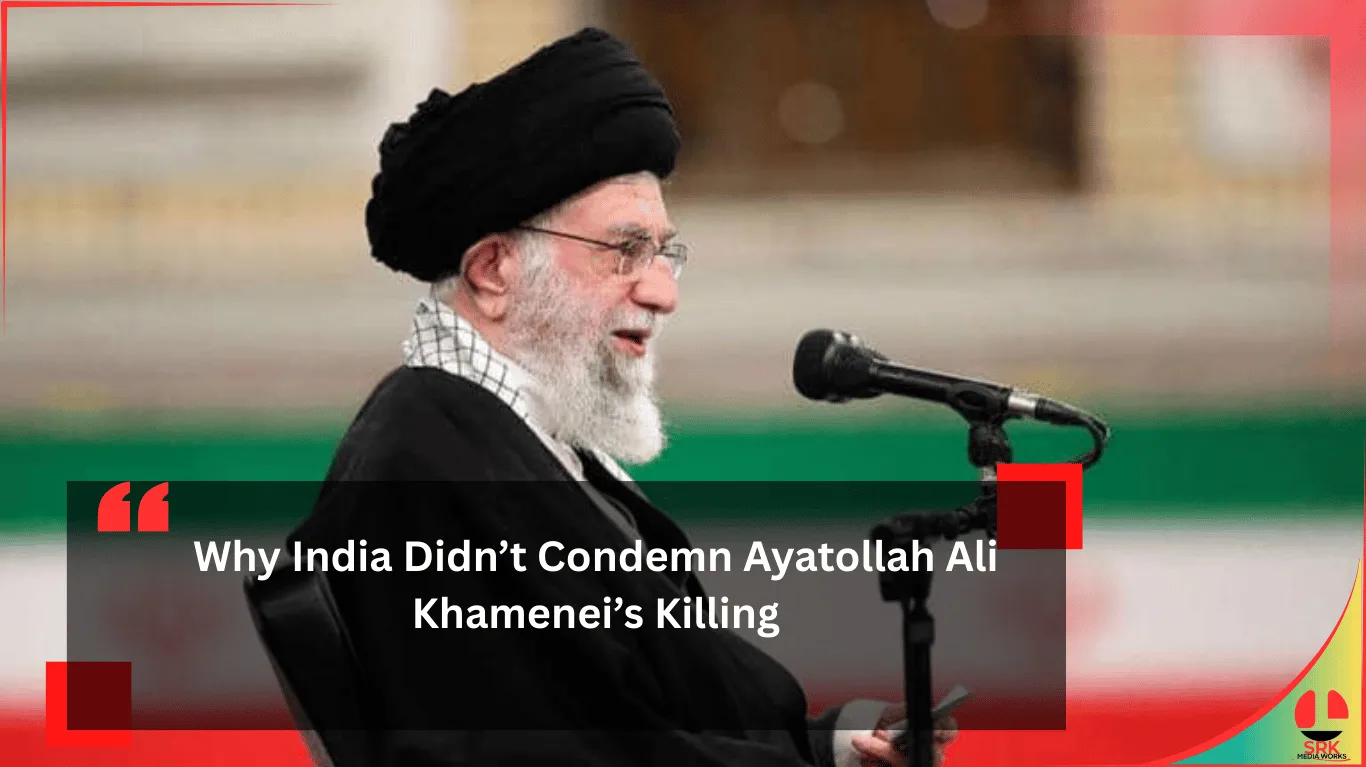
The reported killing of Iran’s Supreme Leader Ayatollah Ali Khamenei has sent shockwaves across the globe, drawing varied responses from different nations. However, India’s silence and lack of condemnation have raised questions in diplomatic and political circles. Understanding why India chose not to issue a formal condemnation requires examining its foreign policy priorities, strategic interests, and the delicate balance it maintains in West Asia.
India’s Strategic Calculations
India’s foreign policy is guided by pragmatism and national interest. In the case of Iran, India has historically maintained a careful balance, recognizing Iran’s importance while also safeguarding ties with other regional and global powers.
Key Considerations:
- Energy Security: Iran has been a significant supplier of crude oil to India.
- Regional Stability: India’s interests in Afghanistan and Central Asia are linked to Iran’s geopolitical role.
- Balancing Relations: India must manage ties with Iran while maintaining strong partnerships with the United States, Israel, and Gulf nations.
- Non-Interference Doctrine: India often avoids direct condemnation in sensitive international incidents to preserve diplomatic flexibility.
Comparative Analysis of Global Responses
| Country | Response to Khamenei’s Killing | Strategic Reasoning |
|---|---|---|
| United States | Strongly critical, citing regional instability | Seeks to maintain influence in West Asia |
| European Union | Expressed concern, called for restraint | Focus on diplomacy and stability |
| Gulf Nations | Mixed reactions, cautious statements | Balancing ties with Iran and global powers |
| India | No formal condemnation | Preserving strategic autonomy |
Pivot Analysis of Diplomatic Sentiment
| Sentiment Category | Impact on India | Impact on Iran | Impact on Global Politics |
|---|---|---|---|
| Diplomatic Relations | Maintains neutrality | Perceived as cautious | Seen as pragmatic |
| Public Perception | Mixed – questions raised | May view India as non-committal | Highlights India’s balancing act |
| Media Coverage | Extensive – focus on silence | Adds to narrative of isolation | Sparks debate on global responses |
| Strategic Autonomy | Strengthened – avoids entanglement | Limits diplomatic fallout | Reinforces India’s independent stance |
Why India Chose Silence
India’s decision not to condemn can be explained by several factors:
- Geopolitical Sensitivity: Any statement could alienate key partners in West Asia.
- Energy Interests: India continues to rely on Gulf and Iranian energy supplies.
- Diaspora Concerns: Millions of Indians live and work in Gulf countries, making stability a priority.
- Global Positioning: India seeks to project itself as a neutral, responsible power that avoids taking sides in volatile conflicts.
Challenges for India
India’s silence, while pragmatic, also presents challenges:
- Perception of Passivity: Critics argue that India risks being seen as unwilling to take moral stands.
- Opposition Pressure: Domestic political opponents may question the government’s foreign policy choices.
- Diplomatic Risks: Iran may interpret silence as indifference, while other nations may see it as opportunism.
Opportunities for India
Despite criticism, India’s stance also opens opportunities:
- Mediation Role: Neutrality allows India to act as a mediator in regional conflicts.
- Strategic Autonomy: Reinforces India’s image as an independent global actor.
- Economic Leverage: Preserves trade and energy ties without alienating partners.
Broader Implications
India’s silence reflects a broader trend in its foreign policy: prioritizing national interest over moral positioning. This approach has implications for:
- West Asia Diplomacy: India remains a trusted partner for multiple nations.
- Global Perception: India is seen as pragmatic, though sometimes cautious.
- Domestic Politics: The government must balance criticism at home with strategic imperatives abroad.
Conclusion
India’s decision not to condemn Ayatollah Ali Khamenei’s killing underscores its pragmatic foreign policy approach. By maintaining silence, India seeks to preserve strategic autonomy, safeguard energy interests, and avoid entanglement in volatile regional politics. While this stance may invite criticism, it reflects India’s long-standing principle of prioritizing national interest and stability over direct involvement in international conflicts.
Disclaimer
This article is a journalistic analysis based on publicly available information and diplomatic trends. It does not endorse or oppose any political party, government, or leader. Readers are encouraged to interpret the content as informative coverage and verify facts independently before forming opinions.