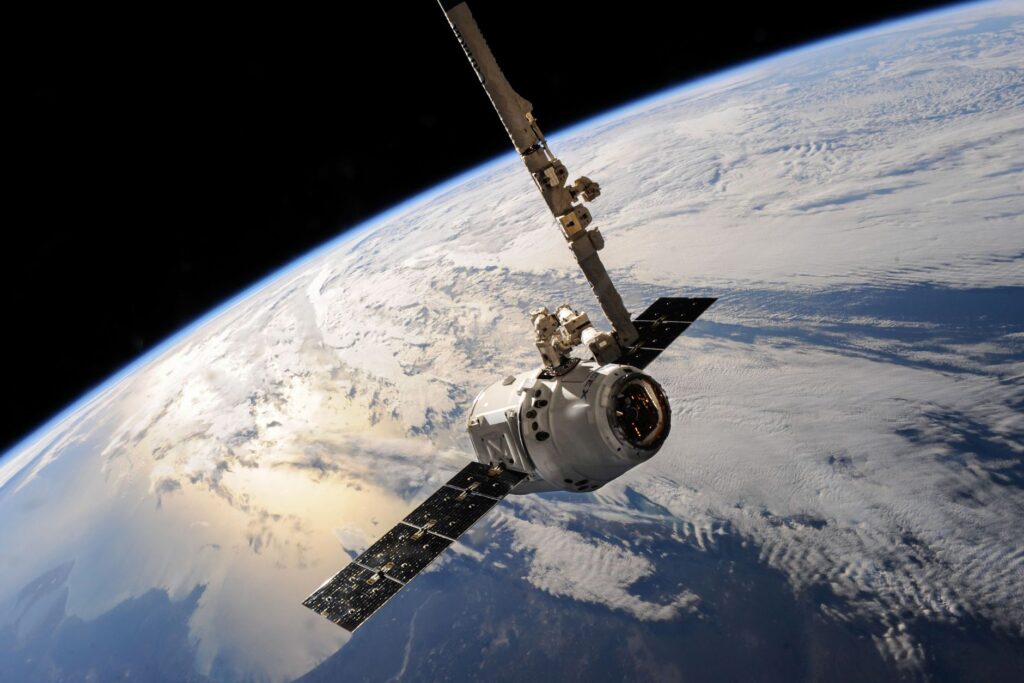

The joint planetary exploration initiative involving two major space agencies has officially reached its ultimate chapter. Following nearly eight years of interplanetary transit and billions of kilometres traveled across the solar system, the specialized dual-spacecraft assembly is entering the final sequence of its journey. Mission controllers are currently preparing the hardware for the historic orbital insertion around the innermost planet.
Mission Background and Long Journey
The ambitious venture, a collaborative effort between the European Space Agency and the Japan Aerospace Exploration Agency, began its complex transit years ago. Because flying directly toward the innermost region of the solar system requires immense deceleration against the gravitational pull of the sun, the flight path has been exceptionally intricate. Navigators have continuously utilized multiple planetary gravity assists, swinging past Earth, Venus, and Mercury itself to gradually shape the trajectory of the vehicle.
Over the course of nearly a decade, the flight stack has endured punishing thermal environments and deep-space radiation. Despite these rigorous conditions, the engineering teams have successfully maintained spacecraft systems and trajectory integrity. Every flyby has served to refine the velocity of the vessel, bringing it closer to the precise orbital insertion speed required for successful capture by the planetary gravity well.
Preparing for Orbital Insertion
As the mission enters this critical closing phase, engineers on Earth are executing final preparations and trajectory checkouts. The flight hardware consists of two distinct scientific components: a planetary orbiter designed to study the surface and internal composition, and a magnetospheric orbiter dedicated to investigating the magnetic environment surrounding the celestial body.
Once the arrival sequence concludes, the composite spacecraft will separate into its individual components. Each unit will then maneuver independently into its designated polar orbit. This dual-satellite configuration will allow scientists to gather simultaneous measurements from different vantage points, providing unprecedented insight into how the planetary environment interacts with the solar wind.
Scientific Objectives at the Innermost Planet
Data gathered during the upcoming operational phase aims to answer longstanding questions regarding the formation and evolution of terrestrial worlds situated close to stars. Researchers hope to map surface minerals, study the permanently shadowed polar craters for volatile compounds, and analyze the surprisingly robust planetary magnetic field.
Understanding the unique geological history of the target world will help planetary scientists refine models of planet formation across the wider universe. With the final approach now underway, the international scientific community stands ready to unlock the secrets of this extreme and enigmatic environment.