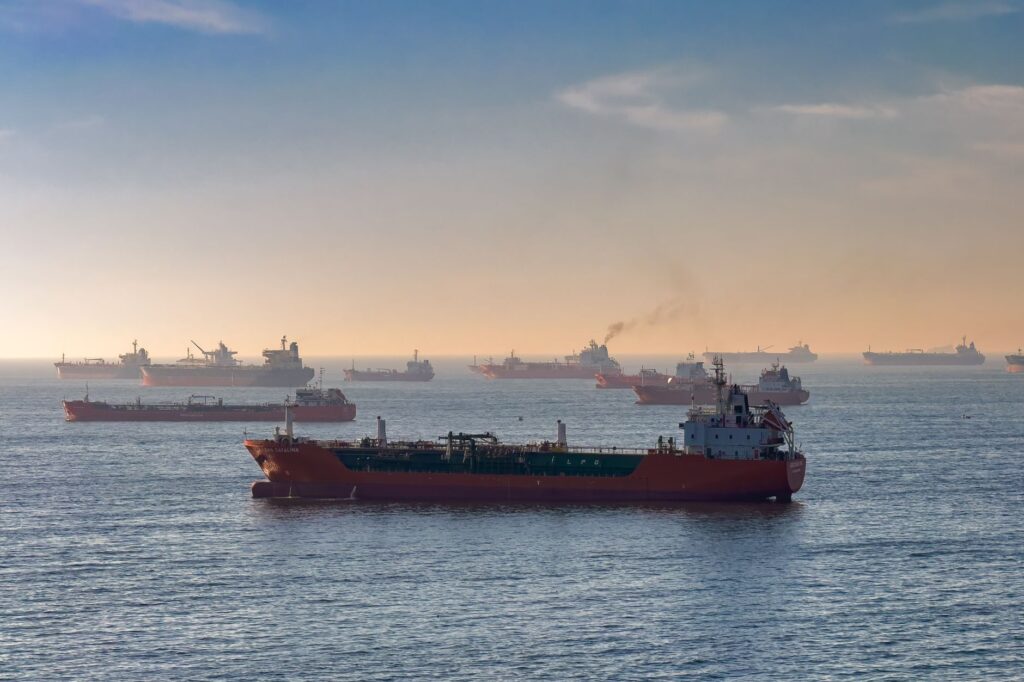

On Wednesday, international benchmark Brent crude surged past $85 per barrel for the first time in a month following an escalation in military tensions in the Persian Gulf. The sudden spike came after reports of a direct naval confrontation near the critical Strait of Hormuz, raising immediate fears of a prolonged disruption to global energy supplies.
A Vital Chokepoint Under Threat
The Persian Gulf remains the world’s most critical artery for oil transportation. The Strait of Hormuz, a narrow waterway between Oman and Iran, sees the passage of approximately 20 million barrels of oil per day, representing roughly one-fifth of global consumption.
Any military friction in this zone immediately threatens the transit of supertankers bound for major economies in Asia and Europe. Historically, even minor incidents in the Gulf have triggered rapid reactions in energy markets, forcing traders to price in a significant geopolitical risk premium.
Market Reaction and Price Dynamics
Following the news of the clash, Brent crude futures jumped by over 3.5%, breaching the $85.50 mark during afternoon trading. West Texas Intermediate (WTI), the US benchmark, similarly rallied, climbing toward $81.50 per barrel.
Energy analysts note that the speed of the rally reflects low inventory buffers globally, leaving markets highly sensitive to supply shocks. According to data from the Intercontinental Exchange (ICE), trading volumes spiked to their highest level in three weeks as hedge funds and institutional investors rushed to cover short positions.
Expert Perspectives on Supply Risks
“We are seeing a classic geopolitical reflex in the crude markets,” said Sarah El-Amin, lead energy analyst at Global Energy Dynamics. “While physical supply has not yet been severed, the probability of a maritime blockade or damage to commercial tankers has risen dramatically.”
Other market observers point to the broader supply-demand balance. The International Energy Agency (IEA) recently warned that global oil markets were already facing a tight supply outlook for the second half of the year due to voluntary production cuts from OPEC+ members.
“The timing of this clash is particularly challenging,” noted Marcus Vance, head of commodity strategy at Vanguard Futures. “With OPEC+ maintaining restricted output, any actual disruption in the Gulf could quickly push Brent toward $90 or even $100 per barrel.”
Strategic Reserves and Policy Options
In response to the price spike, government officials in major importing countries are already assessing their strategic options. The United States and other member states of the International Energy Agency hold millions of barrels of crude in strategic petroleum reserves (SPR) specifically designed to mitigate such supply disruptions.
However, analysts warn that the capacity to deploy these reserves is more limited than in previous crises. Following massive releases from the US SPR over the past two years, domestic reserves are at their lowest levels since the 1980s, limiting the buffer available to counter a prolonged Gulf crisis.
Economic and Industry Implications
For consumer nations, a sustained oil price above $85 per barrel threatens to reignite inflationary pressures. Central banks, which have been cautiously pausing or slowing interest rate hikes, may find their inflation-fighting efforts complicated by rising fuel costs at the pump.
The maritime shipping industry is already feeling the immediate impact. Marine insurance underwriters in London have reportedly begun reviewing war-risk premiums for vessels transiting the Gulf, a move that will inevitably raise the final price of delivered crude and refined products.
What to Watch Next
In the coming days, market participants will closely monitor diplomatic reactions from Washington, Beijing, and regional capitals. The potential for a coordinated naval convoy system to protect commercial shipping remains a key possibility if tensions do not subside.
Investors will also look to the upcoming OPEC+ ministerial meeting for signs of whether the cartel will adjust its production quotas to stabilize global prices. Additionally, satellite tracking of tanker traffic through the Strait of Hormuz will provide the first concrete data on whether shipping lines are actively rerouting vessels around the Cape of Good Hope, a move that would add weeks to transit times and further strain global logistics networks.