
Regional Security Overview
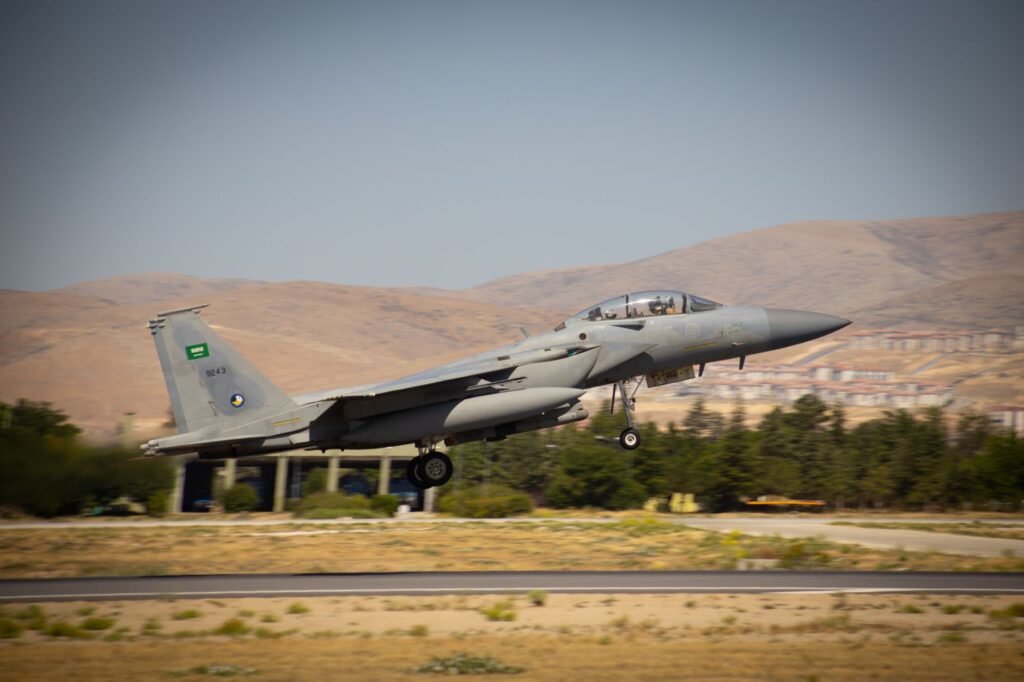
Recent military developments in the Middle East have highlighted ongoing regional security challenges. Defense forces operating within the Saudi-led coalition have taken decisive action to protect national airspace. These defensive maneuvers underscore the persistent threat landscape faced by authorities in the region as they monitor aerial activity and respond to incoming security threats.
Aerial Defense Operations
In a recent series of defensive engagements, the military coalition reported the successful interception of multiple airborne threats. Among the neutralized objects were three cruise missiles that had been directed toward the capital region of Riyadh. Air defense systems tracked and destroyed these projectiles before they could reach populated areas or critical infrastructure.
Targeting Specific Regions
Beyond the capital, defense operations extended to other parts of the country. Coalition forces successfully intercepted and destroyed two drones that were aimed at the holy city of Mecca as well as various southern territories. Additionally, two separate missiles were tracked and neutralized as they headed toward the western region of the nation. These coordinated defensive actions prevented potential damage across multiple geographic zones.
Denials and Counter-Claims
Following the interception of the aerial devices, statements emerged addressing the specific targets of the operation. Representatives for the Yemeni group allegedly responsible for the launch denied that the holy city of Mecca was a designated target. Despite these denials, the coalition maintains its position regarding the trajectory of the intercepted drones and the necessity of maintaining high-alert defense protocols.
Broader Implications for Regional Stability
Incidents of this nature continue to draw international attention and emphasize the fragility of peace efforts in the area. Security experts analyze these aerial engagements to understand shifting tactics and the technological capabilities involved in modern regional conflicts. As diplomatic channels strive to foster lasting resolutions, defensive readiness remains a top priority for nations involved in the coalition, ensuring that critical sites and civilian populations are adequately protected against ongoing aerial threats.