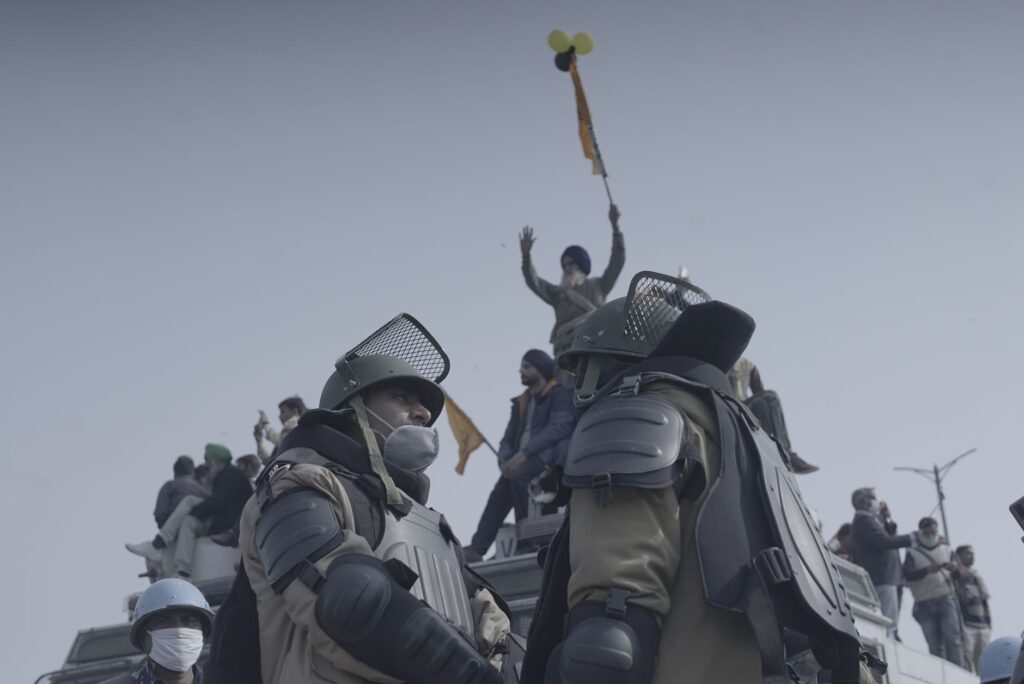

On Monday, security forces in New Delhi fired tear gas and erected multi-layered barricades to halt a massive march organized by the CJP toward Parliament, coinciding with a chaotic opening day of the Monsoon Session where opposition lawmakers disrupted proceedings over the NEET exam paper leak.
The dual crises on the streets and inside the legislative chambers highlighted growing public and political resentment against the government’s handling of national examinations and socio-economic policies.
As protesters clashed with police outside, the ruling Bharatiya Janata Party (BJP) scrambled to defuse the tension by offering immediate assurances of bilateral talks with CJP leadership.
A Convergence of Public Anger
The Monsoon Session of India’s Parliament historically serves as a crucial window for passing key legislation, but this year’s session opened under unprecedented security and political pressure. The CJP, a coalition representing various civil society groups and marginalized communities, organized the march to demand systemic reforms, economic relief, and stronger protection of civil liberties.
Simultaneously, the national spotlight remained fixed on the National Eligibility cum Entrance Test (NEET) undergraduate scandal. Allegations of paper leaks, systemic corruption, and irregular grace marks have thrown the futures of over 2.4 million medical aspirants into jeopardy, sparking nationwide outrage.
The intersection of these two movements created a highly volatile atmosphere in the capital, forcing authorities to deploy thousands of paramilitary personnel and seal off key transit routes leading to the high-security diplomatic enclave.
Clashes and Concessions on the Streets
The march began peacefully in the morning, with thousands of demonstrators carrying banners, chanting slogans, and demanding an audience with key ministry officials. However, as the crowd neared the outer perimeter of the parliamentary complex, Delhi Police deployed water cannons and tear gas to disperse the advancing front lines.
Eyewitnesses reported scenes of panic as thick plumes of smoke filled the air, forcing protesters to retreat into adjacent avenues. Despite the use of force, protest leaders refused to dismantle their camps, prompting senior representatives from the ruling BJP to intervene with an offer of formal negotiations.
Government negotiators quickly issued a public statement confirming their willingness to meet with a delegation of CJP representatives to discuss their charter of demands. This concession marked a strategic shift by the administration, which is currently navigating a narrowed parliamentary majority following the recent general elections.
Parliamentary Gridlock Over NEET Leak
Inside the newly constructed Parliament building, the atmosphere was no less combative. Within minutes of the opening bell, opposition members from the INDIA bloc rose to their feet, waving placards and demanding an immediate suspension of scheduled business to discuss the NEET-UG irregularities.
The Lok Sabha and Rajya Sabha witnessed repeated disruptions and slogan-shouting, rendering legislative business impossible. Speaker Om Birla’s appeals for order went unheeded as opposition leaders accused the government of compromising the integrity of the country’s education system.
“We cannot discuss routine legislative matters when the futures of millions of our youth are being traded in the black market,” said a senior opposition MP during a brief resumption of proceedings, before the house was adjourned for the day.
Data and Expert Perspectives
Political analysts suggest that the scale of the NEET scandal has handed the opposition a powerful cudgel to beat the government with early in its third term. Data from the National Testing Agency (NTA) shows that the June exam saw an unprecedented number of perfect scores, raising immediate red flags among educators and statistics experts.
“The government is on the defensive because this issue transcends traditional caste and regional voting blocs,” said Dr. Sanjay Kumar, a leading political commentator. “It affects middle-class families across the entire country, making it a highly potent political weapon.”
Furthermore, the CJP’s ability to mobilize thousands of demonstrators on day one of the session signals a revitalized civil society that feels emboldened by the changed political arithmetic in Parliament.
Implications and What to Watch Next
The immediate fallout of today’s events points to a highly unproductive Monsoon Session if the government and opposition fail to reach a consensus on debating the exam leaks. The deadlock threatens to delay crucial financial bills and pending labor reforms that the administration had hoped to fast-track.
In the coming days, observers should closely watch the outcome of the promised talks between the BJP leadership and the CJP delegation. A successful negotiation could pacify the streets, but any perceived insincerity by the government could trigger wider, coordinated protests across other state capitals.
Additionally, the Supreme Court of India is scheduled to hear a batch of petitions seeking a complete re-examination of the NEET-UG test. The judicial body’s decisions will likely dictate the next steps for both the government’s education ministry and the millions of anxious students waiting in limbo.