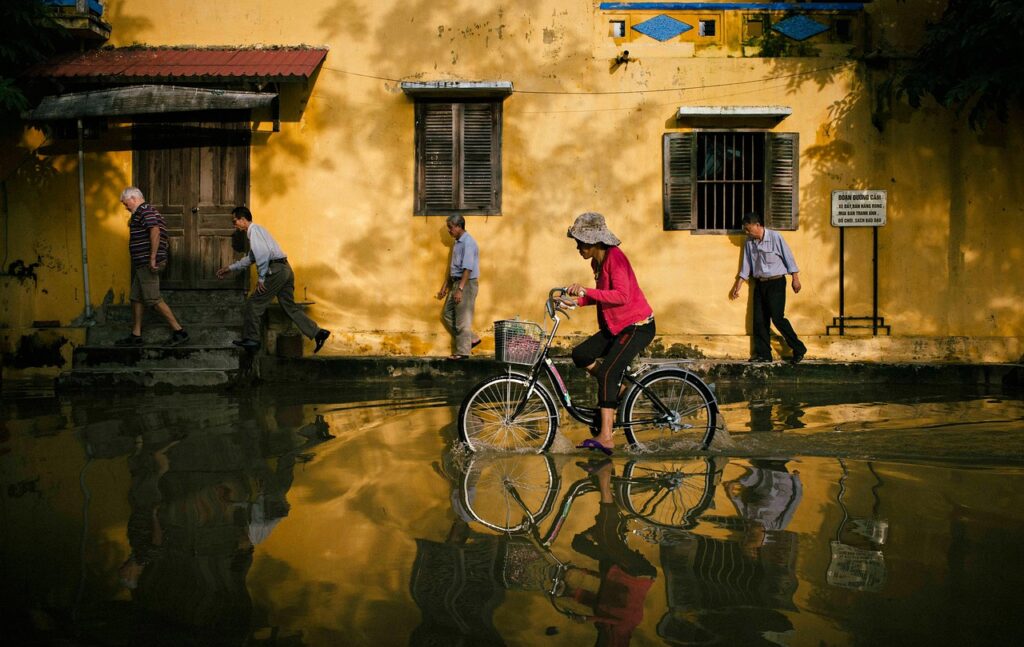

Global coastal communities are facing a dramatic surge in tidal inundations as rising sea levels have quadrupled the frequency of extreme high-water events over the past century. A new international study reveals that human-induced global warming has fundamentally altered the baseline of the world’s oceans, amplifying the destructive power of everyday tides and storms. Released this month, the research warns that coastal defense systems designed under historical assumptions are rapidly becoming obsolete as the oceans continue to encroach inland.
The Changing Baseline of Global Oceans
For generations, coastal cities relied on historical weather patterns to design their harbors, drainage networks, and sea barriers. These systems assumed that extreme flooding events—often referred to as “100-year floods”—would remain rare anomalies. However, the burning of fossil fuels and widespread deforestation have driven global temperatures upward, causing thermal expansion of ocean water and accelerating the melting of polar ice sheets.
This continuous influx of water has raised global mean sea levels, meaning modern storms and high tides now start from a significantly higher baseline than they did a century ago. What once required a massive, category-five hurricane to achieve can now be triggered by moderate seasonal storms or exceptionally high spring tides.
A Quadrupling of Extreme Events
According to the study’s findings, extreme sea-level events that once occurred once every hundred years are now happening four times more frequently. This shift translates to a dramatic increase in chronic, low-level flooding that disrupts daily commerce, damages local economies, and threatens freshwater aquifers. While natural climate variations, such as the El Niño-Southern Oscillation and regional atmospheric pressure changes, still dictate localized seasonal risks, the overarching global trend is driven by human activity.
The research team analyzed tidal gauge data spanning more than a century from hundreds of locations worldwide. Their analysis demonstrates that the frequency of these high-water events began to accelerate sharply in the latter half of the 20th century, coinciding with rapid industrialization. The data suggests that natural variations can no longer shield coastlines from the compounding effects of global sea-level rise.
Localized Impacts and Infrastructure Strain
The consequences of this ocean rise are not distributed evenly, with certain coastlines experiencing far more rapid shifts due to land subsidence and shifting ocean currents. Low-lying metropolitan areas, particularly in Southeast Asia and the United States Gulf Coast, are already experiencing “nuisance flooding” during normal high tides. This persistent inundation slowly degrades critical infrastructure, corroding underground electrical systems, compromising sewage treatment plants, and cracking building foundations.
Local governments are finding that traditional drainage systems, which rely on gravity to channel rainwater out to sea, are failing because high tides now push seawater backward through the pipes and onto city streets. The result is a compounding hazard where even moderate rainfall during high tide can lead to severe urban flooding.
The Cost of Inaction: Data and Expert Perspectives
Climate scientists warn that even minor increments of sea-level rise can have exponential impacts on storm surges. A storm that would have caused minor beach erosion fifty years ago can now push destructive floodwaters blocks inland. Data from the World Meteorological Organization (WMO) indicates that global average sea level has risen at an average rate of 4.5 millimeters per year over the last decade, the highest rate on record.
“We are witnessing a fundamental shift in the frequency-of-occurrence curve,” explains Dr. Marcus Thorne, a senior coastal scientist who reviewed the study. “What used to be an extraordinary weather event is rapidly becoming an annual or even monthly disruption for millions of people. Our infrastructure was built for a stable climate that no longer exists.”
Financial analysts are also sounding the alarm, noting that coastal real estate markets are beginning to price in these escalating risks. Mortgage lenders and municipal bond markets are increasingly scrutinizing the long-term viability of developments situated less than ten feet above current sea levels, threatening to destabilize local tax bases.
Rethinking the Future of Coastal Habitability
As these hydrological changes accelerate, municipalities are realizing that traditional concrete defenses like seawalls may no longer suffice. Engineers are advocating for “living shorelines”—using mangroves, oyster reefs, and wetlands to naturally absorb wave energy and buffer coastal communities. These nature-based solutions are often more cost-effective and adaptable than rigid concrete structures.
In more extreme cases, urban planners are beginning to discuss “managed retreat,” the systematic relocation of communities and infrastructure away from highly vulnerable coastlines. While politically and socially challenging, it is increasingly viewed as an inevitable necessity for the lowest-lying regions.
Looking ahead, the next decade will likely see a dramatic overhaul of international building codes, flood insurance models, and municipal zoning laws. Governments will face intense pressure to fund massive adaptation projects, while international climate negotiations will increasingly focus on securing loss-and-damage funding for developing nations unable to afford expensive coastal defenses. Observers should watch how global financial markets respond to these escalating risks, as the availability of long-term mortgages and property insurance in coastal zones will serve as the ultimate bellwether for the future of seaside living.