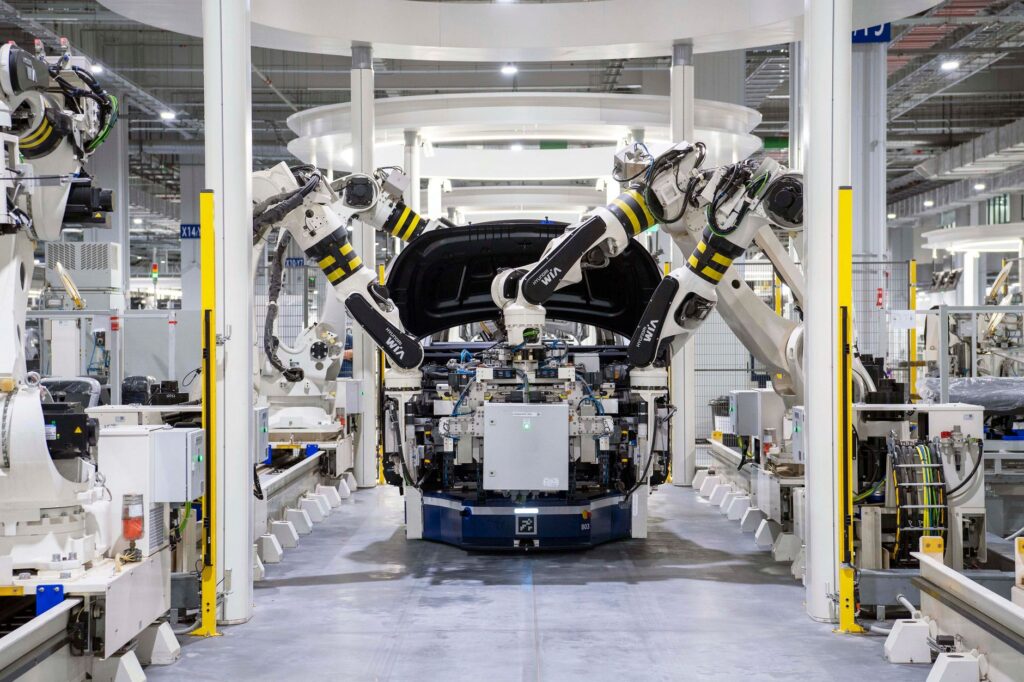

Tesla Inc. reported a decline in its quarterly net income on Wednesday from its Austin, Texas headquarters, despite a global rebound in vehicle deliveries. The electric vehicle giant experienced a squeeze on its profit margins due to a year-long strategy of aggressive price cuts and escalating expenditures on artificial intelligence and next-generation vehicle development.
The Cost of Market Dominance
The electric vehicle (EV) market has transitioned from a high-growth, supply-constrained environment into a highly competitive arena. Over the past year, Tesla has repeatedly slashed prices across its lineup, including the popular Model 3 and Model Y, to stimulate demand amidst rising interest rates and intensifying competition from domestic Chinese manufacturers and legacy Western automakers.
While these price reductions successfully boosted sales volume and helped Tesla maintain its global market leadership, they have fundamentally altered the company’s financial profile. Investors who once valued Tesla for its industry-leading, software-like margins are now adjusting to a reality where the automaker operates closer to traditional automotive industry profitability standards. High borrowing costs globally have also forced Tesla to offer promotional financing terms, further absorbing costs that would otherwise contribute to its bottom line.
Deliveries Rise as Margins Shrink
Tesla’s latest financial disclosures reveal a stark divergence between top-line volume and bottom-line profitability. The company delivered over 462,000 vehicles globally during the quarter, representing a significant rebound from earlier sluggish quarters, yet net income fell by double digits compared to the same period last year. This trend highlights the diminishing returns of discounting as a long-term demand driver.
According to the company’s financial statements, Tesla’s operating margin fell to just under 8 percent, a sharp decline from the double-digit margins it enjoyed during its peak in 2022. This contraction reflects not only lower average selling prices per vehicle but also the rising costs associated with underutilized factory capacity and the complex, expensive production ramp-up of the steel-clad Cybertruck at Gigafactory Texas.
Furthermore, Tesla has significantly increased its capital expenditure to fund long-term growth initiatives. The company is directing billions of dollars toward high-performance computing clusters, specifically its Dojo supercomputer, which powers the development of its Full Self-Driving (FSD) beta software and humanoid robot projects. These investments, while critical for Tesla’s future identity as an AI company, represent massive upfront costs with delayed revenue realization.
Industry Analysts Weigh the Trade-offs
Financial analysts remain divided on whether Tesla’s volume-first strategy will yield long-term benefits. Some argue that sacrificing short-term margins is a necessary sacrifice to secure market share and build a massive fleet of vehicles that can eventually be monetized through high-margin software subscriptions and autonomous driving packages.
“Tesla is playing a long game, prioritizing fleet size over immediate profitability,” said Dan Ives, senior equity analyst at Wedbush Securities. “The near-term pain in margins is the price they must pay to defend their moat and train the neural networks that will power their autonomous future.”
Conversely, skeptics warn that the continuous price cuts have eroded Tesla’s premium brand perception. Critics point out that rivals, particularly in China like BYD, are producing highly competitive vehicles at lower cost structures, making it difficult for Tesla to raise prices in the future without losing market share. Additionally, the rapid depreciation of used Tesla vehicles, driven by new car price cuts, has frustrated existing owners and impacted fleet buyers.
What Lies Ahead for the EV Sector
The financial pressure on Tesla signals a challenging environment for the broader automotive transition to electrification. If the world’s most profitable EV manufacturer is struggling to maintain high margins, legacy automakers transitioning from internal combustion engines face an even steeper climb to profitability. This margin pressure is likely to accelerate consolidation in the EV sector and force manufacturers to re-evaluate their pricing strategies.
Looking forward, market observers will closely monitor Tesla’s progress on its promised low-cost vehicle platform, expected to begin production next year. This upcoming model is widely seen as crucial for revitalizing volume growth and restoring investor confidence in Tesla’s mass-market appeal.
Additionally, the industry is watching Tesla’s upcoming regulatory milestones regarding autonomous driving. The company’s ability to transition from a pure-play automaker to an autonomous robotaxi operator remains the ultimate test of its high valuation, with regulatory approvals and software reliability serving as the key benchmarks for success in the coming quarters.