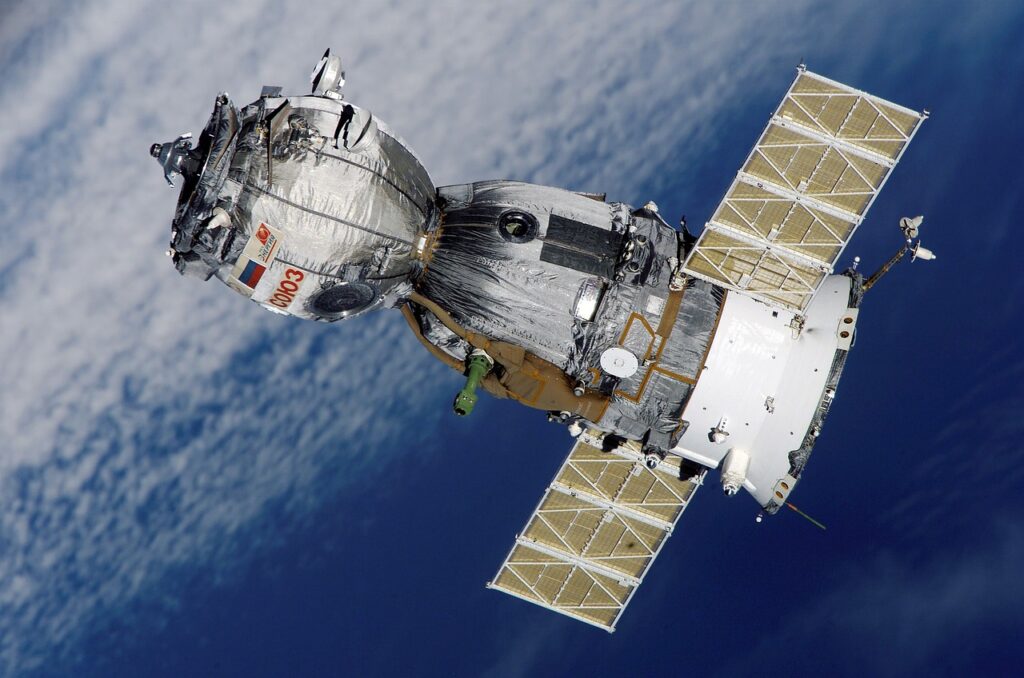

Commercial space enterprise SpaceLogistics successfully launched a breakthrough satellite-servicing spacecraft from Cape Canaveral on Tuesday, embarking on a high-stakes mission to dock with fuel-depleted communication satellites in geostationary orbit and extend their operational lifespans by up to five years. The mission targets high-value orbital assets that remain fully functional in terms of electronics and communications gear, but lack the chemical propellant required to maintain their precise positioning over Earth. By taking over altitude and station-keeping controls, the private servicing vehicle aims to salvage hundreds of millions of dollars in orbital hardware while pioneering a more sustainable commercial space economy.
The Growing Challenge of Orbital Obsolescence
For decades, the global satellite industry has operated under a costly, throwaway business model. Geostationary communication satellites—often costing upwards of $300 million to manufacture and launch—are routinely decommissioned not because their payload instruments fail, but simply because their onboard thrusters run out of propellant.
Standard geostationary satellites rely on hydrazine fuel to perform routine station-keeping maneuvers, counteracting gravitational tugs from the sun and moon. When these fuel tanks empty after 15 to 20 years of active service, operators are forced to use their final reserves to nudge the spacecraft into high-altitude “graveyard orbits” to avoid creating hazards in active orbital lanes.
This premature retirement forced operators to endure massive capital expenditure cycles, spending heavily to build and launch replacement satellites while abandoning perfectly viable operational technology in deep space.
Precision Engineering in Geostationary Orbit
The newly launched servicing craft utilizes advanced autonomous rendezvous algorithms and optical sensors to navigate to geostationary orbit, approximately 36,000 kilometers above the Earth. Once positioned within meters of the client satellite, the servicer executes a delicate docking maneuver, mechanically clamping onto the target satellite’s liquid apogee engine structure without requiring pre-installed docking hardware.
Once firmly attached, the servicing vehicle acts as a mechanical backpack. Its high-efficiency electric propulsion system takes over all orbit maintenance and attitude control, steering the combined stack for the agreed-upon contract duration.
Engineering teams back on Earth oversee the rendezvous sequence, but the final approach relies heavily on real-time onboard computer vision due to the three-second signal delay between Earth and geostationary altitude. This high degree of autonomy represents a major technological step forward for commercial robotic spacecraft operating far beyond low Earth orbit.
Economic Impacts and Data Insights
The economic incentive for life extension is compelling for satellite telecom operators facing competition from terrestrial fiber networks and mega-constellations. Industry reports indicate that extending the operational life of an existing, fully amortized satellite can generate upwards of $20 million to $40 million annually in pure revenue for operators with minimal added overhead.
According to market analysis by Northern Sky Research (NSR), the in-orbit servicing, assembly, and manufacturing (ISAM) market is projected to generate over $14 billion in cumulative revenue over the next decade. Analysts cite life extension as the primary commercial driver of this rapid market expansion.
“Life-extension services transform how satellite operators manage their fleet balances,” said Dr. Aris Thorne, a senior space economics analyst. “Instead of committing hundreds of millions of dollars upfront for a next-generation satellite five years in advance, operators can buy time, defer major capital expenses, and adapt to changing bandwidth markets in real time.”
Mitigating Orbital Congestion and Debris
Beyond profitability, the mission addresses urgent environmental concerns regarding space sustainability. By extending the utility of hardware already in orbit, servicing missions reduce the immediate need to launch additional physical payloads into increasingly crowded orbital shells.
Additionally, controlling aging satellites prevents them from drifting unguided through geostationary slots. Uncontrolled drifting objects pose serious collision risks with neighboring operational satellites, a scenario that could trigger cascades of orbital debris.
Space sustainability advocate groups have praised the mission as a vital operational shift toward circular economy principles in space, demonstrating that satellite maintenance and life extension are both technically viable and commercially lucrative.
A Stepping Stone to In-Orbit Infrastructure
This landmark mission lays the groundwork for a future where satellites are routinely serviced, repaired, refueled, and upgraded directly in space rather than discarded. Aerospace companies are already developing second-generation servicers equipped with dexterous robotic arms capable of replacing degraded components, installing upgraded payloads, and refueling satellite architectures built with standardized fluid transfer ports.
Industry experts will be monitoring the servicer’s autonomous docking sequence scheduled over the coming weeks, a milestone that could accelerate regulatory approval for commercial proximity operations across international space agencies. Success in this mission will likely catalyze wider adoption of standardized refueling valves on future spacecraft, accelerating the transition from disposable satellites to a permanent, reusable orbital infrastructure.