
In New Delhi on Thursday, political confrontation reached a boiling point after Indian National Congress leader Rahul Gandhi and opposition lawmakers staged high-profile demonstrations near Prime Minister Narendra Modi’s residence over allegations surrounding the NEET-UG 2026 examination paper leak and subsequent police action against protesting students. Union Education Minister Dharmendra Pradhan swiftly hit back at the demonstration, accusing Gandhi and the opposition of exploiting young medical aspirants for political gain while the government works to address administrative lapses in the national testing process.
Contextual Background on the National Eligibility cum Entrance Test
The National Eligibility cum Entrance Test (NEET-UG), administered by the National Testing Agency (NTA), serves as the sole gateway for students seeking admission into undergraduate medical and dental programs across public and private institutions in India. This year, approximately 2.4 million candidates registered for the examination, competing for a limited pool of roughly 110,000 MBBS seats nationwide, making it one of the most competitive entrance tests globally.
Reports of question paper leaks, localized cheating scandals, and grace-mark discrepancies have compromised the perceived integrity of the selection process in recent cycles. The ongoing crisis has led to widespread public outrage, street protests by student unions, and numerous petitions filed before the Supreme Court of India demanding a comprehensive re-examination and an independent probe into the testing body’s operations.
Protests Escalate Near Prime Minister’s Residence
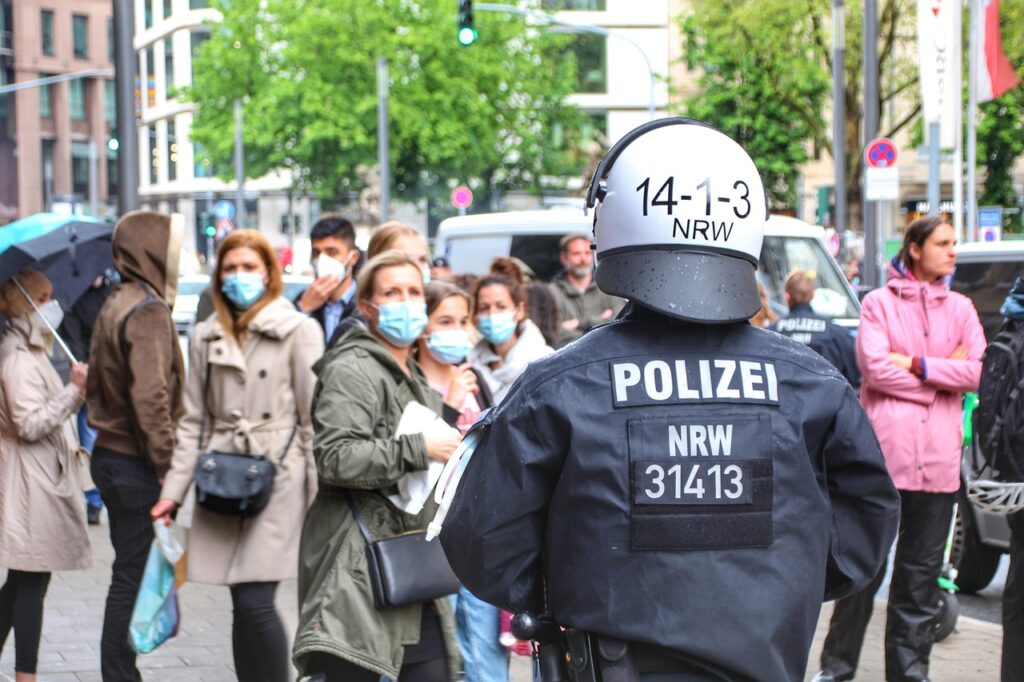
Tensions escalated significantly when student organizations alongside senior opposition figures attempted to march toward the Prime Minister’s official residence in New Delhi. Demonstrators demanded the immediate dismissal of senior education officials, a complete overhaul of the NTA, and immediate relief for affected candidates. Law enforcement authorities established multi-layered security cordons, utilizing metal barricades and detaining dozens of student leaders to disperse the crowd.
Congress MP Manickam Tagore issued a scathing condemnation of the administration during the protest, directing severe allegations toward the government’s handling of the crisis. Tagore declared that the “blood of India’s brightest is on this NEET-UG scam,” citing severe psychological distress among students and demanding full accountability from Union Education Minister Dharmendra Pradhan.
Minister Pradhan vigorously rejected the opposition’s charges, defending the government’s response and outlining corrective measures taken by law enforcement and administrative bodies. Pradhan stated that the opposition was engaging in political opportunism, accusing Rahul Gandhi of weaponizing the anxiety of students rather than participating in constructive policy debates. He reiterated that a high-level committee had been instituted to review NTA procedures and ensure absolute transparency in upcoming testing cycles.
Data and Expert Perspectives on National Competitive Exams
Educational policy experts point to persistent structural vulnerabilities within centralized, high-stakes examination systems. According to data compiled by public policy groups monitoring educational governance, India has recorded more than 70 major question paper leak incidents across 15 states over the past six years, impacting an estimated 14 million job applicants and entrance test candidates.
Dr. Ananya Roy, a senior education policy researcher in New Delhi, highlighted the logistical complexity of managing paper-based examinations at this scale. “When an entrance exam dictates the career trajectories of over two million students simultaneously, the operational footprint becomes immense,” Dr. Roy noted. “The reliance on multiple external agencies, printing presses, and local transport nodes creates vulnerability vectors that rogue elements repeatedly exploit.”
Legal experts emphasize that invalidating a nationwide exam affects non-offending students just as severely as candidate fraud affects the broader system. Advocate Rohit Sharma, who represents student petitioners in ongoing Supreme Court proceedings, emphasized that judicial remedies must balance systemic integrity against the practical hardship imposed on millions of innocent students who spent years preparing for the assessment.
Policy Implications and What to Watch Next
The intensifying political and judicial scrutiny leaves the Ministry of Education with limited options beyond aggressive structural reform. The central government has already signaled plans to enact tougher statutory penalties against organized cheating syndicates under newly proposed public examination legislation. Furthermore, discussions regarding a transition toward multi-session, computer-based adaptive testing models are gaining momentum within policy circles to eliminate physical paper distribution risks entirely.
Key focus now shifts toward the Supreme Court of India, where upcoming hearings will determine whether a full national re-test will be mandated or if targeted cancellations in specific compromised centers will suffice. Parliament is also expected to witness heated debates over the statutory independence and administrative capacity of the National Testing Agency during its upcoming legislative session.