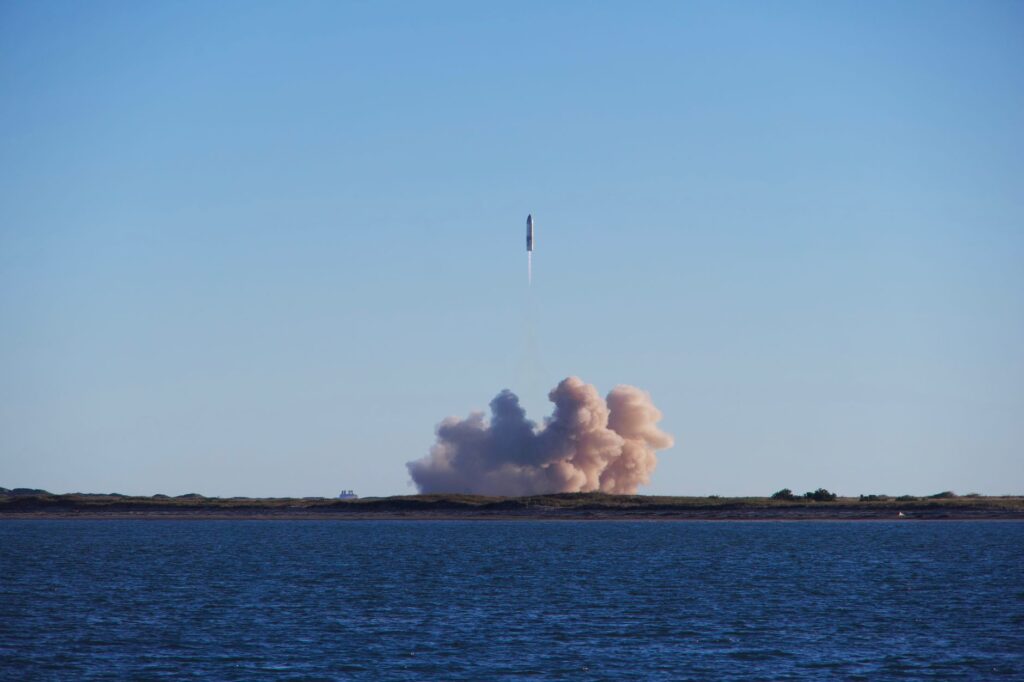

The United States government has issued a formal critique regarding a recent intercontinental ballistic missile (ICBM) test conducted by the People’s Republic of China in the Pacific Ocean. Officials in Washington expressed significant concern over the lack of “sufficient notice” provided by Beijing prior to the launch.
According to official statements, the test represents a notable shift in China’s military behavior and nuclear posture. The U.S. Department of State and the Pentagon have both highlighted the potential for miscalculation when such high-stakes military activities are conducted without transparent communication.
The missile, which landed in international waters, was the first of its kind to be fired into the open Pacific by China in several decades. Historically, the Chinese military has preferred to conduct long-range tests within its own territorial boundaries or over sparsely populated inland areas.
Background of China’s Nuclear Expansion
For many years, international observers characterized China’s nuclear strategy as one of “minimum deterrence.” This policy aimed to maintain just enough nuclear capability to survive an initial strike and launch a retaliatory blow.
However, recent intelligence reports and satellite imagery have indicated a rapid acceleration in the modernization of the People’s Liberation Army Rocket Force (PLARF). Official data shows that China is constructing hundreds of new missile silos in its western desert regions.
The U.S. Department of Defense recently estimated that China’s stockpile of operational nuclear warheads has surpassed 500 and is expected to exceed 1,000 by 2030. This expansion has fundamentally altered the strategic calculus for U.S. policymakers and regional allies.
Details of the Recent Pacific ICBM Test
The launch took place last month and involved a missile capable of reaching the continental United States. The Chinese Ministry of National Defense described the event as a “routine arrangement” intended to test weapon performance and troop training levels.
While Beijing claimed it had notified “relevant countries” in advance, U.S. officials disputed the adequacy of that notification. According to reports, the notice provided was vague and did not follow the established norms of international transparency usually seen among nuclear-armed states.
The missile traveled several thousand kilometers before impacting a designated sea area. The precision and range demonstrated by the test have heightened concerns about the technological advancements of China’s strategic forces.
Geopolitical Implications and Regional Security
The test has sent ripples through the Indo-Pacific, a region already grappling with territorial disputes and an intensifying naval presence. Nations such as Japan and Australia have joined the U.S. in calling for greater openness regarding China’s military intentions.
In Tokyo, government spokespeople noted that the lack of transparency regarding the missile’s flight path posed a potential risk to maritime and aviation safety. The North Pacific is one of the world’s busiest corridors for commercial shipping and air travel.
The U.S. administration has used the incident to reinforce its calls for a formal arms control dialogue with Beijing. Thus far, China has largely resisted these invitations, arguing that its arsenal remains far smaller than those of the United States and Russia.
Economic and Strategic Impact
The escalation of nuclear tensions often leads to a shift in regional economic priorities. Analysts suggest that the perceived threat from China’s growing arsenal may drive increased defense procurement across Southeast Asia and the Pacific.
This “security dilemma”—where one nation’s efforts to increase its security decrease the security of others—could trigger a localized arms race. Such a scenario often results in higher government spending on military hardware, potentially impacting long-term infrastructure and social investments.
Furthermore, the instability in the Pacific could affect investor confidence in regional markets. Stability is a prerequisite for the massive volume of trade that passes through the South China Sea and the wider Pacific basin.
The Push for Transparency and Guardrails
The U.S. continues to push for “guardrails” in its relationship with China to prevent competition from veering into conflict. Establishing clear protocols for missile launch notifications is seen as a critical component of these safety measures.
According to official sources, the U.S. and Russia have long-standing agreements to notify each other of strategic launches to avoid the risk of a false alarm triggering a nuclear response. Washington believes a similar framework is essential for the U.S.-China relationship.
The refusal to provide detailed notice is viewed by some Western analysts as a deliberate move by Beijing to maintain “strategic ambiguity.” By keeping its adversaries guessing, China may believe it enhances its overall deterrent effect.
What to Watch Next
In the coming months, defense analysts will be looking for signs of further long-range tests in the Pacific. If China adopts this as a regular practice, it will necessitate a permanent shift in how the U.S. and its allies monitor the region.
Diplomatic efforts are expected to intensify during upcoming international forums, such as the G20 or ASEAN meetings. The U.S. is likely to seek a multilateral consensus on the need for standardized notification procedures for all nuclear-armed states.
Finally, the internal development of the People’s Liberation Army will remain under close scrutiny. Any further expansion of silo fields or the deployment of new road-mobile ICBMs will likely prompt additional U.S. military adjustments in the Indo-Pacific theater.
Disclaimer: This article is published for general news and informational purposes only. While every effort has been made to ensure accuracy, readers are advised to verify important information from official sources. The publisher shall not be responsible for any loss or inconvenience arising from reliance on the information published.