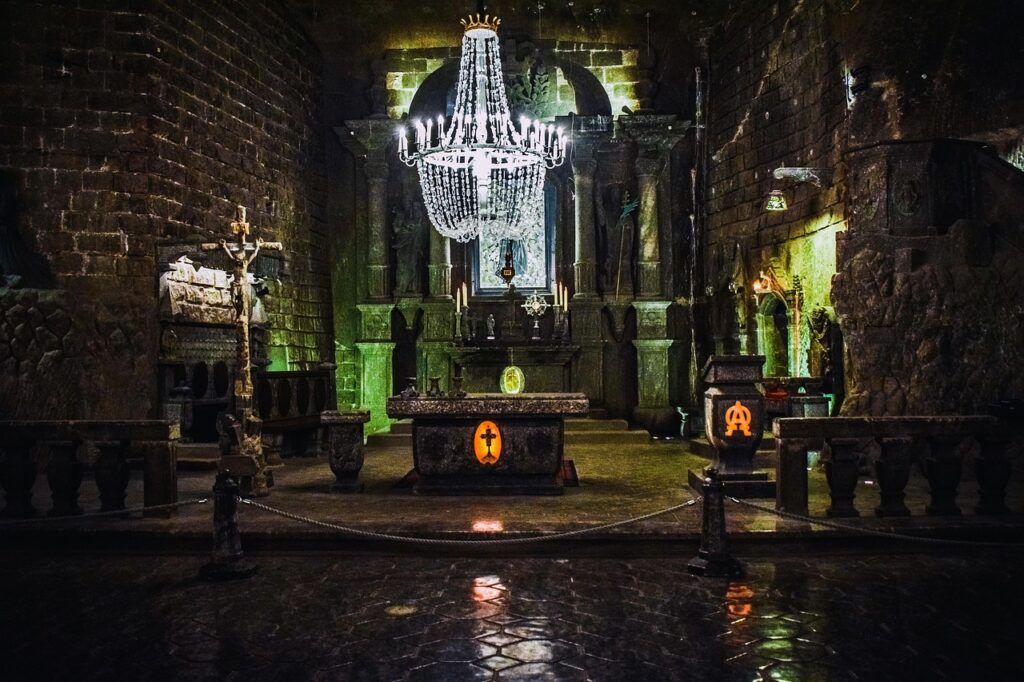

Deep beneath the surface of Wieliczka, Poland, lies a sprawling, 700-year-old subterranean labyrinth that functions as a fully realized city carved entirely from rock salt. Since the 13th century, generations of miners have transformed this industrial site into an artistic masterpiece, featuring ornate chapels, expansive underground lakes, and intricate sculptures that attract over a million visitors annually.
A Legacy Carved in Salt
The Wieliczka Salt Mine, designated as a UNESCO World Heritage site in 1978, represents one of the oldest industrial operations in the world. What began as a vital economic engine for the Polish crown during the Middle Ages eventually evolved into a cultural sanctuary where laborers expressed their devotion and creativity through their medium of choice: salt.
Mining operations in this region date back to the Neolithic period, but it was in the 13th century that systematic excavation began. As miners delved deeper, they carved out vast chambers, eventually creating a network of tunnels reaching depths of 327 meters and extending over 280 kilometers in length.
Artistry in the Depths
The most iconic feature of the complex is the Chapel of St. Kinga, a subterranean cathedral where even the chandeliers are fashioned from salt crystals. Every element within this space—from the altar reliefs to the intricate floor patterns—was hand-carved by generations of workers, turning a functional mining shaft into a site of profound aesthetic significance.
Beyond the religious architecture, the mine houses subterranean brine lakes that mirror the vaulted, salt-crusted ceilings. These geological features, combined with the atmospheric lighting installed for modern tourism, create a surreal environment that defies conventional architectural classification.
Economic and Cultural Impact
Data from the Wieliczka Salt Mine Management indicates that the site transitioned from a primary industrial operation to a tourist destination in the late 20th century. While salt extraction officially ceased in 1996, the site remains a critical component of Poland’s national identity and tourism economy.
Experts in subterranean architecture note that the site provides a unique case study in how industrial utility can be repurposed for cultural preservation. The structural integrity of the salt chambers has been maintained through rigorous engineering, allowing the site to host events ranging from weddings to health-focused spa retreats in the mine’s microclimate.
Implications for the Future
As the site continues to age, conservationists are increasingly focused on the preservation of the salt sculptures against humidity and atmospheric changes. The challenge remains to balance the heavy foot traffic of international tourism with the structural stability of the ancient caverns.
Observers should monitor upcoming restoration projects focused on the site’s most delicate salt carvings, as these efforts will determine the longevity of the mine’s artistic treasures. As global travel trends shift toward experiential and historical tourism, Wieliczka stands as a primary example of how heritage sites can successfully adapt to modern demands without compromising their historical integrity.