

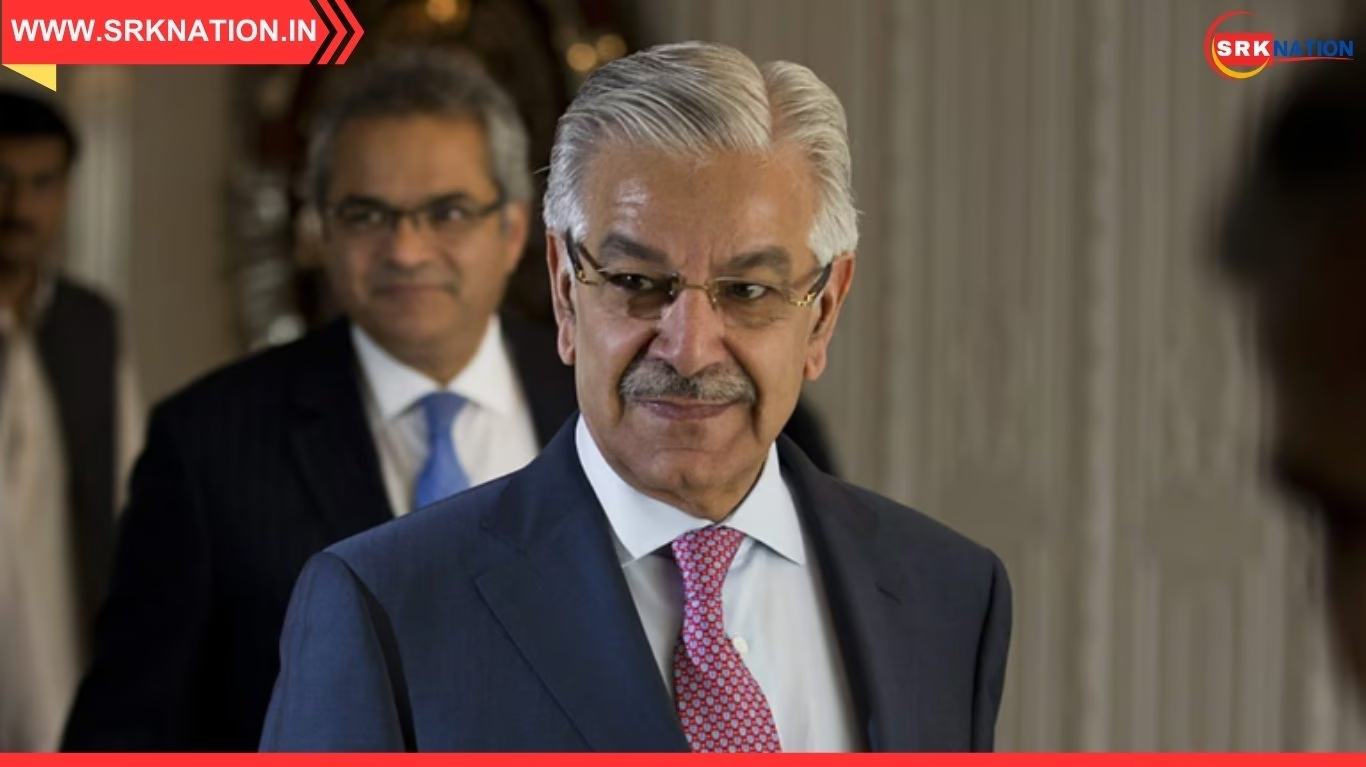
Pakistan’s Defence Minister Khawaja Asif has reignited tensions in South Asia with a provocative claim that India is deliberately engaging Pakistan in a two-front war—using Afghanistan as a proxy on the western border while maintaining pressure on the eastern front. The statement, made during a televised interview on November 1, 2025, comes amid revelations of Islamabad’s secret agreement with the United States to allow drone operations from Pakistani soil, a deal that has reportedly strained Pakistan’s relations with the Taliban and complicated its regional security calculus.
Asif’s remarks have drawn sharp reactions from analysts and political observers, who view the statement as an attempt to deflect attention from Pakistan’s internal challenges and its faltering diplomacy with Afghanistan. The timing of the claim, just days after the collapse of peace talks in Istanbul between Pakistan and the Taliban, has added fuel to the geopolitical fire.
🧠 Khawaja Asif’s Statement and Strategic Implications
| Statement Summary | Strategic Interpretation |
|---|---|
| “India wants to keep us engaged on both borders.” | Suggests deliberate pressure from India via Afghanistan |
| “India is using Afghanistan for a proxy war.” | Accusation without evidence, seen as deflection tactic |
| “Modi has gone silent after setbacks.” | Implies India’s eastern front is under strain |
Asif’s rhetoric reflects Pakistan’s growing anxiety over its deteriorating security environment.
📊 Timeline of Events Leading to the Two-Front War Claim
| Date | Event Description | Outcome |
|---|---|---|
| Oct 28, 2025 | Istanbul peace talks between Pakistan and Taliban collapse | No ceasefire agreement |
| Oct 30, 2025 | Reports surface of Pakistan-US drone deal | Sparks domestic and regional backlash |
| Nov 1, 2025 | Khawaja Asif makes two-front war claim | Escalates diplomatic tensions |
The drone deal revelation has undermined Pakistan’s credibility in negotiations with Afghanistan.
🧭 Pakistan’s Security Challenges on Two Fronts
| Border Region | Key Issues | Recent Developments |
|---|---|---|
| Eastern (India) | Ceasefire violations, border skirmishes | Operation Sindoor in May 2025 |
| Western (Afghanistan) | Taliban hostility, airspace violations | Drone strikes, failed peace talks |
Pakistan’s military is stretched thin, facing simultaneous threats from both neighbors.
🗣️ Reactions from Regional Stakeholders
| Country/Entity | Response Summary |
|---|---|
| India | No official response; maintains strategic silence |
| Afghanistan | Accuses Pakistan of violating airspace |
| United States | Silent on drone deal; diplomatic channels active |
| Pakistani Opposition | Criticizes government’s lack of transparency |
The controversy has triggered a wave of political and diplomatic fallout.
📈 Pakistan-US Drone Deal: What We Know
| Deal Component | Description |
|---|---|
| Agreement Type | Secret bilateral pact |
| Purpose | US drone operations targeting terror cells |
| Location | Western Pakistan near Afghan border |
| Fallout | Taliban backlash, peace talks collapse |
The deal has exposed Pakistan’s dual-track diplomacy and internal contradictions.
🧠 Strategic Analysis: Is India Waging a Two-Front War?
| Argument For | Argument Against |
|---|---|
| India’s presence in Afghanistan post-2021 | No direct military engagement since Taliban takeover |
| Proxy war allegations | No verifiable evidence presented by Pakistan |
| Tactical advantage for India | India focused on border defense, not aggression |
Experts suggest Asif’s claim is more political than strategic.
📌 Conclusion
Pakistan Defence Minister Khawaja Asif’s claim that India is orchestrating a two-front war—while Pakistan grapples with fallout from a secret US drone deal—has intensified regional tensions and raised questions about Islamabad’s strategic coherence. As Pakistan faces mounting pressure on both its eastern and western borders, the narrative of external blame may serve short-term political goals but risks long-term diplomatic isolation. With India maintaining strategic silence and Afghanistan demanding accountability, the region braces for further instability.
Disclaimer: This article is based on publicly available news reports, official statements, and geopolitical analysis. It is intended for informational and editorial purposes only and does not constitute diplomatic or military advice.