

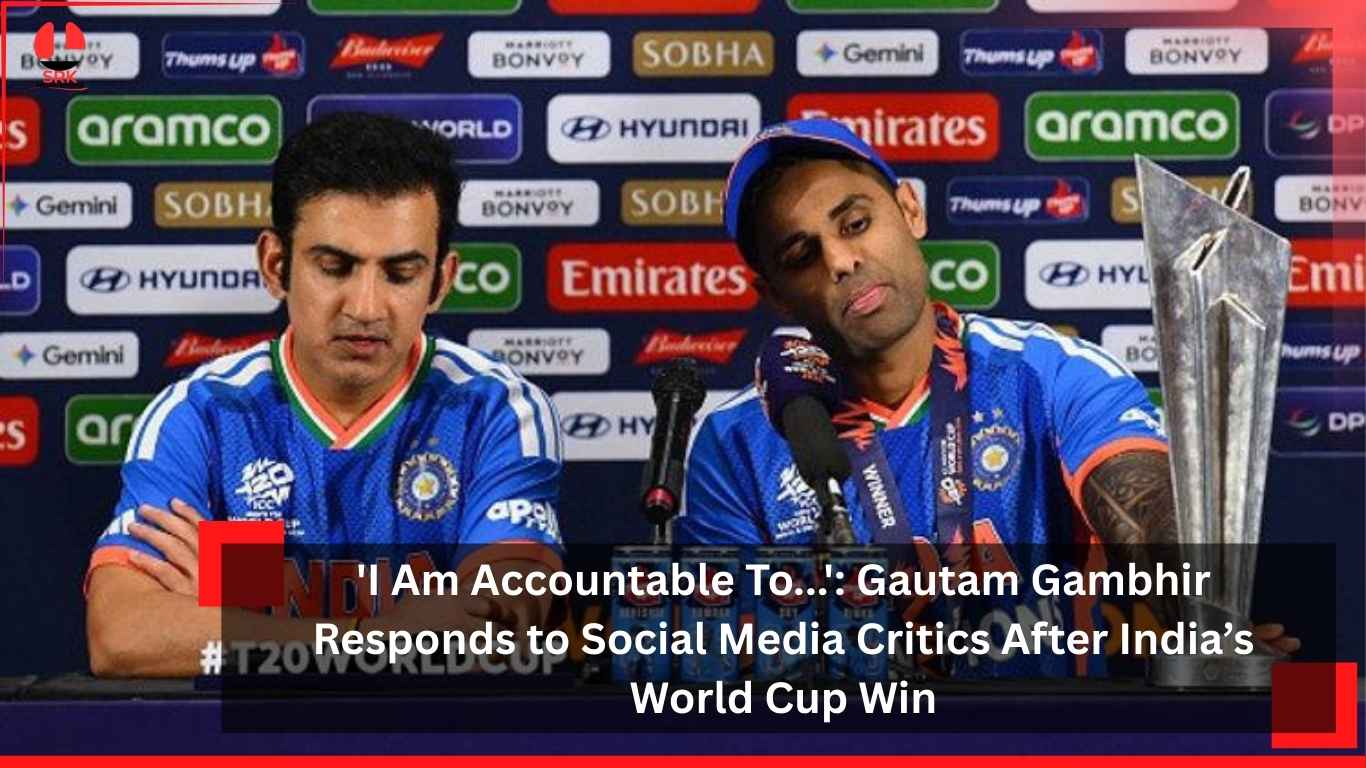
India’s triumphant World Cup victory has brought immense joy to millions of fans, but it has also reignited debates around former cricketer and current politician Gautam Gambhir. Facing criticism on social media for his outspoken views and perceived role in cricket commentary, Gambhir responded firmly, stating, “I am accountable to the people of my country, not to social media critics.” His remarks underline the tension between public figures and online discourse, especially in the aftermath of major sporting achievements.
Context of Gambhir’s Statement
Following India’s World Cup win, Gambhir was targeted by a section of social media users who questioned his commentary style and political involvement. Critics accused him of being overly harsh in his analysis and not celebrating enough during India’s victory.
In response, Gambhir clarified that his accountability lies with the nation and its people, not with anonymous online critics. He emphasized that constructive criticism is welcome, but trolling and personal attacks do not contribute to meaningful dialogue.
Gambhir’s Role in Cricket and Politics
Gautam Gambhir, a key architect of India’s 2011 World Cup triumph, has transitioned into politics as a Member of Parliament. His dual role as a former cricketer and politician often places him under intense scrutiny.
- As a Cricketer: Gambhir was known for his grit and determination, playing crucial innings in India’s World Cup victories in 2007 (T20) and 2011 (ODI).
- As a Politician: He represents East Delhi in Parliament and has been vocal on issues ranging from national security to urban development.
- As a Commentator: His straightforward analysis often sparks debates, as he prioritizes honesty over popular sentiment.
Social Media Criticism
Social media platforms have amplified voices of fans, but they have also become arenas for trolling. Gambhir’s critics argue that he lacks enthusiasm in celebrating India’s victories, while supporters praise his balanced and professional approach.
This divide reflects a broader challenge faced by public figures: navigating the fine line between authenticity and public expectations.
Comparative Analysis of Public Figures Facing Criticism
| Public Figure | Field | Nature of Criticism | Response Style |
|---|---|---|---|
| Gautam Gambhir | Cricket & Politics | Commentary tone, political role | Firm, unapologetic |
| Virat Kohli | Cricket | Aggressive behavior, captaincy decisions | Reflective, adaptive |
| M.S. Dhoni | Cricket | Tactical choices, retirement timing | Calm, composed |
| Sachin Tendulkar | Cricket | Political silence, endorsements | Diplomatic, restrained |
Pivot Analysis of Gambhir’s Accountability
| Dimension | Gambhir’s Position | Social Media Critics | Broader Public |
|---|---|---|---|
| Accountability | To the nation | To fans online | To democratic values |
| Communication Style | Direct, firm | Aggressive, emotional | Mixed reactions |
| Impact on Image | Polarizing | Divisive | Respect for honesty |
| Long-Term Outlook | Stable in politics | Temporary criticism | Balanced recognition |
Political and Sporting Implications
Gambhir’s remarks carry implications beyond cricket:
- For Cricket Fans: His statement reinforces the idea that commentary should be analytical, not performative.
- For Politics: By emphasizing accountability to the nation, Gambhir strengthens his political narrative of prioritizing public service.
- For Social Media: His response highlights the growing tension between public figures and online criticism, raising questions about digital civility.
Broader Concerns About Online Criticism
The episode reflects a larger issue in modern society:
- Digital Accountability: Should public figures tailor their responses to online sentiment?
- Constructive vs. Toxic Criticism: How can meaningful feedback be separated from trolling?
- Mental Health Impact: Continuous online attacks can affect the well-being of public figures.
Conclusion
Gautam Gambhir’s firm response to social media critics after India’s World Cup win underscores his commitment to accountability towards the nation rather than online voices. His statement, “I am accountable to the people of my country,” resonates as both a political and sporting declaration.
While social media criticism is unlikely to fade, Gambhir’s stance reflects a growing trend among public figures to prioritize authenticity and national responsibility over digital popularity. As India celebrates its World Cup triumph, his words remind us that accountability extends beyond applause—it lies in service, honesty, and resilience.
Disclaimer
This article is a journalistic analysis based on public statements and available information. It does not represent endorsement of any political party, individual, or viewpoint. Readers are encouraged to interpret the content as part of ongoing democratic and sporting discourse.