




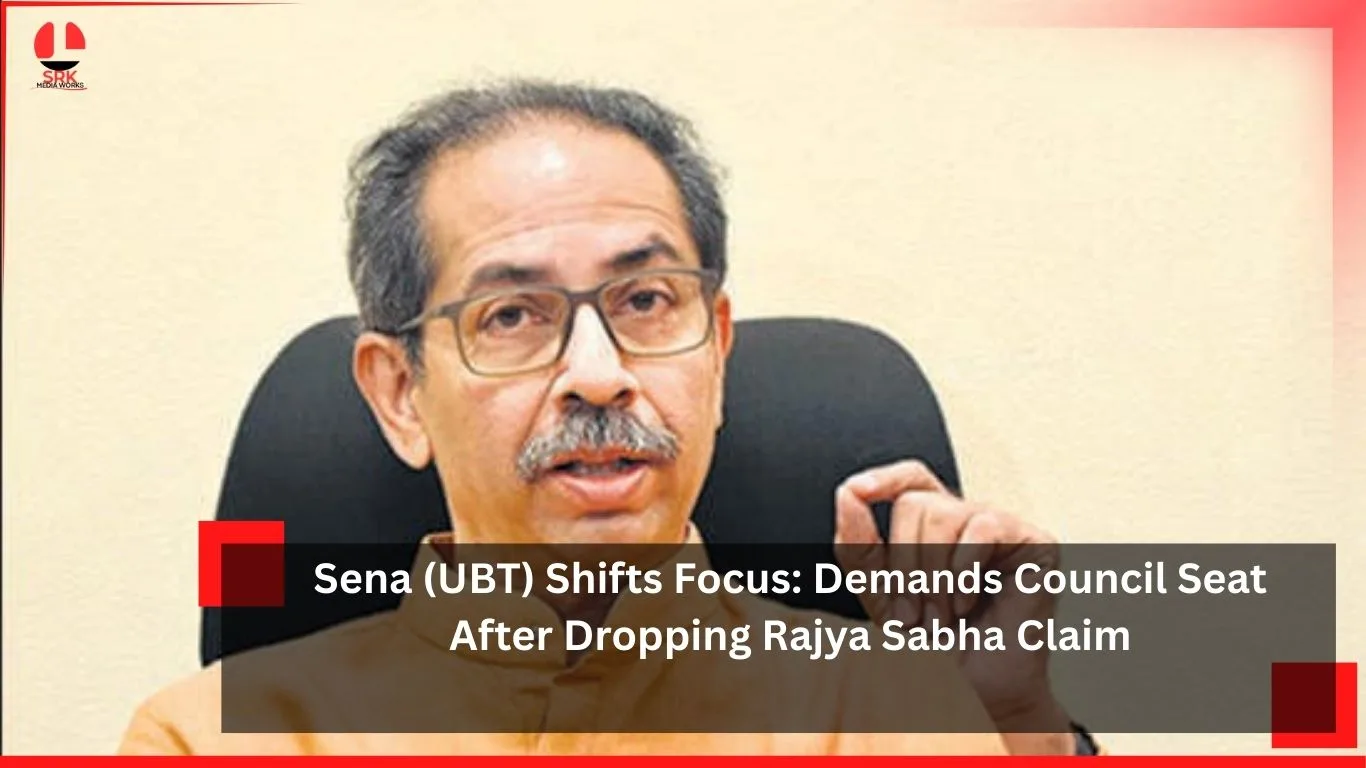
In a significant political move, the Shiv Sena (Uddhav Balasaheb Thackeray faction), commonly referred to as Sena (UBT), has decided to withdraw its claim for a Rajya Sabha seat and instead demanded representation in the Maharashtra Legislative Council. This decision reflects the party’s evolving strategy in balancing its political presence across legislative bodies while maintaining influence in state politics.
The Announcement
Party leaders confirmed that Sena (UBT) will not pursue the Rajya Sabha seat, citing the need to strengthen its position in the state legislature. By demanding a council seat, the faction aims to consolidate its role in Maharashtra’s governance and ensure representation in critical policy discussions.
Background: Rajya Sabha vs Legislative Council
The Rajya Sabha, India’s upper house of Parliament, provides national-level representation, while the Legislative Council serves as the upper house in certain states, including Maharashtra. For Sena (UBT), shifting focus from the Rajya Sabha to the Council indicates a prioritization of state-level influence over national visibility.
Key Considerations:
- State-Centric Strategy: Focus on Maharashtra’s governance.
- Political Balance: Ensuring representation across legislative bodies.
- Party Dynamics: Strengthening ties with allies in the state.
- Public Perception: Demonstrating flexibility and pragmatism.
Comparative Analysis of Party Strategies
| Party | Recent Move | Focus Area | Impact |
|---|---|---|---|
| Sena (UBT) | Demands Council seat | State politics | Strengthened local influence |
| BJP | Push for RS seats | National politics | Expanded central presence |
| NCP (SP) | Council representation | Regional balance | Consolidated state role |
| Congress | RS nominations | National visibility | Maintained parliamentary voice |
This comparison shows how different parties balance state and national priorities, with Sena (UBT) opting for a state-centric approach.
Pivot Analysis: Impact of Sena (UBT)’s Decision
| Stakeholder | Immediate Impact | Long-Term Outcome |
|---|---|---|
| Sena (UBT) | Gains Council representation | Stronger state-level presence |
| Allies | Adjusted seat-sharing | Reinforced coalition balance |
| Opposition | Opportunity to contest RS | Increased competition nationally |
| Citizens | Perception of pragmatism | Greater focus on state issues |
| State Politics | Redistribution of influence | More dynamic legislative debates |
Political Significance
The move highlights Sena (UBT)’s pragmatic approach to coalition politics. By stepping back from the Rajya Sabha, the party avoids potential conflicts with allies while securing a Council seat that ensures its voice in Maharashtra’s legislative process.
Economic and Social Dimensions
Representation in the Legislative Council allows Sena (UBT) to influence state-level policies directly affecting citizens, including infrastructure, education, and social welfare. This shift could strengthen the party’s grassroots appeal.
Broader Impacts:
- Policy Influence: Greater say in state legislation.
- Coalition Stability: Reduced friction with allies.
- Public Engagement: Enhanced focus on local issues.
- Electoral Strategy: Stronger positioning for upcoming state elections.
Public Sentiment
Reactions to the decision have been mixed. Supporters view it as a smart move to prioritize Maharashtra’s interests, while critics argue that the party is stepping back from national relevance. Social media discussions highlight both approval for the pragmatic approach and skepticism about long-term strategy.
Historical Context
Sena has a long history of balancing state and national politics. Under Uddhav Thackeray’s leadership, the party has often emphasized Maharashtra’s identity and regional issues. This latest move continues that tradition, reinforcing the faction’s commitment to state-centric governance.
Global Context
Political parties worldwide often adjust strategies between national and regional representation. Sena (UBT)’s decision mirrors similar moves in other democracies where regional parties prioritize local influence over national visibility.
Global Comparisons of Political Strategy
| Country | Party | Strategy | Outcome |
|---|---|---|---|
| India (Sena UBT) | Council seat demand | State focus | Local influence |
| UK | Regional parties in devolved parliaments | Local governance | Strong regional identity |
| Spain | Catalan parties | Regional autonomy | Heightened local power |
| Germany | State parties in Bundesrat | Federal balance | Policy influence |
Conclusion
Sena (UBT)’s decision to drop its Rajya Sabha claim and demand a Council seat marks a strategic pivot toward state-level politics. This move strengthens its role in Maharashtra’s governance, stabilizes coalition dynamics, and reinforces its identity as a party deeply rooted in regional issues. While critics question the loss of national visibility, the party’s supporters see it as a pragmatic step to secure influence where it matters most.
Disclaimer
This article is based on publicly available reports and expert analysis. It is intended for informational purposes only and does not represent official party statements or endorsements. Readers should note that political strategies are subject to change, and interpretations may vary across different sources.