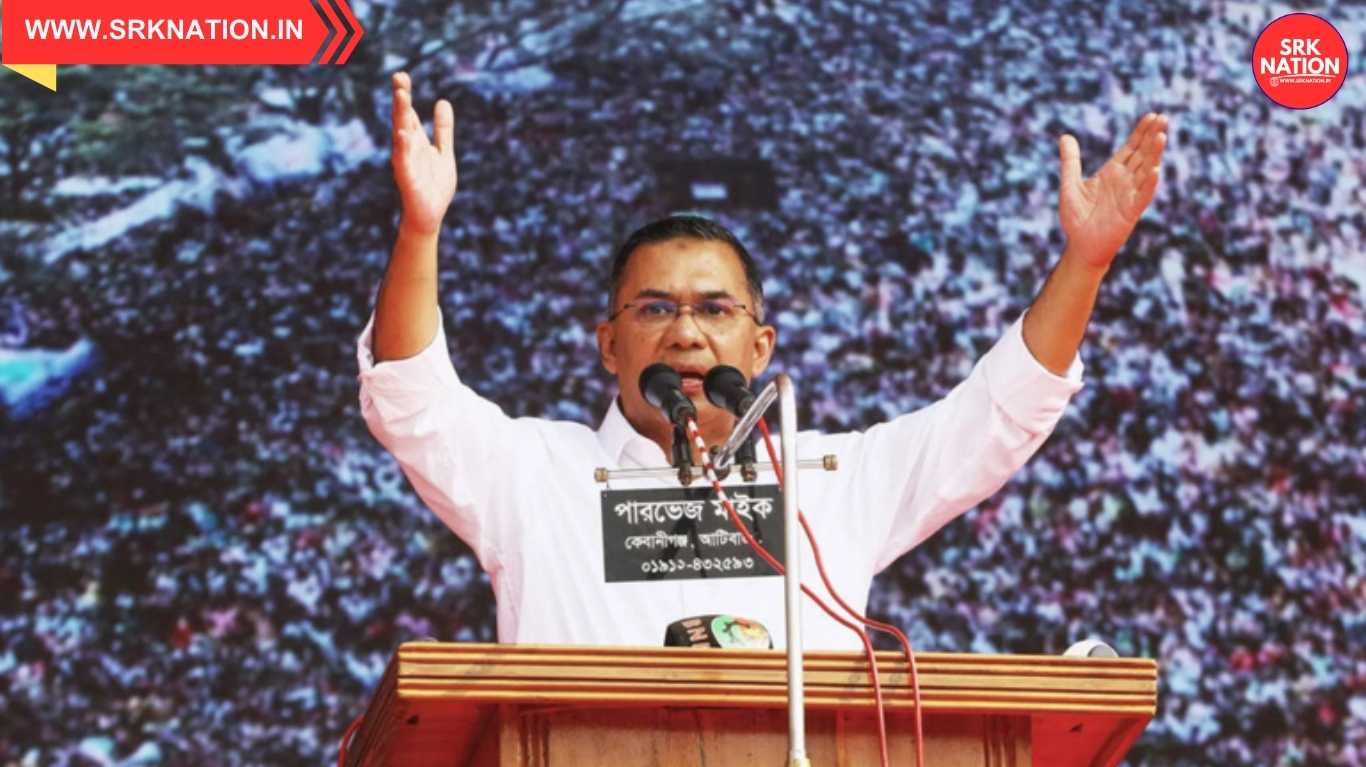




Bangladesh’s political landscape is witnessing a dramatic shift with the return of Tarique Rahman, the elder son of former Prime Minister Khaleda Zia and widely regarded as the “crown prince” of the Bangladesh Nationalist Party (BNP). After spending 17 years in exile in London, Tarique’s re-entry into Dhaka’s political arena has sparked intense debate about the future of the BNP, the balance of power with the ruling Awami League, and the broader trajectory of Bangladesh’s democracy.
Background of Tarique Rahman’s Exile
- Tarique Rahman left Bangladesh in 2008 amid corruption charges and political turmoil.
- He settled in London, where he remained active in BNP politics but avoided direct confrontation with the ruling Awami League.
- His long absence created a leadership vacuum within the BNP, with Khaleda Zia’s declining health further weakening the party’s organizational strength.
- Tarique’s return is seen as both a symbolic and strategic move to rejuvenate the BNP ahead of crucial political battles.
Key Highlights of Tarique Rahman’s Return
| Indicator | Details |
|---|---|
| Duration of Exile | 17 years (2008–2025) |
| Location During Exile | London, United Kingdom |
| Party Role | Acting Chairman of BNP |
| Symbolic Title | “Crown Prince” of BNP |
| Political Impact | Potential reset of Bangladesh’s opposition politics |
BNP Before vs After Tarique’s Return
| Factor | BNP During Exile | BNP After Return | Implication |
|---|---|---|---|
| Leadership | Weak, fragmented | Centralized under Tarique | Stronger organizational control |
| Public Sentiment | Declining support | Renewed enthusiasm | Revival of opposition |
| Electoral Strategy | Defensive, reactive | Aggressive, proactive | Greater challenge to Awami League |
| International Perception | Limited visibility | Increased global attention | BNP regains relevance |
Why Tarique Rahman’s Return Matters
- Leadership Vacuum Filled: His presence provides the BNP with a clear leader after years of uncertainty.
- Symbolic Strength: Tarique embodies the legacy of Khaleda Zia and Ziaur Rahman, reinforcing BNP’s identity.
- Electoral Strategy: His return signals BNP’s intent to mount a serious challenge in upcoming elections.
- Public Mobilization: Supporters view his comeback as a rallying point for opposition unity.
Tarique Rahman’s Political Strategy
| Attribute | Details |
|---|---|
| Core Base | BNP loyalists, rural supporters, youth activists |
| Political Style | Assertive, populist, legacy-driven |
| Current Focus | Rebuilding BNP’s organizational strength |
| Electoral Ambition | Positioning BNP as a viable alternative to Awami League |
| Future Outlook | Central figure in Bangladesh’s next political reset |
Tarique’s strategy revolves around leveraging his family’s political legacy while modernizing BNP’s approach to resonate with younger voters.
Expert Opinions
- Political Analysts: View Tarique’s return as a game-changer for opposition politics.
- Awami League Leaders: Downplay his influence, citing corruption charges and legal hurdles.
- BNP Supporters: Celebrate his comeback as the beginning of a new chapter.
- International Observers: Note that his presence could re-energize Bangladesh’s democratic contest.
Challenges Ahead for Tarique Rahman
- Legal Battles: Pending corruption cases could hinder his political activities.
- Public Perception: Critics accuse him of opportunism and question his credibility.
- Party Discipline: Managing internal factions within BNP remains a challenge.
- Government Pressure: The ruling Awami League may use state machinery to limit his influence.
Opportunities for BNP
- Revival of Opposition: Tarique’s leadership could unify fragmented opposition forces.
- Youth Mobilization: His return offers BNP a chance to connect with younger voters.
- International Attention: Global observers may view his comeback as a sign of democratic resilience.
- Electoral Momentum: BNP could regain ground in upcoming elections with a clear leader.
Broader Context of Bangladesh Politics
- Bangladesh’s political scene has long been dominated by the rivalry between the Awami League and BNP.
- Sheikh Hasina’s Awami League has maintained power for over a decade, often accused of suppressing opposition.
- Khaleda Zia’s declining health left BNP weakened, creating space for Tarique’s re-entry.
- His return could reset the balance of power, intensifying political competition in Dhaka.
Public Sentiment
- BNP supporters welcomed Tarique with enthusiasm, seeing him as the rightful heir to Khaleda Zia’s legacy.
- Critics remain skeptical, pointing to his past controversies and corruption allegations.
- Social media debates reflect a mix of excitement, caution, and curiosity about his future role.
- Overall sentiment suggests that Tarique’s return has re-energized Bangladesh’s political discourse.
Conclusion
The re-entry of Tarique Rahman, Bangladesh’s “crown prince,” after 17 years in exile marks a pivotal moment in the country’s political history. His comeback fills a leadership vacuum within the BNP, offering the opposition a chance to reset its strategy and challenge the ruling Awami League. While legal hurdles and public skepticism remain, Tarique’s presence is central to Dhaka’s next political reset. His ability to unify supporters, mobilize youth, and leverage his family’s legacy will determine whether the BNP can reclaim its place as a formidable force in Bangladesh’s democracy.
Disclaimer
This article is intended for informational purposes only and does not constitute political or policy advice. Leadership decisions, party strategies, and electoral outcomes are subject to change based on evolving circumstances. Readers are encouraged to follow official updates for accurate information. The author and publisher are not responsible for any decisions made based on this article.