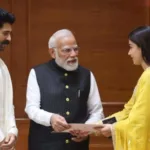

Prime Minister Narendra Modi’s Independence Day address this year stirred political ripples as he lauded the Rashtriya Swayamsevak Sangh (RSS) for its role in nation-building, calling it an organisation that has dedicated a century to the service of India. While the statement was received warmly by the RSS and its affiliates, the Congress party wasted no time in questioning the Prime Minister’s intent, suggesting that such high praise could be a “retirement benefit” in anticipation of Modi’s post-political career.
The exchange has reignited long-standing debates over the relationship between the ruling Bharatiya Janata Party (BJP) and the RSS, as well as the broader role of cultural organisations in India’s political landscape.
PM Modi’s Independence Day Praise for RSS
Speaking from the historic Red Fort, PM Modi dedicated a segment of his speech to acknowledging organisations that have contributed to the country’s growth, with special emphasis on the RSS.
“The Rashtriya Swayamsevak Sangh has, for a hundred years, worked tirelessly for the unity, cultural pride, and development of our nation,” the Prime Minister said.
Modi highlighted the RSS’ involvement in education, rural development, disaster relief, environmental conservation, and youth training, positioning it as a key player in strengthening India’s social fabric.
Congress’ Sharp Response
The Congress, however, viewed the praise with suspicion. Senior Congress leader Jairam Ramesh quipped that PM Modi’s words might be an early application for a “retirement benefit” from the RSS.
“Such glowing praise from the Prime Minister is unusual and might indicate where he sees himself after 2029,” Ramesh said, alluding to the end of Modi’s current term.
The remark was both sarcastic and politically charged, reflecting the Congress’ long-standing criticism of the RSS’ influence on governance and its ideological alignment with the BJP.
Political Context: RSS-BJP Nexus
The RSS, founded in 1925 by Dr. Keshav Baliram Hedgewar, is widely regarded as the ideological parent of the BJP. While the RSS maintains that it is a non-political cultural organisation, its worldview and cadre-building efforts have historically shaped the BJP’s policies and leadership.
PM Modi himself is a long-time swayamsevak (volunteer) of the RSS, having risen through its ranks before taking on political responsibilities in the BJP. Congress leaders argue that the RSS’ reach into government policy is undeniable, while BJP leaders maintain that the RSS merely serves as a moral compass and inspiration.
RSS at 100: A Century of Service and Debate
The centenary year has put the RSS under national spotlight. Supporters hail its work in:
- Promoting education through Vidya Bharati schools
- Running healthcare camps and mobile clinics
- Supporting disaster relief in flood and earthquake-hit regions
- Conducting environmental conservation projects such as tree plantation and water harvesting
Critics, including Congress, accuse it of pursuing a Hindutva agenda that sidelines India’s pluralism. The debate has intensified with PM Modi’s visible endorsement.
Major RSS Social Service Sectors
| Sector | Key Activities | Social Impact |
|---|---|---|
| Education | Ekal Vidyalaya, rural literacy missions | Reduced illiteracy rates, rural upliftment |
| Healthcare | Free medical check-ups, rural clinics | Improved access to healthcare in remote areas |
| Disaster Relief | Rapid volunteer mobilisation during crises | Lifesaving assistance in emergencies |
| Environment | Afforestation, river rejuvenation | Promoted sustainable practices |
| Cultural Programs | Heritage conservation, youth camps | Strengthened cultural identity |
Independence Day Speech: A Political Signal?
Political analysts are divided on whether Modi’s praise was purely an acknowledgment of service or a calculated political message.
View 1 – Recognition of Contribution
Proponents argue that given the RSS’ vast volunteer base and track record in grassroots work, it deserved recognition during a national event.
View 2 – Strategic Positioning
Skeptics, including Congress leaders, see the move as strategic—reinforcing the BJP’s ideological roots while signalling personal allegiance to the RSS in the later stages of Modi’s political journey.
Historical Timeline of RSS Growth
| Year | Milestone |
|---|---|
| 1925 | Founded in Nagpur by Dr. K.B. Hedgewar |
| 1940s | Expansion into multiple Indian states |
| 1975-77 | Role during the Emergency, political mobilisation |
| 1990s | Surge in cultural and environmental programs |
| 2014 | First RSS pracharak becomes Prime Minister |
| 2025 | Centenary celebrations nationwide |
Congress vs BJP: A Familiar Battlefield
The war of words over the RSS is not new. Congress leaders have historically attacked the organisation for alleged sectarianism, while the BJP and RSS supporters accuse Congress of ignoring India’s cultural heritage.
This latest episode mirrors past political flashpoints:
- 2014-2019: Congress accused the Modi government of “RSS-isation” of institutions.
- 2019-2024: The opposition claimed policy priorities were being dictated by RSS affiliates.
- 2025: Modi’s open praise adds a personal dimension to the political debate.
Public and Social Media Reaction
Social media witnessed a flood of reactions following both Modi’s speech and Congress’ response:
- BJP supporters trended hashtags celebrating the RSS’ centenary.
- Congress loyalists amplified Jairam Ramesh’s “retirement benefit” comment.
- Neutral voices questioned why the focus of an Independence Day speech shifted to organisational praise.
The Road Ahead
As the BJP prepares for the next general election cycle, Modi’s close alignment with the RSS could consolidate the party’s base but may also provide the opposition with ammunition to claim ideological bias.
Meanwhile, the RSS continues its centenary celebrations with plans for outreach in education, health, and environment, aiming to expand its volunteer base. Whether Modi’s comments were an early signal of future association or simply a centenary tribute remains open to interpretation.
Conclusion
PM Modi’s Independence Day praise for the RSS has reignited a familiar yet potent political discourse in India. For the BJP, it strengthens cultural and ideological ties with its support base. For the Congress, it is an opportunity to question motives and hint at political undercurrents. With the RSS marking 100 years, this exchange has ensured that the organisation’s role in India’s past, present, and future remains a subject of national debate.
Disclaimer: This article is for informational purposes only. It is based on public statements, reported facts, and political commentary. It does not represent an endorsement or personal opinion but aims to provide balanced coverage of the issue.