



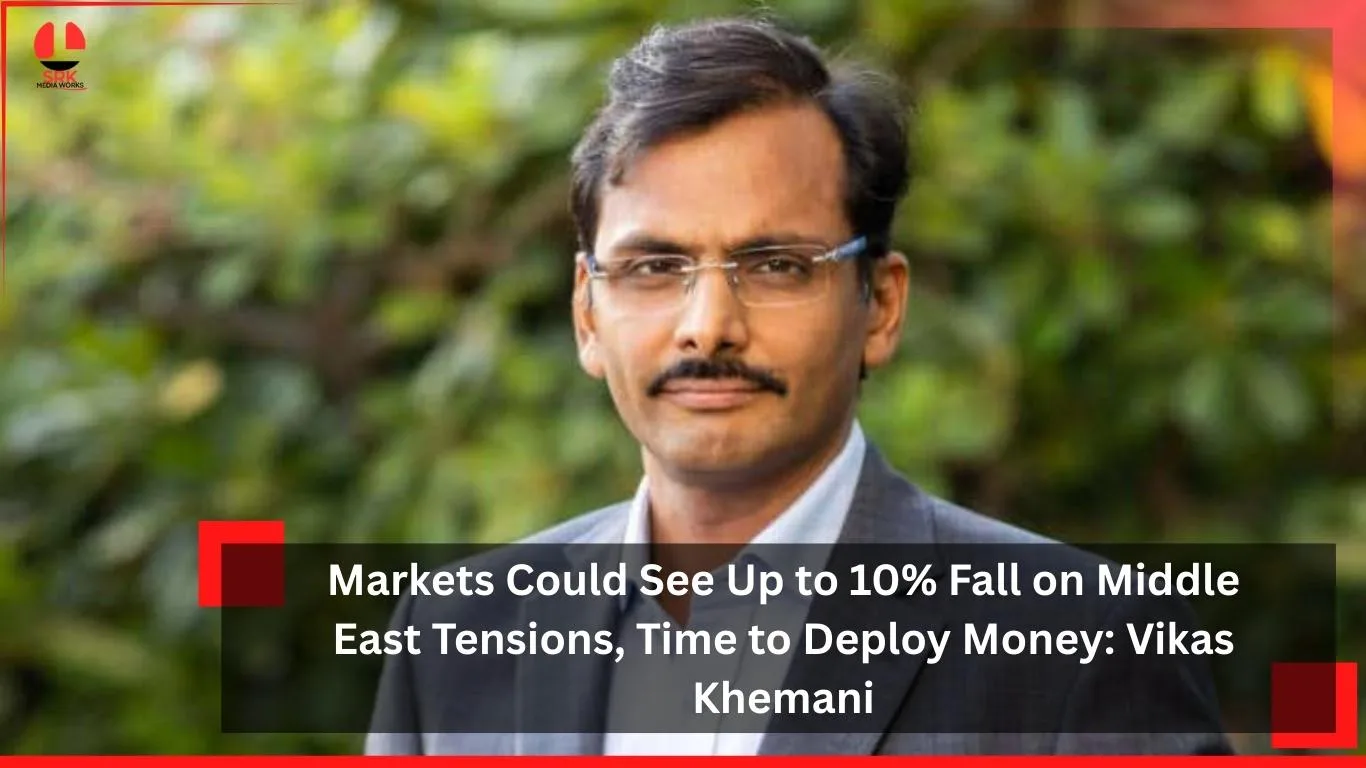
The global equity markets are bracing for volatility as Middle East tensions escalate, with investor and market expert Vikas Khemani warning that indices could see up to a 10% correction. Despite the looming risks, Khemani believes this is an opportune time for investors to deploy capital strategically, emphasizing that corrections often pave the way for long-term gains.
Context of the Warning
Khemani, a seasoned market strategist and founder of Carnelian Capital, highlighted that geopolitical tensions in the Middle East have historically triggered sharp but temporary declines in global markets. He noted that while the immediate reaction could be a fall of up to 10%, such corrections often create attractive entry points for investors with a long-term horizon.
His remarks come at a time when crude oil prices are surging, global supply chains are under stress, and inflationary pressures remain elevated.
Why Middle East Tensions Matter
The Middle East plays a pivotal role in global energy supply. Any disruption in the region tends to:
- Spike Oil Prices: Higher crude prices increase input costs across industries.
- Fuel Inflation: Rising energy costs feed into consumer prices, impacting demand.
- Trigger Risk-Off Sentiment: Investors often move away from equities into safe-haven assets like gold and bonds.
- Impact Emerging Markets: Countries dependent on oil imports, such as India, face currency and fiscal challenges.
Khemani’s Investment Outlook
Despite the risks, Khemani urged investors not to panic. He argued that corrections are part of market cycles and often provide opportunities to accumulate quality stocks at attractive valuations.
He emphasized:
- Long-Term View: Investors should focus on structural growth stories rather than short-term volatility.
- Sectoral Rotation: Defensive sectors like FMCG, healthcare, and IT may outperform during uncertainty.
- Capital Deployment: Systematic investment during corrections can yield superior returns over time.
Historical Market Corrections Linked to Geopolitics
| Year | Event | Market Reaction | Recovery Timeline |
|---|---|---|---|
| 1990 | Gulf War | Global equities fell ~15% | Recovery within 12 months |
| 2003 | Iraq War | Sharp correction in oil-importing nations | Recovery within 9 months |
| 2014 | ISIS crisis | Crude surged, equities corrected ~10% | Recovery within 6 months |
| 2022 | Russia-Ukraine conflict | Global indices fell 20% | Recovery gradual over 18 months |
Pivot Analysis of Current Market Situation
| Dimension | Current Scenario | Past Geopolitical Crises | Future Outlook |
|---|---|---|---|
| Oil Prices | Rising above $100 | Similar spikes in past crises | Could stabilize if tensions ease |
| Equity Indices | Risk of 10% fall | 10–20% corrections common | Likely rebound in medium term |
| Investor Sentiment | Cautious, risk-off | Panic-driven in past | More disciplined now |
| Recovery Potential | Strong fundamentals | Dependent on resolution | Long-term bullish |
Sectoral Impact
- Energy: Oil producers benefit from higher prices, but import-dependent economies suffer.
- Banking & Finance: Rising inflation and interest rates could pressure margins.
- IT & Pharma: Defensive sectors likely to attract investor interest.
- Infrastructure: Higher input costs may delay projects.
Strategic Advice from Khemani
Khemani’s key message is that investors should view corrections as opportunities rather than threats. His recommendations include:
- Deploy Gradually: Avoid lump-sum investments; stagger entries to average costs.
- Focus on Quality: Stick to companies with strong balance sheets and sustainable growth.
- Diversify: Spread investments across sectors to mitigate risks.
- Stay Patient: Volatility is temporary; long-term trends remain intact.
Broader Economic Concerns
The potential 10% correction raises questions about global economic resilience:
- Will central banks tighten monetary policy further to combat inflation?
- Can emerging markets withstand currency pressures from rising oil prices?
- How will investors balance between equities and safe-haven assets?
Conclusion
Vikas Khemani’s warning about a possible 10% market fall due to Middle East tensions is both a cautionary note and a strategic insight. While short-term volatility is inevitable, he believes this is the right time to deploy money into quality assets.
History shows that geopolitical shocks often trigger corrections, but markets eventually recover and reward disciplined investors. For those willing to stay patient and invest strategically, the current environment may offer significant opportunities.
Disclaimer
This article is a journalistic analysis based on expert commentary and publicly available information. It does not represent financial advice or endorsement of any investment strategy. Readers are encouraged to consult professional advisors before making investment decisions.