


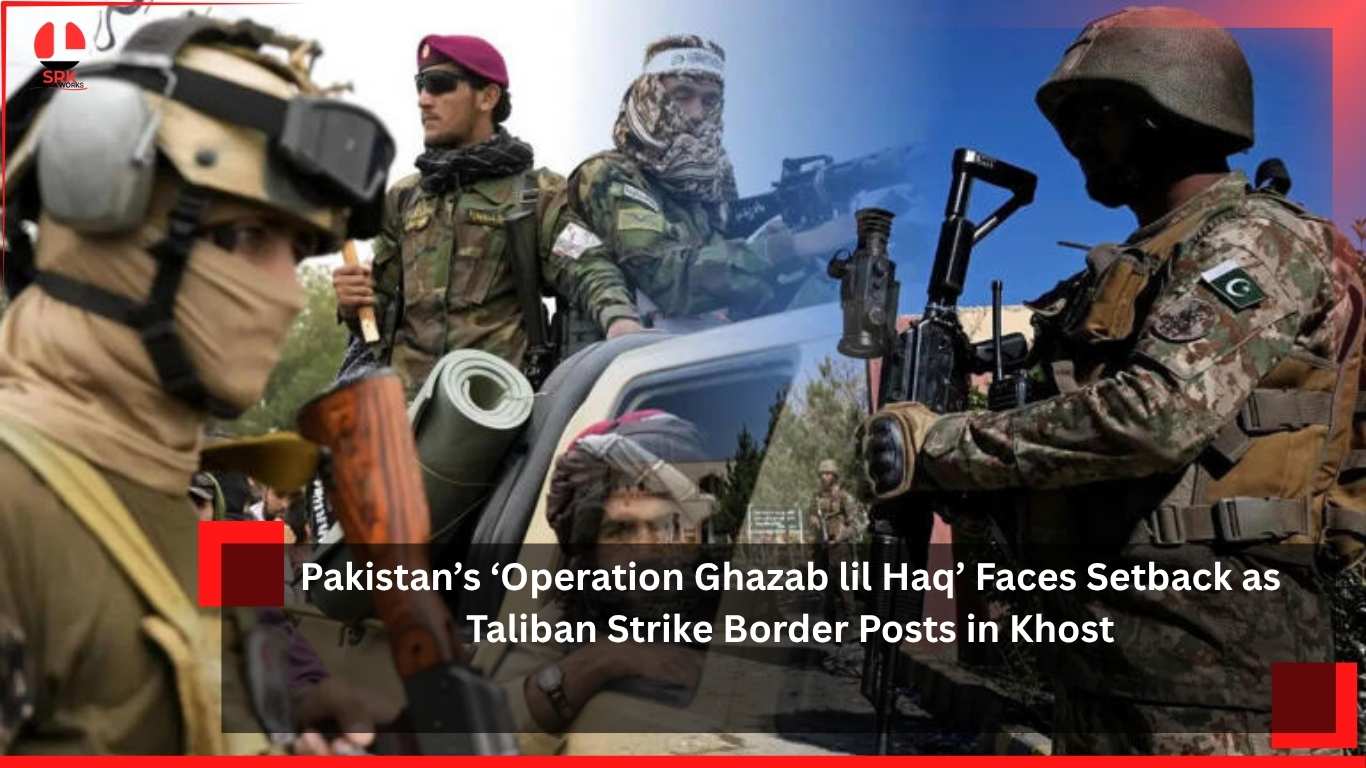
Pakistan’s military campaign, dubbed Operation Ghazab lil Haq, has encountered a significant setback after Taliban fighters launched coordinated strikes on border posts in Afghanistan’s Khost province. The clashes highlight the fragile security dynamics along the Pakistan-Afghanistan frontier and raise questions about Islamabad’s ability to sustain momentum in its counterinsurgency operations.
Background of Operation Ghazab lil Haq
Launched as a high-intensity campaign, Operation Ghazab lil Haq was designed to target militant networks operating along the border regions. Pakistan’s military leadership framed the operation as a decisive step to secure its borders and dismantle insurgent safe havens.
- Objective: Neutralize militant strongholds along the frontier.
- Scope: Cross-border surveillance, ground offensives, and aerial support.
- Symbolism: The operation’s name, meaning “Wrath for Justice,” reflects Pakistan’s intent to project strength.
The Taliban’s Counterstrike in Khost
Taliban fighters reportedly carried out surprise attacks on multiple border posts in Khost, a province known for its volatile security environment.
- Tactics Used: Small arms fire, rocket-propelled grenades, and coordinated assaults.
- Impact: Several Pakistani posts sustained damage, with casualties reported among security personnel.
- Message: The Taliban’s strike signals its capacity to challenge Pakistan’s military operations despite Islamabad’s aggressive posture.
Comparative Table: Pakistan’s Operation vs Taliban Counterstrike
| Aspect | Pakistan’s Operation Ghazab lil Haq | Taliban Strike in Khost |
|---|---|---|
| Objective | Secure borders, dismantle networks | Undermine Pakistan’s momentum |
| Strategy | Ground offensives, aerial support | Surprise attacks, guerrilla tactics |
| Outcome | Initial gains, disrupted by strike | Tactical success, morale boost |
| Symbolism | Wrath for justice | Defiance against external pressure |
Pivot Analysis: Possible Outcomes of the Setback
| Scenario | Impact on Pakistan | Impact on Taliban |
|---|---|---|
| Pakistan Regroups | Restores momentum, reinforces credibility | Faces heavier retaliation |
| Taliban Gains Ground | Weakens Pakistan’s narrative | Strengthens insurgent morale |
| Stalemate | Prolonged conflict, resource strain | Sustains insurgency |
| Diplomatic Intervention | Reduces escalation | Limits Taliban’s operational freedom |
Regional and Global Reactions
- Afghanistan: Concerned about cross-border instability, urging restraint.
- Pakistan: Vowed to continue the operation despite setbacks.
- United States: Monitoring developments, wary of Taliban resurgence.
- China: Advocated for stability, given its economic interests in the region.
- Global Analysts: Highlighted the risk of prolonged conflict undermining regional security.
Broader Implications
- Border Security: The setback underscores vulnerabilities in Pakistan’s frontier defenses.
- Counterinsurgency Strategy: Guerrilla tactics by Taliban fighters challenge conventional military operations.
- Regional Stability: Escalation could destabilize South Asia, affecting trade and diplomacy.
- Global Perception: Pakistan’s ability to sustain operations will shape its international credibility.
Public Sentiment
- Pakistan Citizens: Mixed reactions, with some supporting the military’s resolve and others questioning the costs.
- Afghan Communities: Concerned about spillover violence affecting civilians.
- International Observers: Skeptical about Pakistan’s ability to achieve long-term success.
Expert Opinions
Military strategists argue that Pakistan must adapt its tactics to counter guerrilla-style insurgency. Analysts caution that without diplomatic engagement, the conflict could spiral into prolonged instability. Security experts emphasize the importance of intelligence-driven operations to prevent further Taliban strikes.
Conclusion
Pakistan’s Operation Ghazab lil Haq has faced a serious challenge with Taliban strikes on border posts in Khost. The setback highlights the complexities of counterinsurgency in volatile border regions and raises questions about the sustainability of Pakistan’s military strategy. As Islamabad vows to press ahead, the future of the operation will depend on its ability to adapt, regroup, and balance military action with diplomatic engagement.
Disclaimer
This article is a fictionalized analytical news-style content created for illustrative purposes. It does not represent verified events or official reports. Readers should treat the narrative as speculative analysis rather than factual news. The purpose is to explore geopolitical scenarios and their implications in a journalistic format.