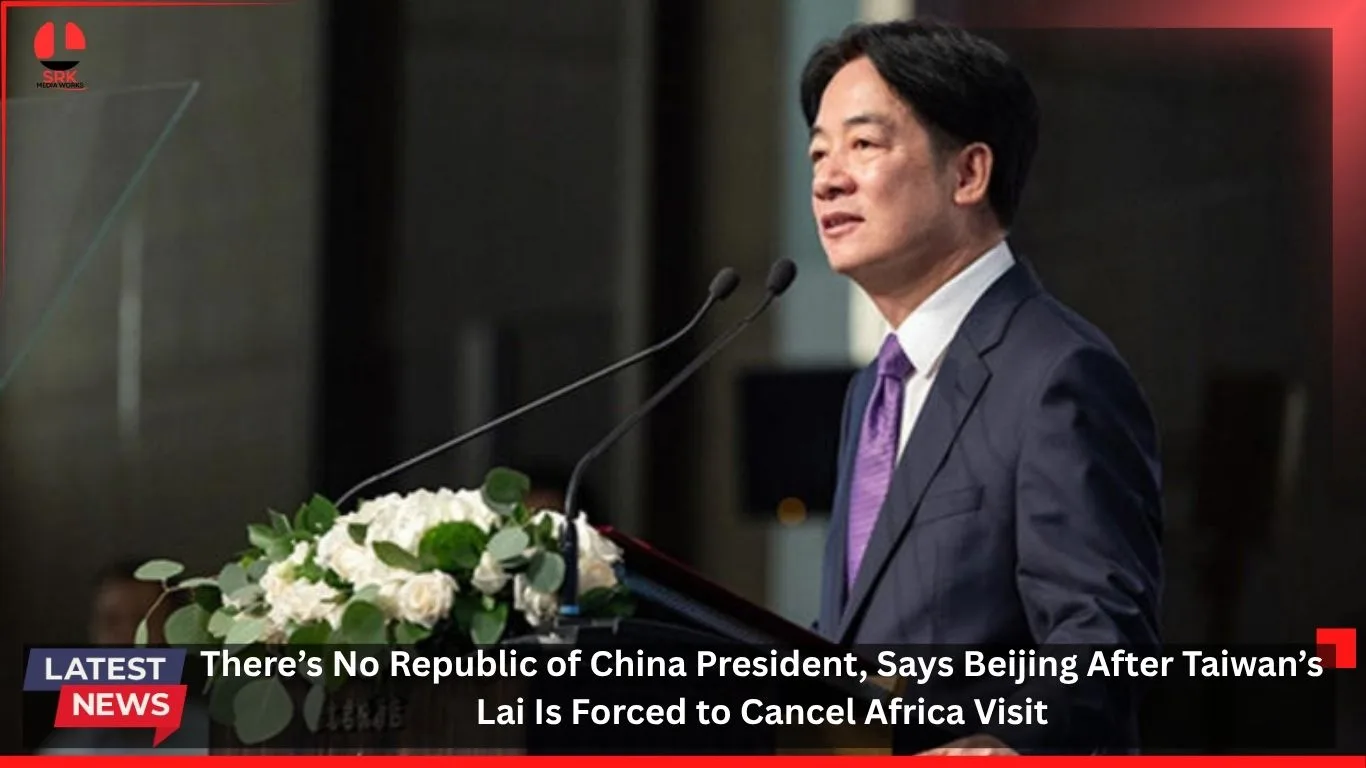
China has reiterated its stance that there is “no Republic of China president,” dismissing Taiwan’s leadership claims after President Lai Ching-te was forced to cancel a planned visit to Africa. The cancellation, reportedly due to diplomatic pressure and Beijing’s opposition, underscores the ongoing tensions between China and Taiwan over sovereignty and international recognition.
Key Highlights
- Beijing’s Statement: China insists Taiwan has no legitimate president, reiterating its “One China” principle.
- Lai’s Cancelled Visit: Taiwan’s leader was scheduled to visit African nations but withdrew amid pressure.
- Diplomatic Tensions: China continues to block Taiwan’s international engagements.
- Global Context: The incident highlights the geopolitical struggle over Taiwan’s recognition.
Background of the Dispute
China considers Taiwan a breakaway province, while Taiwan operates as a self-governing democracy with its own leadership and institutions. Beijing’s refusal to acknowledge Taiwan’s president is part of its broader strategy to isolate the island diplomatically.
| Aspect | China’s Position | Taiwan’s Position |
|---|---|---|
| Sovereignty | Taiwan is part of China | Taiwan is a self-governing democracy |
| Leadership | No legitimate president | Democratically elected president |
| International Role | Blocked from global forums | Seeks wider recognition |
| Diplomatic Visits | Opposed by Beijing | Pursued for partnerships |
Lai’s Cancelled Africa Visit
Taiwanese President Lai Ching-te had planned to strengthen ties with African nations, focusing on trade, technology, and healthcare cooperation. However, the visit was cancelled after diplomatic pressure, reportedly influenced by Beijing’s opposition.
- Planned Agenda: Trade agreements, technology partnerships, and aid programs.
- Cancellation Reason: Diplomatic pushback and geopolitical sensitivities.
- Impact: Taiwan’s limited ability to expand global presence.
China’s Diplomatic Strategy
Beijing has consistently pressured countries to avoid official engagement with Taiwan. This includes:
- Economic Leverage: Using trade and investment to influence governments.
- Diplomatic Isolation: Blocking Taiwan from international organizations.
- Political Messaging: Reiterating “One China” principle in global forums.
| Strategy | Effect |
|---|---|
| Economic Pressure | Countries avoid ties with Taiwan |
| Diplomatic Isolation | Taiwan excluded from UN and WHO |
| Political Messaging | Reinforces Beijing’s sovereignty claims |
Global Reactions
The cancellation has drawn mixed responses:
- Support for Taiwan: Some democracies emphasize Taiwan’s right to engage globally.
- Neutral Stance: Many nations avoid confrontation with China.
- China’s Allies: Back Beijing’s position and discourage Taiwan’s outreach.
Expert Opinions
Analysts argue that Beijing’s strong stance reflects its determination to prevent Taiwan from gaining international legitimacy. At the same time, Taiwan’s cancelled visit highlights the challenges of navigating global diplomacy under pressure from China.
Conclusion
Beijing’s declaration that “there is no Republic of China president” following Lai Ching-te’s cancelled Africa visit underscores the deepening diplomatic struggle over Taiwan’s status. As China intensifies efforts to isolate Taiwan, the island continues to seek avenues for international engagement, reflecting the broader geopolitical contest shaping Asia and beyond.
Disclaimer
This article is a journalistic analysis based on public statements and geopolitical developments. It does not constitute endorsement of any political position or official confirmation of diplomatic actions. Readers are encouraged to follow verified government and institutional updates for accurate information.