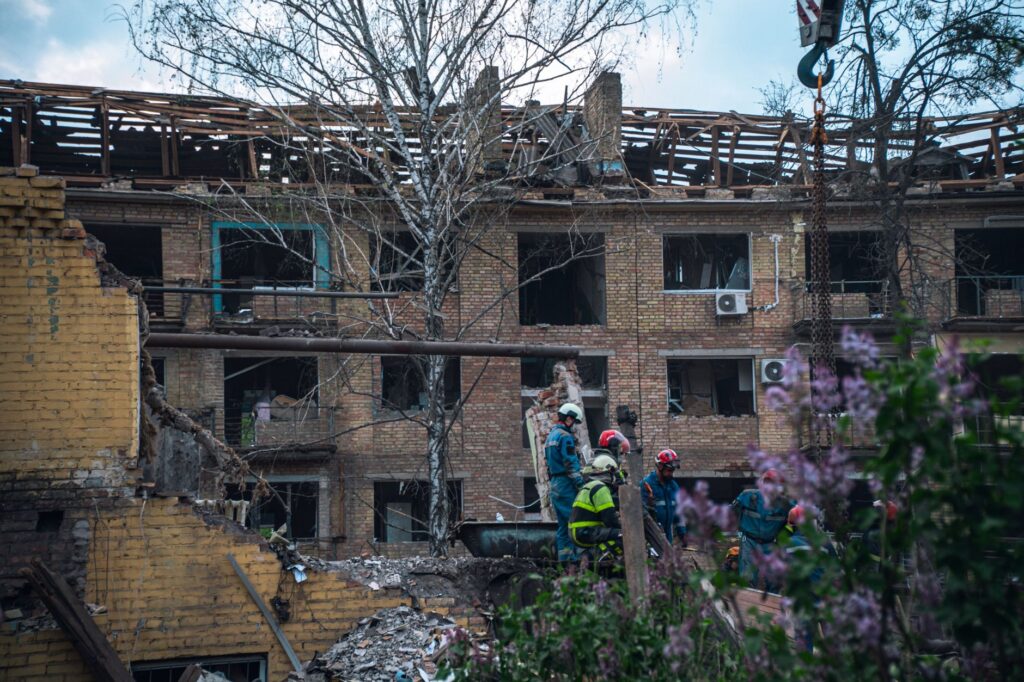

Russian forces launched a fresh wave of missile strikes against Ukraine on Tuesday, killing at least two people and injuring several others in Kyiv, just hours before Ukrainian President Volodymyr Zelenskyy and U.S. President-elect Donald Trump were scheduled to meet to discuss the future of the war and NATO involvement. The assault, which targeted critical infrastructure and residential areas, marks a significant escalation in hostilities as international leaders gather to debate the trajectory of military support for Kyiv.
A Pattern of Sustained Aggression
The latest strikes follow one of the deadliest attacks on the Ukrainian capital in recent months, which resulted in 30 civilian casualties just 24 hours prior. Moscow’s strategy appears designed to project strength and signal dissatisfaction with the ongoing diplomatic discussions occurring among Western allies.
Ukraine’s State Emergency Service confirmed the casualty count, noting that rescue teams are currently navigating debris to locate potential survivors. The frequency of these barrages has placed immense pressure on Ukraine’s air defense networks, which are struggling to neutralize an increasing volume of incoming cruise and ballistic missiles.
The Geopolitical Context
The timing of these attacks is no coincidence, according to regional security analysts. With President-elect Trump preparing to engage in high-level talks regarding NATO’s role in the conflict, the Kremlin is leveraging kinetic force to influence the narrative of Western support.
NATO leaders are currently evaluating the efficacy of current military aid packages and the potential for long-term security guarantees. Moscow has repeatedly warned that increased Western involvement, particularly regarding the use of long-range weaponry, would be met with severe consequences. The current bombardment serves as a physical manifestation of that threat.
Expert Perspectives and Strategic Impact
Military analysts suggest that Russia is attempting to exhaust Ukraine’s limited supply of interceptor missiles before the harsh winter months set in. “The objective is to degrade the energy grid and shatter public morale simultaneously,” stated a defense consultant familiar with the region’s tactical trends.
Data from the Institute for the Study of War indicates that while Russia has suffered significant equipment losses, its industrial capacity to produce missile systems remains resilient. This allows for sustained, high-intensity campaigns that force Ukraine to prioritize the defense of major cities over front-line operations.
Implications for the Future
The ongoing violence casts a long shadow over upcoming diplomatic summits. For the international community, the primary challenge remains balancing the need for de-escalation with the necessity of providing Ukraine with the tools to defend its sovereignty.
Observers should watch for shifts in NATO’s rhetoric following the Zelenskyy-Trump meeting. Any move to increase air defense supplies or adjust limitations on Western-provided weapons will likely trigger further retaliatory strikes from Moscow. As the conflict enters this new, unpredictable phase, the stability of regional security remains tethered to the outcome of these high-level deliberations and the immediate effectiveness of Ukraine’s defensive posture.