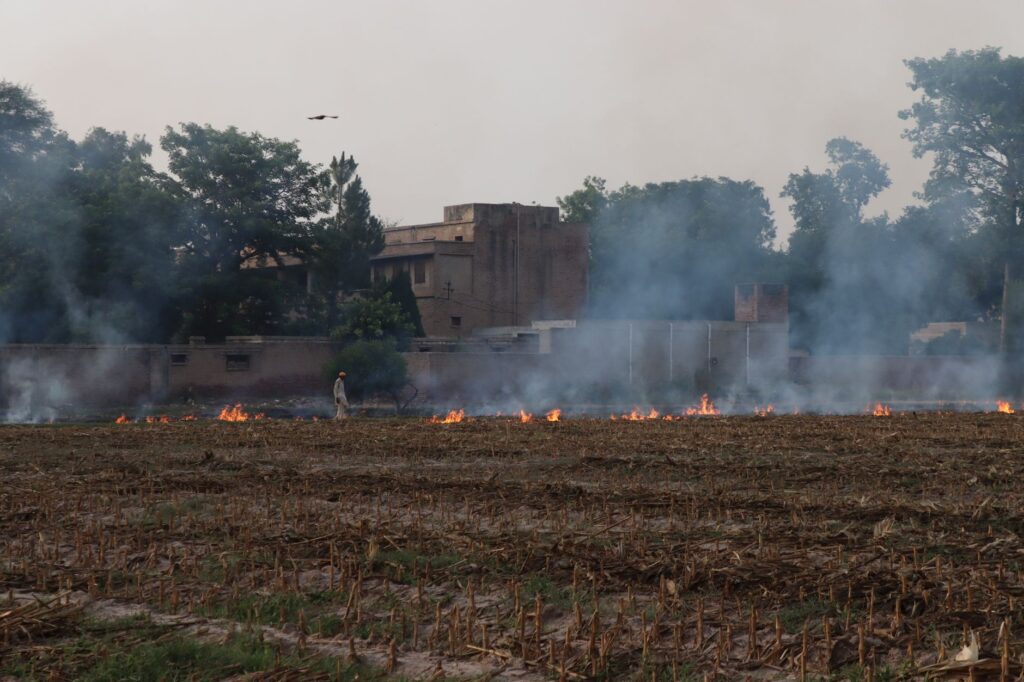

The agricultural landscape in northern India is facing renewed scrutiny as agricultural residue fires climb significantly. Recent updates from the region indicate a sharp escalation in farm fires, raising serious concerns regarding regional air quality and environmental health.
Rapid Surge in Agricultural Fires
Within a remarkably brief window of just seventy-two hours, approximately five hundred new burning events were documented across the state. This sudden spike pushed the cumulative tally to 1,612 incidents. Just days prior, at the end of October, the recorded figure stood at 1,047, demonstrating how quickly the situation can deteriorate during the post-harvest season.
District-Wise Breakdown of Incidents
Data mapping reveals that certain areas are experiencing higher frequencies of residue burning than others. Tarn Taran currently leads the state with 489 documented cases. Following closely behind are Ferozepur and Amritsar, which reported 193 and 192 incidents respectively. These figures highlight specific localized hotspots where enforcement and alternative management strategies face the greatest challenges.
Understanding the Stubble Burning Phenomenon
Agricultural residue burning typically occurs when farmers seek to quickly clear their fields of leftover straw and stubble following the harvest of paddy crops. The tight turnaround window between harvesting one crop and planting the next often leaves agricultural workers with limited time and economic options for clearing the land. Consequently, controlled or open burning remains a persistent practice despite ongoing regulatory interventions and awareness campaigns.
Implications for Regional Air Quality
The steady accumulation of smoke from these widespread fires contributes heavily to declining air quality indices across neighboring urban centers and rural areas alike. As particulate matter fills the atmosphere, health authorities consistently advise vulnerable populations to limit outdoor exposure. Environmental specialists continue to emphasize the necessity of adopting viable residue management technologies, such as straw incorporation machinery and alternative utilization methods, to mitigate the yearly recurrence of this environmental challenge.