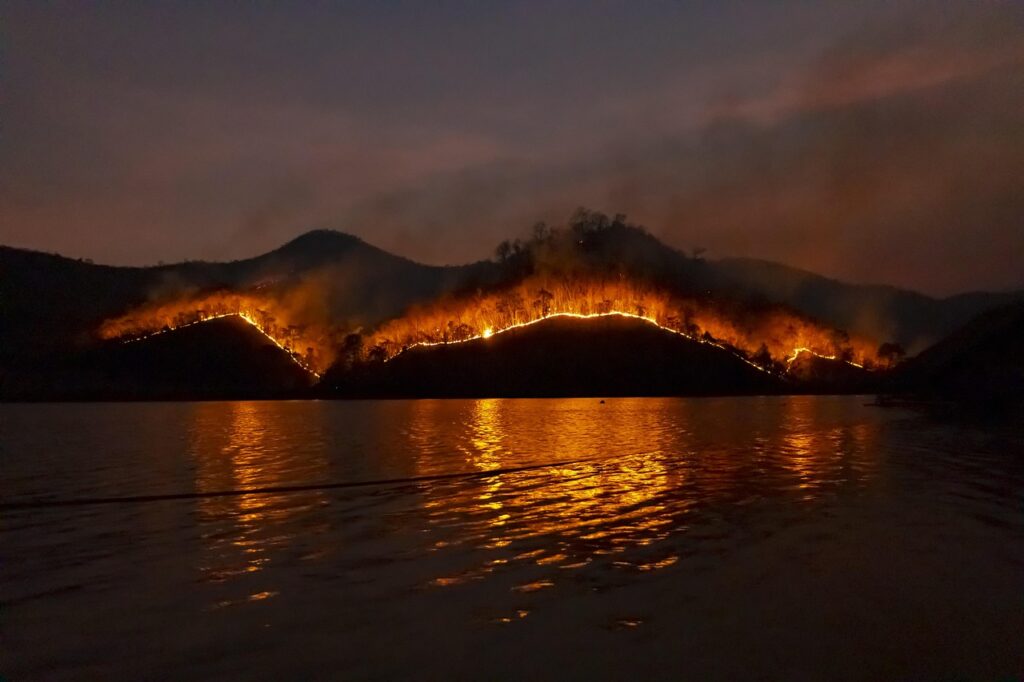

U.S. President Donald Trump announced plans this week to hold Canada financially accountable for wildfire smoke drifting across the northern border, vowing to offset the associated economic and health costs by imposing new tariffs on Canadian imports. Speaking to reporters, Trump asserted that the United States would no longer absorb the financial burden of hazardous air quality originating from Canadian forests. The proposed policy threatens to introduce a highly controversial element to bilateral trade relations between the two close allies.
The Rising Toll of Cross-Border Wildfire Smoke
In recent years, unprecedented wildfire seasons in Canada have sent massive plumes of toxic smoke southward, blanketing major American cities from Minneapolis to New York. The 2023 fire season was the most destructive on record for Canada, burning over 15 million hectares of forest and triggering hazardous air quality alerts for tens of millions of Americans.
The smoke contains high levels of fine particulate matter, known as PM2.5, which poses severe risks to human health. The U.S. Environmental Protection Agency (EPA) has repeatedly warned that exposure to these particles can exacerbate respiratory and cardiovascular conditions, leading to spikes in hospital admissions.
Beyond health concerns, the smoke has caused significant economic disruptions. Outdoor tourism, sporting events, and construction projects across the northern and eastern United States have faced repeated cancellations and delays during peak smoke events, costing businesses billions of dollars in lost revenue.
Tariffs as an Environmental Policy Tool
Trump’s proposal to link wildfire smoke to import tariffs marks a radical departure from traditional trade policy. Typically, tariffs are utilized to protect domestic industries from unfair foreign competition or to retaliate against trade agreement violations.
By framing wildfire smoke as an actionable economic liability, the administration is attempting to establish a precedent where a nation is held financially liable for transboundary environmental disasters. Critics argue that this approach ignores the natural and unpredictable nature of wildfires, which are heavily influenced by global climate patterns rather than government policy.
The Canadian government has historically cooperated with the U.S. on environmental and forest management issues. However, the prospect of being penalized for natural disasters has raised concerns in Ottawa, where officials are preparing to defend Canadian exports against potential new levies.
Legal and Economic Feasibility
Trade experts and legal scholars have expressed skepticism regarding the viability of implementing “smoke tariffs” under existing international law. The United States-Mexico-Canada Agreement (USMCA) contains strict guidelines regarding when and how member nations can impose tariffs on one another.
“Attempting to levy tariffs on Canada due to wildfire smoke would likely violate several provisions of the USMCA,” said Sarah Jenkins, a senior trade analyst at the Washington-based Global Trade Institute. “Wildfires are generally classified as force majeure or natural events, making it legally difficult to hold a sovereign government financially responsible for the resulting wind patterns.”
Economists also warn that American consumers would ultimately bear the brunt of any new tariffs on Canadian goods. Canada is the largest foreign supplier of crude oil, electricity, and softwood lumber to the United States, and added tariffs could quickly drive up prices for energy and housing.
Future Trade Relations and Climate Diplomacy
The proposed tariffs could severely strain diplomatic relations between Washington and Ottawa ahead of the scheduled 2026 review of the USMCA. Canadian officials may consider retaliatory measures on American agricultural and manufactured goods if the Trump administration moves forward with the plan.
Furthermore, this policy shift could redefine how neighboring countries negotiate environmental responsibility. If the U.S. successfully implements a mechanism to charge Canada for air pollution, it could open the door for other nations to demand compensation for transboundary pollution, such as acid rain or water contamination.
Observers will be watching closely to see if the U.S. Trade Representative drafts a formal framework to quantify the economic damage of the smoke. The upcoming months will reveal whether this proposal remains a rhetorical negotiating tactic or develops into an official policy that reshapes North American trade.