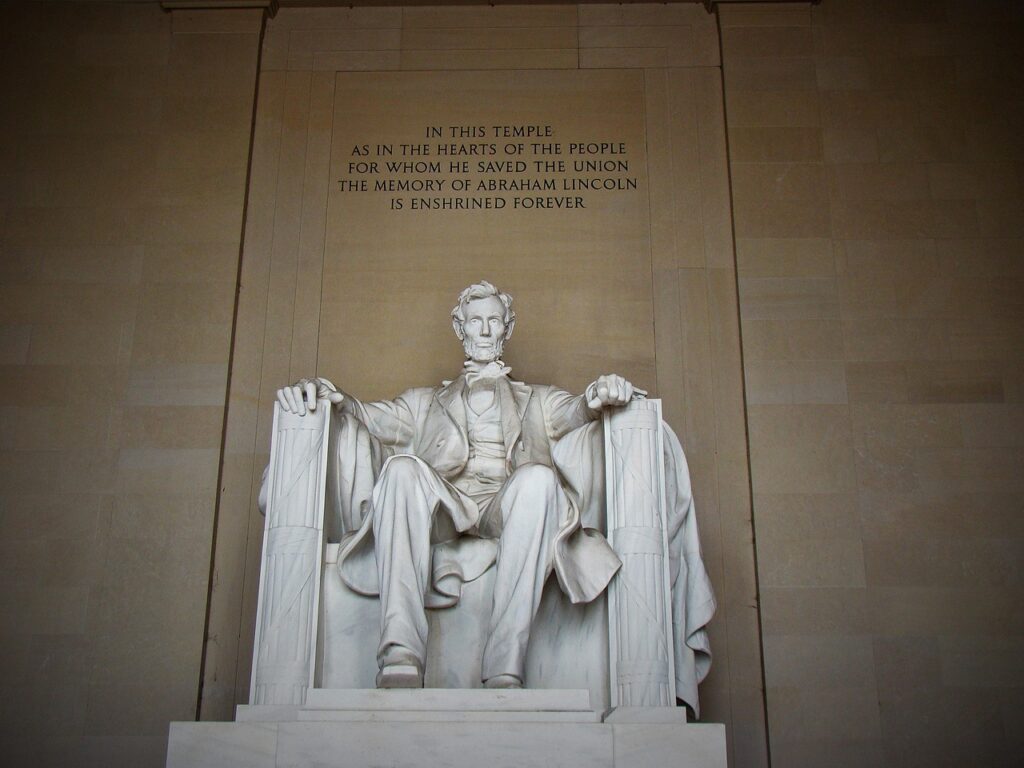

President Donald Trump has publicly criticized Jeanine Pirro, the U.S. Attorney for the District of Columbia, following her office’s decision to drop criminal charges against a former Olympian. The individual was accused of damaging the Lincoln Memorial Reflecting Pool, a landmark of significant national importance.
The rebuke highlights a rare public disagreement between the President and one of his handpicked legal officials. According to official reports, the President expressed frustration that the case did not proceed to trial, signaling a preference for a stricter approach to the protection of federal property.
The incident occurred at the National Mall, where the Reflecting Pool serves as a centerpiece for millions of annual visitors. Federal authorities initially brought charges after the former athlete allegedly caused physical damage to the site, though the specific nature of the damage was not immediately detailed in public filings.
Background on the Appointment and the Incident
Jeanine Pirro was appointed to the position of federal prosecutor for Washington, D.C., with the President’s vocal support. The role is unique because the D.C. U.S. Attorney oversees both federal and local prosecutions, making it one of the most powerful legal positions in the country.
The Lincoln Memorial Reflecting Pool, completed in 1923, is a strictly protected federal site managed by the National Park Service. Damage to such landmarks often carries significant legal weight under federal statutes designed to preserve American heritage. The decision to drop the case against the former Olympian has therefore raised questions regarding the criteria used for prosecutorial discretion.
Legal experts note that the U.S. Attorney’s Office often weighs the severity of the offense against the likelihood of a conviction. However, the President’s reaction suggests that the symbolic value of the monument should have played a larger role in the decision-making process.
Latest Developments in the Dispute
The dismissal of the charges reportedly came after a review of the evidence by Pirro’s office. Sources indicate that the prosecution determined the case did not meet the necessary threshold for a successful criminal trial at this time.
Following the announcement, President Trump took to social media and public statements to voice his disapproval. He characterized the decision as a failure to uphold law and order at a time when the administration has prioritized the security of national monuments.
The Department of Justice has not issued a formal statement regarding the specific reasons for the dismissal. However, internal reports suggest that the decision has caused a stir within the D.C. prosecutor’s office, which is already under intense public and political scrutiny.
Impact on the Legal and Political Landscape
This development may have lasting implications for the relationship between the White House and the Department of Justice. While the President has the authority to appoint U.S. Attorneys, these officials traditionally maintain a level of independence in their specific case decisions.
Public criticism of a handpicked ally like Pirro could signal a shift in how the administration intends to manage its legal appointees. It also places additional pressure on federal prosecutors to pursue maximum penalties in cases involving the vandalism of government property.
For the public and the tourism industry, the case emphasizes the ongoing efforts to protect the National Mall. The Reflecting Pool is not only a tourist attraction but also a site for major historical events, making its maintenance and security a matter of public interest.
Legal Implications for Federal Landmarks
Federal law provides strict penalties for the willful injury of government property. Under 18 U.S. Code § 1361, individuals can face fines and imprisonment if the damage exceeds certain monetary thresholds.
The dismissal of this high-profile case may lead to calls for legislative clarity or revised DOJ guidelines. Proponents of stricter enforcement argue that leniency in such cases could embolden others to disregard the rules governing national parks and monuments.
Conversely, defense advocates argue that prosecutorial discretion is essential to ensure that the legal system is not used for political messaging. They maintain that each case must be judged solely on the merits of the evidence available.
What to Watch Next
Observers are closely monitoring whether the U.S. Attorney’s Office will provide further justification for the dismissal or if the case could be reopened under new evidence. The President’s public rebuke may also lead to changes in leadership or policy within the D.C. office.
The former Olympian at the center of the case has remained largely out of the public eye since the charges were dropped. Any future legal actions or civil suits brought by the National Park Service could bring the individual back into the spotlight.
Finally, the incident serves as a precursor to how the administration might handle future conflicts with its legal appointees. The balance between executive expectations and prosecutorial independence remains a central theme in the current political climate.
Disclaimer: This article is published for general news and informational purposes only. While every effort has been made to ensure accuracy, readers are advised to verify important information from official sources. The publisher shall not be responsible for any loss or inconvenience arising from reliance on the information published.