
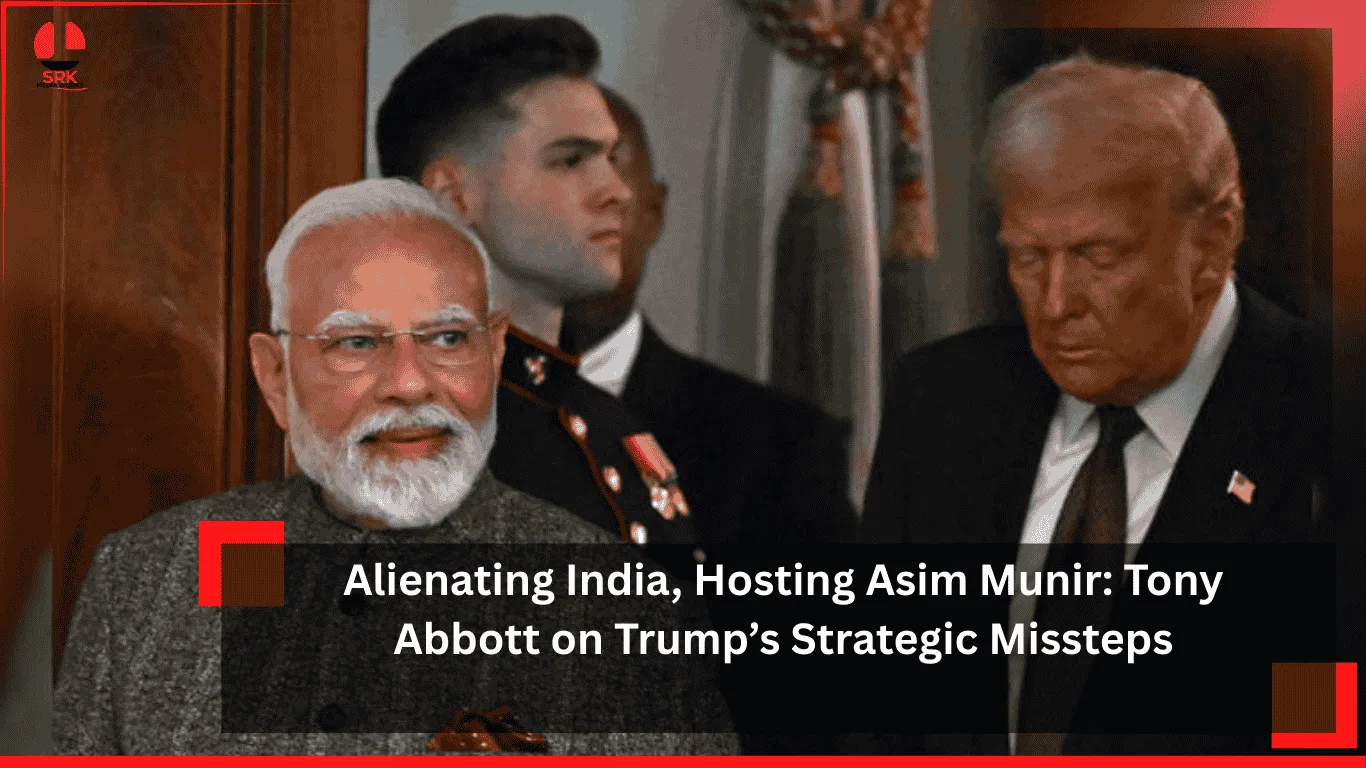
In the ever-evolving landscape of global politics, former Australian Prime Minister Tony Abbott has raised sharp concerns about what he perceives as some of Donald Trump’s most consequential foreign policy mistakes. Abbott’s remarks, particularly focusing on Trump’s strained approach toward India and his controversial hosting of Pakistan’s Army Chief General Asim Munir, have sparked intense debate among analysts, diplomats, and political observers worldwide.
This analysis explores Abbott’s perspective, the broader geopolitical implications, and the potential long-term consequences of these decisions.
🌍 India’s Central Role in Global Strategy
India has emerged as a pivotal player in the Indo-Pacific region, both economically and strategically. With its growing influence, strong democratic institutions, and expanding military capabilities, India is widely seen as a counterbalance to China’s assertive rise.
Tony Abbott emphasized that alienating India was a grave miscalculation. He argued that Trump’s inconsistent engagement with New Delhi weakened trust and undermined opportunities for deeper cooperation.
Key Points:
- India is the world’s largest democracy and a critical partner in the Quad alliance (India, US, Japan, Australia).
- Alienation risks pushing India closer to alternative alliances, including Russia and regional partnerships.
- Economic ties between India and the US have significant potential, particularly in technology, defense, and energy.
⚔️ Hosting Asim Munir: A Diplomatic Gamble
Trump’s decision to host Pakistan’s Army Chief General Asim Munir raised eyebrows across the diplomatic community. Abbott criticized this move as strategically short-sighted, given Pakistan’s complex history with terrorism, military dominance in politics, and its uneasy relationship with India.
Why It Matters:
- Pakistan’s military has historically played a dominant role in shaping the country’s foreign policy.
- Hosting Munir was seen by many as legitimizing Pakistan’s military influence at a time when democratic institutions in the country remain fragile.
- India perceived this as a direct affront, further straining US-India relations.
📊 Comparative Analysis of Trump’s Strategic Choices
| Decision | Intended Outcome | Actual Impact | Long-Term Consequence |
|---|---|---|---|
| Alienating India | Pressure India on trade and defense | Strained relations, reduced trust | Risk of India diversifying alliances |
| Hosting Asim Munir | Strengthen ties with Pakistan | Alienated India, raised global concerns | Perception of US favoring military over democracy |
| Withdrawing from global agreements | Assert US sovereignty | Reduced global leadership role | Allies seek alternative partnerships |
🔎 Abbott’s Perspective in Context
Tony Abbott’s critique is not merely about Trump’s decisions in isolation. It reflects a broader concern about how the US approaches its allies and adversaries. Abbott, known for his strong support of democratic values and strategic alliances, believes that alienating India undermines the collective effort to maintain balance in the Indo-Pacific.
He also highlighted that engaging Pakistan through its military leadership rather than civilian institutions sends the wrong signal about America’s commitment to democracy.
🌐 Geopolitical Ripple Effects
The consequences of these decisions extend beyond bilateral relations.
- Regional Security: India’s cooperation is essential in countering China’s growing influence in the South China Sea and beyond. Weakening ties jeopardizes collective security.
- Economic Partnerships: India’s booming tech sector and manufacturing potential align with US interests. Alienation risks losing economic opportunities.
- Global Perception: Hosting military leaders over elected officials raises questions about America’s stance on democratic governance.
📈 Pivot Analysis: India vs Pakistan in US Strategy
| Factor | India | Pakistan |
|---|---|---|
| Governance | Stable democracy | Military-dominated politics |
| Economy | Fast-growing, tech-driven | Struggling, reliant on aid |
| Strategic Value | Counterbalance to China | Tactical role in Afghanistan |
| US Relations | Potential long-term ally | Historically inconsistent partner |
🗣️ Expert Opinions
- Diplomatic Analysts: Many argue that Trump’s approach risked undermining decades of progress in US-India relations.
- Security Experts: Hosting Munir was seen as prioritizing short-term tactical gains over long-term strategic stability.
- Economic Observers: Alienating India could mean missing out on one of the fastest-growing consumer markets in the world.
🔮 Long-Term Implications
If Abbott’s warnings prove accurate, the US may face challenges in rebuilding trust with India. The Indo-Pacific strategy relies heavily on India’s participation, and any perception of favoritism toward Pakistan could complicate future cooperation.
Moreover, global observers note that America’s credibility as a champion of democracy is at stake when military figures are given precedence over elected leaders.
📝 Conclusion
Tony Abbott’s critique of Trump’s foreign policy decisions underscores the delicate balance required in global diplomacy. Alienating India, a democratic powerhouse, while hosting Pakistan’s military leadership, reflects choices that may have unintended consequences for America’s long-term strategic interests.
The Indo-Pacific remains a theater of immense geopolitical importance, and decisions made today will shape alliances, economic opportunities, and security frameworks for decades to come. Abbott’s warning serves as a reminder that diplomacy requires foresight, consistency, and respect for democratic values.
Disclaimer
This article is an analytical piece based on public commentary and geopolitical perspectives. It does not represent endorsement of any political figure or government. The content is intended for informational and educational purposes only, highlighting the complexities of international relations and strategic decision-making. Readers are encouraged to consult multiple sources for a comprehensive understanding.