




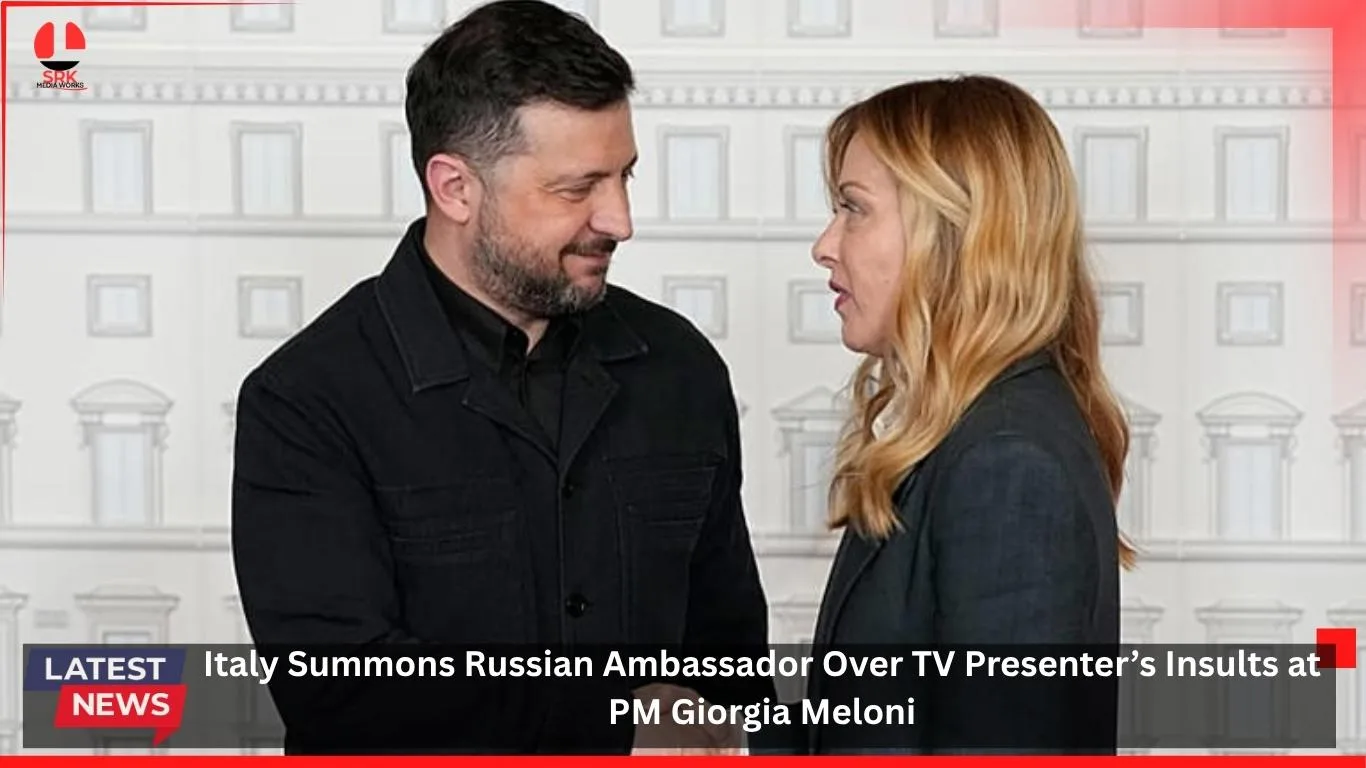
Italy has lodged a strong diplomatic protest against Russia after a television presenter made insulting remarks about Prime Minister Giorgia Meloni. The Italian government summoned the Russian ambassador in Rome to express its displeasure, calling the comments unacceptable and disrespectful to the office of the Prime Minister. The incident has sparked a fresh wave of tension between Rome and Moscow, adding to the already strained relations over the ongoing war in Ukraine.
The Incident
The controversy began when a Russian state television presenter used derogatory language while referring to Giorgia Meloni during a broadcast. Italian officials described the remarks as “offensive and inappropriate,” stressing that such behavior undermines diplomatic norms and mutual respect between nations.
Italy’s Response
Italy’s Ministry of Foreign Affairs immediately summoned the Russian ambassador to convey its protest. Officials emphasized that while political disagreements are expected, personal insults directed at a head of government cross the line of acceptable discourse.
Russia’s Position
Russian officials have yet to issue a formal apology, but sources suggest that Moscow may downplay the incident, framing it as the opinion of a media personality rather than an official government stance. However, Italy insists that the remarks, broadcast on state-controlled television, carry political weight.
Diplomatic Fallout
The incident has triggered wider diplomatic consequences:
- European Union: Expressed solidarity with Italy, condemning the remarks as disrespectful.
- NATO Allies: Supported Italy’s protest, linking the incident to Russia’s broader pattern of aggressive rhetoric.
- Russia: Maintains silence, possibly to avoid escalating the dispute further.
Strategic Implications
The episode highlights the fragile state of Italy-Russia relations, already strained by Italy’s support for Ukraine and sanctions against Moscow.
| Stakeholder | Position on Incident | Strategic Concern |
|---|---|---|
| Italy | Strong protest | Protecting dignity of leadership |
| Russia | Downplaying incident | Avoiding escalation |
| EU | Supporting Italy | Unity against Russian aggression |
| NATO | Backing Italy | Reinforcing alliance solidarity |
| Global Observers | Concerned | Diplomatic norms under strain |
Historical Context
Italy and Russia have had a complex relationship, balancing economic ties with political disagreements. The Ukraine war has tilted Italy firmly toward the Western bloc, leading to repeated clashes with Moscow.
| Year | Event | Impact |
|---|---|---|
| 2014 | Crimea annexation | Italy supported EU sanctions |
| 2022 | Ukraine invasion | Italy increased support for NATO |
| 2026 | TV insult incident | Diplomatic protest escalates tensions |
Public Opinion in Italy
Italian citizens have reacted strongly to the incident, with many viewing the insults as an attack on national dignity. Supporters of Meloni rallied behind her, while critics argued that the government should focus on substantive policy rather than symbolic disputes.
Possible Scenarios Ahead
- Russia Issues Apology: Could ease tensions, though unlikely given current relations.
- Continued Silence: Moscow ignores the protest, leaving relations further strained.
- Escalation: Italy pushes for EU-wide condemnation, increasing diplomatic pressure on Russia.
- Normalization: Both sides move past the incident, focusing on broader geopolitical issues.
Expert Opinions
Diplomatic experts argue that the incident reflects Russia’s use of media as a political tool. Analysts note that Italy’s strong response is aimed at reinforcing its position within the EU and NATO, while also signaling to domestic audiences that national dignity will be defended.
Conclusion
Italy’s decision to summon the Russian ambassador over insulting remarks directed at Prime Minister Giorgia Meloni underscores the seriousness with which Rome views diplomatic respect. The incident adds another layer of tension to Italy-Russia relations, already strained by the Ukraine conflict. Whether Moscow chooses to apologize or ignore the protest will shape the next phase of this diplomatic confrontation.
Disclaimer
This article is a journalistic analysis based on current diplomatic developments and public statements. It does not endorse or oppose any political leader or government. Readers are encouraged to follow official updates and consider multiple perspectives for a comprehensive understanding of the situation.