









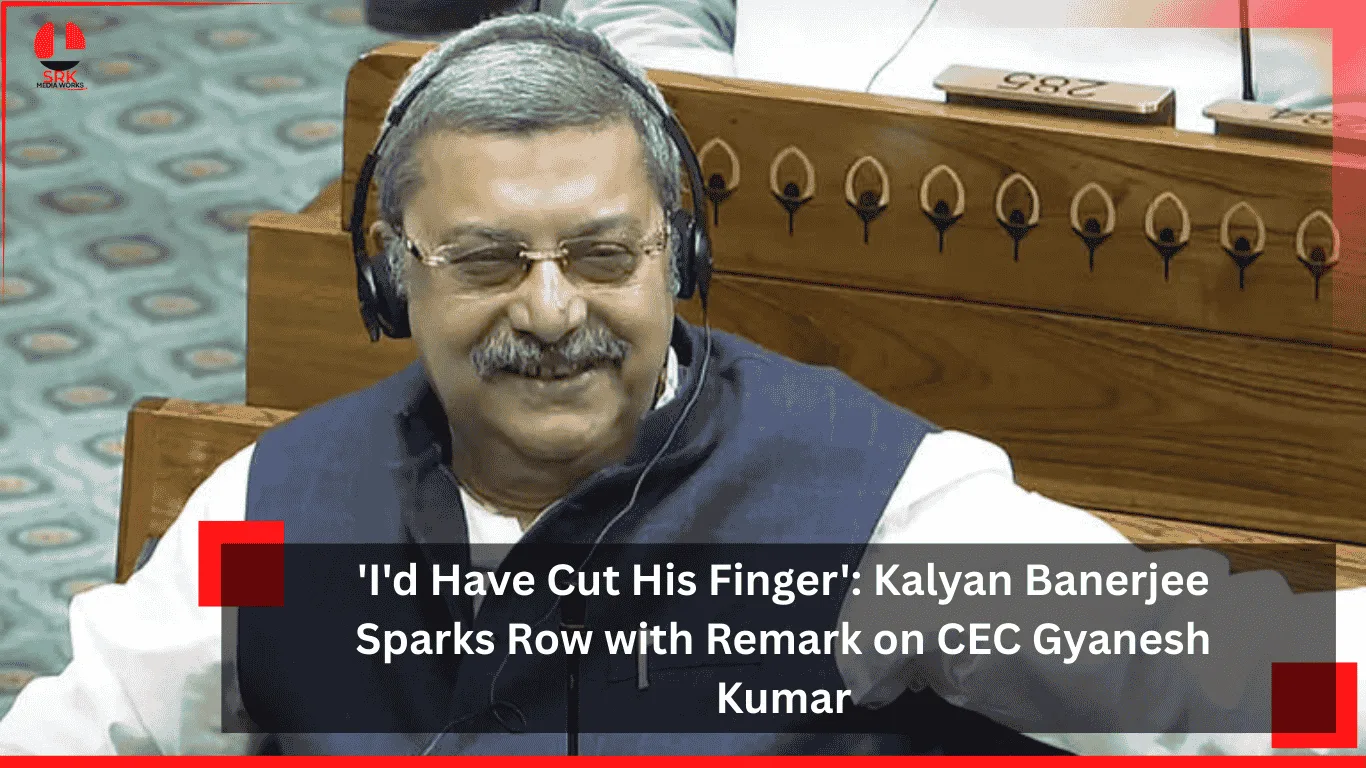
A major political controversy erupted after Trinamool Congress (TMC) leader Kalyan Banerjee made a provocative remark about Chief Election Commissioner (CEC) Gyanesh Kumar, saying, “I’d have cut his finger.” The statement has triggered widespread criticism across political circles, raising questions about political discourse, respect for constitutional authorities, and the boundaries of free speech in India’s democratic framework.
Background of the Controversy
Kalyan Banerjee, a senior TMC Member of Parliament, made the remark during a public address, reportedly in response to decisions taken by the Election Commission under Gyanesh Kumar’s leadership. The comment was seen as an attack on the impartiality of the Election Commission, an institution tasked with safeguarding free and fair elections in India.
The remark quickly went viral, sparking outrage among rival parties and drawing sharp reactions from civil society groups.
Role of the Election Commission
The Election Commission of India (ECI) is a constitutional body responsible for conducting elections to Parliament, state legislatures, and the offices of President and Vice President. Its credibility depends on impartiality and independence.
Key Functions of the ECI
- Conducting free and fair elections.
- Monitoring political parties and candidates.
- Enforcing the Model Code of Conduct.
- Regulating campaign finance and expenditure.
- Ensuring voter rights and transparency.
Comparative Analysis of Political Reactions
| Political Party | Reaction to Banerjee’s Remark | Position on ECI |
|---|---|---|
| BJP | Strong condemnation, demanded apology | Defends ECI’s impartiality |
| Congress | Criticized remark but questioned ECI’s credibility | Calls for reforms |
| TMC | Defended Banerjee as speaking in frustration | Accuses ECI of bias |
| Civil Society | Condemned violent language | Advocates respect for institutions |
This table highlights the polarized responses across political and social groups.
Why the Remark Sparked Outrage
- Attack on Constitutional Authority: The CEC is a constitutional office-holder, and such remarks undermine institutional respect.
- Violent Language: The imagery of cutting a finger was widely condemned as inappropriate in political discourse.
- Election Sensitivity: With elections approaching, any attack on the ECI is seen as politically charged.
- Public Perception: Citizens expect leaders to uphold democratic values, not resort to provocative statements.
Historical Context of Political Remarks Against ECI
| Year | Leader | Remark | Outcome |
|---|---|---|---|
| 2014 | Opposition leaders | Accused ECI of bias | Sparked debates on reforms |
| 2019 | Regional leaders | Criticized ECI decisions | Led to parliamentary discussions |
| 2024 | Multiple parties | Questioned ECI neutrality | Calls for transparency |
| 2026 | Kalyan Banerjee | “I’d have cut his finger” | Major controversy |
This timeline shows that criticism of the ECI is not new, but Banerjee’s remark stands out for its violent undertone.
Expert Opinions
- Political Analysts: Warn that such remarks erode public trust in democratic institutions.
- Constitutional Experts: Stress that criticism of institutions should be constructive, not violent.
- Civil Society Leaders: Call for greater accountability in political speech.
Broader Implications
- Democratic Values: The controversy raises concerns about declining respect for constitutional bodies.
- Political Polarization: Remarks like these deepen divides between ruling and opposition parties.
- Public Confidence: Citizens may lose faith in the impartiality of elections.
- Media Discourse: The incident has fueled debates on responsible political communication.
Balanced Perspectives
While critics condemned Banerjee’s remark, supporters argued that his frustration stemmed from perceived bias in the Election Commission’s decisions. The controversy reflects the broader tension between political parties and constitutional institutions in India.
Conclusion
Kalyan Banerjee’s remark about CEC Gyanesh Kumar has sparked a nationwide debate on political discourse, respect for institutions, and the boundaries of free speech. While criticism of constitutional bodies is part of democratic debate, violent language undermines the credibility of both the speaker and the institution being criticized.
The incident highlights the urgent need for political leaders to exercise restraint, uphold democratic values, and engage in constructive dialogue rather than resorting to provocative statements.
Disclaimer
This article is based on publicly available information and expert analysis. The details of the controversy are subject to ongoing political developments. Readers are advised to treat the content as informational and not as definitive political guidance.