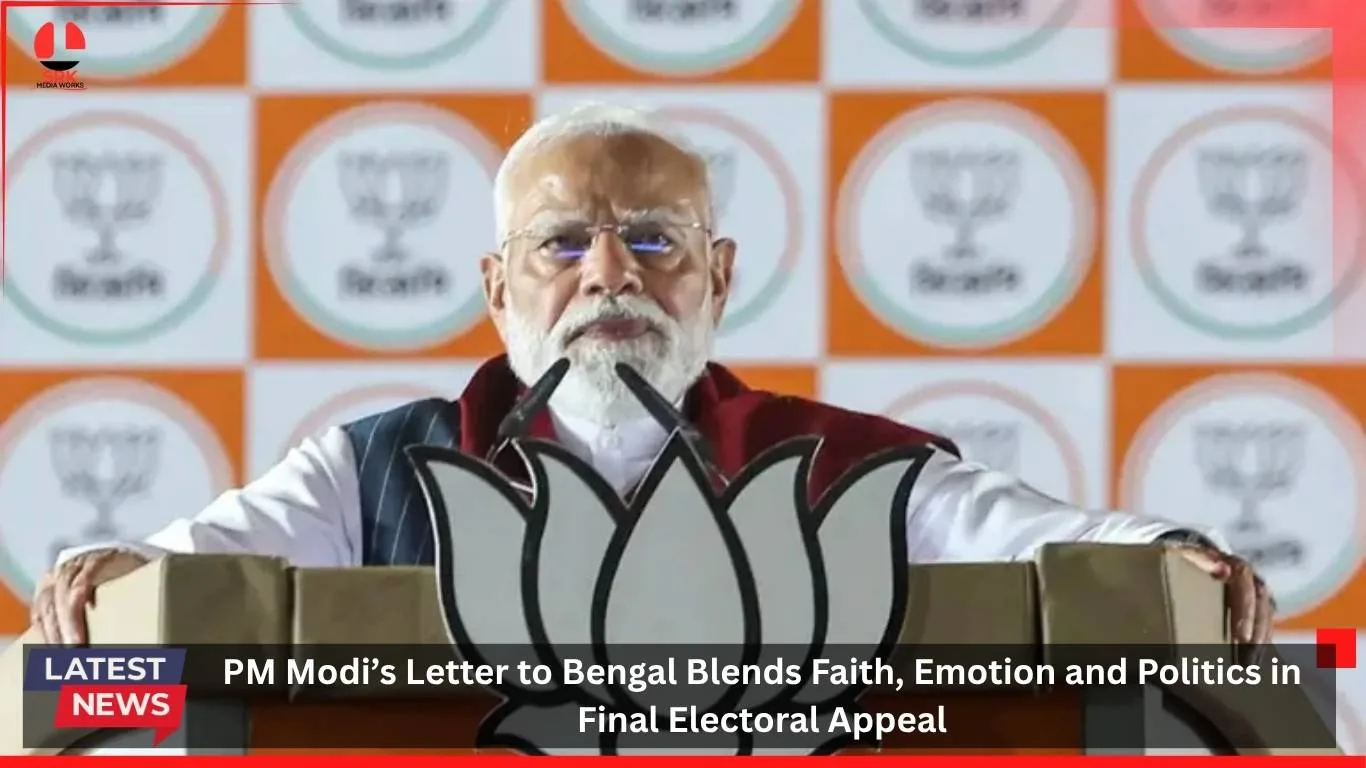

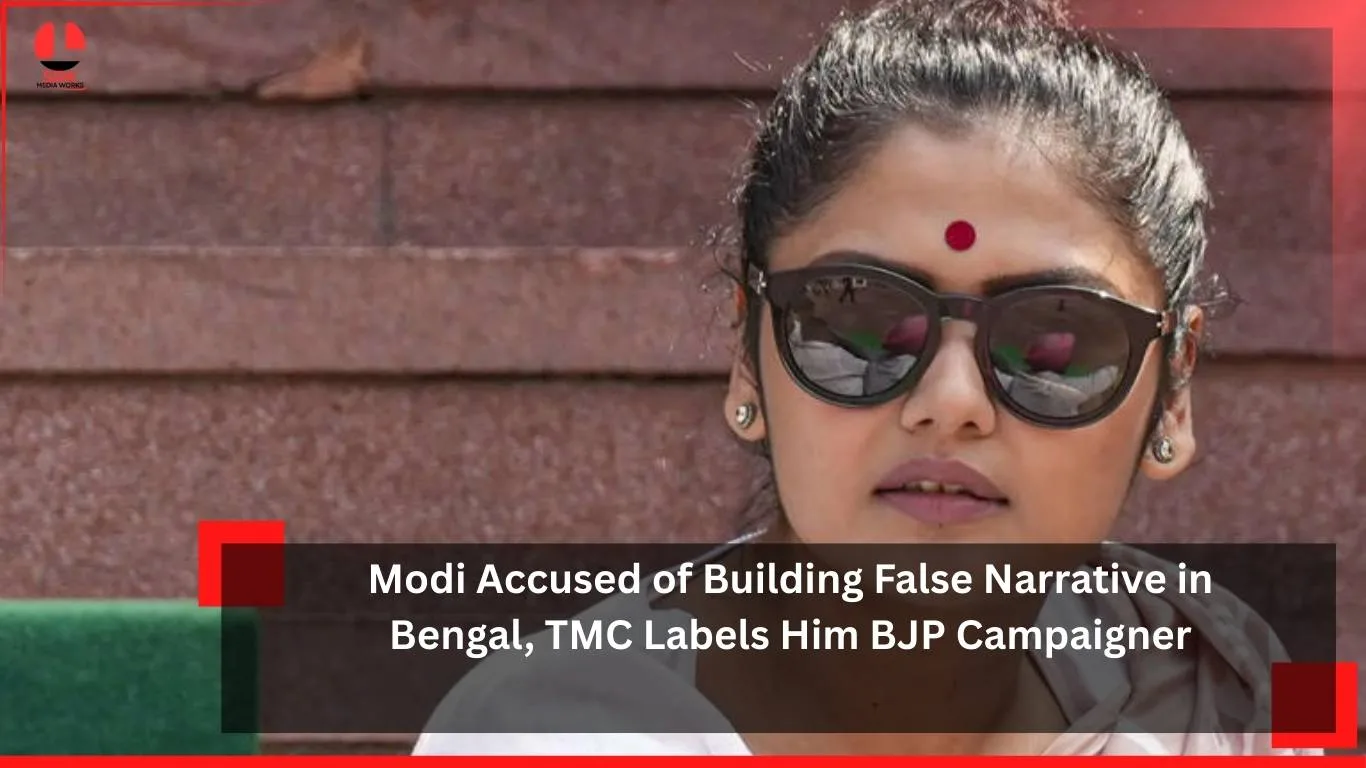
The political landscape in West Bengal has once again become the center of national attention as the Trinamool Congress (TMC) has accused Prime Minister Narendra Modi of deliberately constructing a false narrative about the state. According to TMC leaders, Modi’s recent remarks and campaign strategies are not reflective of Bengal’s ground realities but are instead designed to serve as propaganda tools for the Bharatiya Janata Party (BJP).
This accusation comes at a time when Bengal is witnessing intense political activity, with both the ruling TMC and the opposition BJP vying for dominance. The TMC has strongly criticized Modi’s speeches, alleging that he is acting less like a Prime Minister and more like a BJP campaigner.
TMC’s Allegations Against Modi
The TMC leadership has repeatedly emphasized that Modi’s portrayal of Bengal is misleading. They argue that his speeches exaggerate issues such as law and order, corruption, and governance failures, while ignoring the state’s achievements in social welfare, infrastructure, and cultural preservation.
- Narrative Building: TMC claims Modi is attempting to paint Bengal as a state in crisis to justify BJP’s aggressive campaign.
- Campaigner Role: Instead of addressing national concerns, Modi is accused of focusing disproportionately on Bengal, aligning himself with BJP’s electoral agenda.
- Selective Highlighting: According to TMC, Modi highlights isolated incidents while ignoring broader developmental progress.
BJP’s Counter-Position
The BJP, on the other hand, has defended Modi’s remarks, stating that the Prime Minister is highlighting genuine concerns of Bengal’s citizens. BJP leaders argue that issues such as political violence, corruption, and lack of transparency are real and need urgent attention.
They maintain that Modi’s speeches resonate with the people of Bengal who feel neglected under TMC’s governance.
Historical Context of Bengal Politics
West Bengal has historically been a politically vibrant state. From decades of Left Front rule to TMC’s rise under Mamata Banerjee, the state has seen dramatic shifts in political power. The BJP’s emergence as a strong contender in recent years has added a new dimension to Bengal’s political narrative.
- Left Front Era: Dominated Bengal politics for over three decades.
- TMC’s Rise: Mamata Banerjee ended Left dominance in 2011, positioning herself as Bengal’s strong leader.
- BJP’s Entry: Initially weak in Bengal, BJP has steadily gained ground, especially in the 2019 Lok Sabha elections.
Comparative Analysis of Political Narratives
| Aspect | TMC’s View on Modi’s Narrative | BJP’s Defense of Modi’s Narrative |
|---|---|---|
| Law & Order | Exaggerated portrayal | Genuine concern for citizens |
| Development | Ignored achievements | Highlighting gaps in governance |
| Role of PM | Acting as BJP campaigner | Addressing national issues locally |
| Cultural Identity | Misrepresentation of Bengal | Protecting traditions and values |
Electoral Impact
The accusations and counter-accusations are not just rhetorical; they have significant electoral implications. Bengal’s voters are highly sensitive to issues of identity, governance, and cultural pride. Modi’s narrative, if accepted, could strengthen BJP’s position, while TMC’s counter-narrative aims to preserve its dominance.
- Urban Voters: More receptive to BJP’s narrative of corruption and governance failure.
- Rural Voters: Often align with TMC’s welfare schemes and grassroots outreach.
- Youth: Divided between aspirations for national integration and regional pride.
Pivot Analysis of Political Strategies
| Strategy Focus | TMC Approach | BJP Approach |
|---|---|---|
| Welfare Schemes | Highlighting social programs like health, education, and women empowerment | Criticizing inefficiency and corruption in scheme implementation |
| Campaign Style | Emphasizing Bengal’s cultural pride and regional autonomy | Nationalistic appeal with focus on Modi’s leadership |
| Narrative Building | Countering Modi’s speeches as false propaganda | Projecting Bengal as a state needing urgent reform |
Media and Public Perception
Media coverage has amplified the clash of narratives. National media often highlights Modi’s speeches, while regional outlets give more space to TMC’s rebuttals. Public perception remains divided, with urban middle-class voters leaning towards BJP’s narrative and rural communities showing stronger support for TMC.
The Road Ahead
As Bengal heads deeper into election season, the battle of narratives will intensify. Modi’s role as a campaigner for BJP and TMC’s accusations of falsehoods will continue to dominate headlines. The outcome will depend on which narrative resonates more strongly with Bengal’s diverse electorate.
Conclusion
The accusation by TMC that Modi is building a false narrative about Bengal and acting as a BJP campaigner underscores the deep polarization in the state’s politics. While BJP seeks to expand its influence by projecting Bengal as a state in crisis, TMC is determined to defend its governance record and cultural identity.
The clash of narratives is not just about Bengal—it reflects the broader struggle between regional autonomy and national integration, between welfare-driven politics and reform-oriented campaigns.
Disclaimer
This article is a political analysis based on publicly available information and statements made by political parties. It does not represent endorsement of any political figure or party. Readers are encouraged to verify facts independently and consider multiple perspectives before forming opinions.