










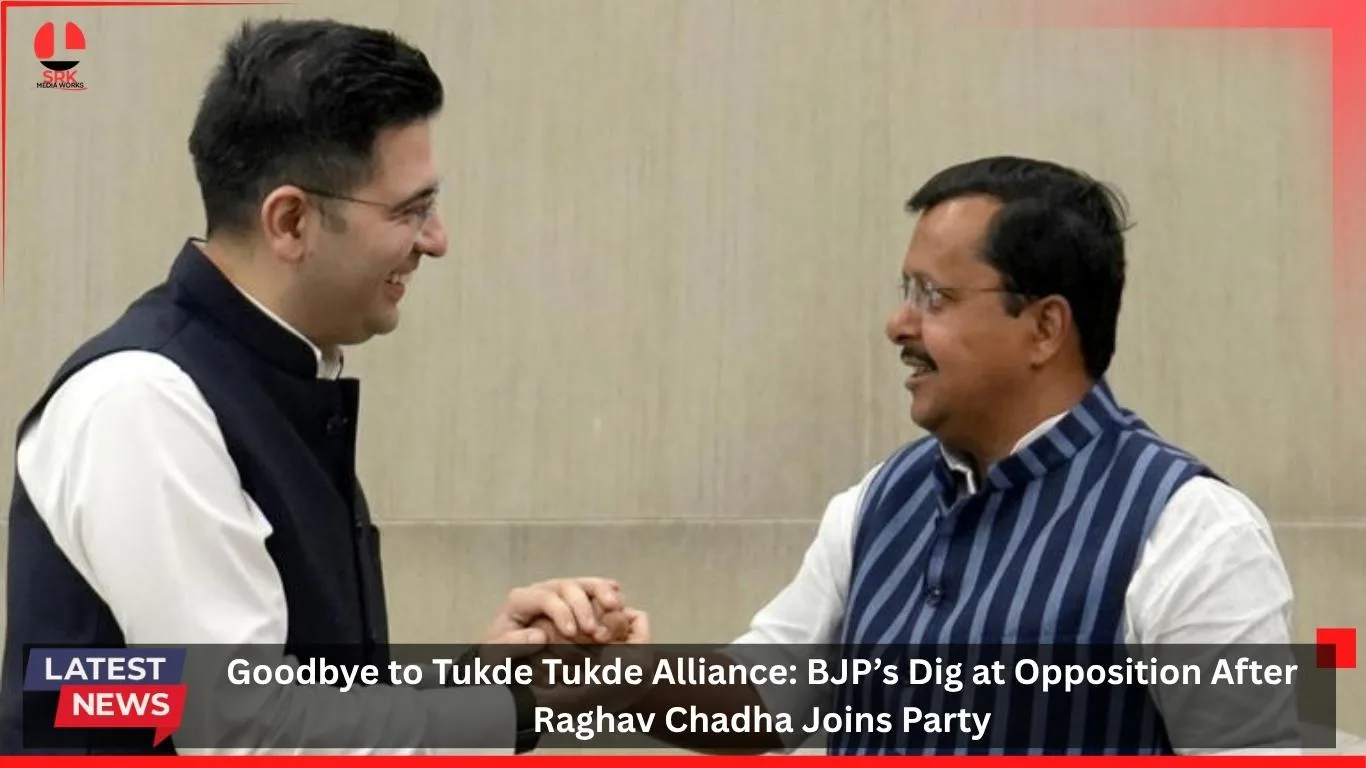
The political landscape in India witnessed a dramatic shift as Raghav Chadha, once a prominent face of the opposition, formally joined the Bharatiya Janata Party (BJP). The ruling party wasted no time in taking a sharp dig at the opposition, declaring “Goodbye to Tukde Tukde alliance,” a phrase often used by BJP leaders to criticize fragmented opposition coalitions.
Key Highlights
- Event: Raghav Chadha joins BJP.
- BJP’s Statement: “Goodbye to Tukde Tukde alliance.”
- Impact: Opposition unity faces fresh challenges.
- Symbolism: BJP projects Chadha’s move as a blow to opposition credibility.
Why Chadha’s Move Matters
Raghav Chadha’s decision to switch sides is significant for several reasons:
- Youth Appeal: Chadha was seen as a young, articulate leader in the opposition.
- Symbolic Defection: His move is projected by BJP as proof of opposition disarray.
- Strategic Timing: Comes ahead of crucial state elections and national debates.
Political Snapshot
| Category | Details |
|---|---|
| Leader Involved | Raghav Chadha |
| New Party | BJP |
| Opposition Impact | Weakening of coalition unity |
| BJP Narrative | “Goodbye to Tukde Tukde alliance” |
| Timing | Pre-election season |
BJP’s Narrative
The BJP has consistently used the phrase “Tukde Tukde alliance” to portray opposition parties as fragmented and ideologically inconsistent. Chadha’s entry into BJP gave the ruling party fresh ammunition to reinforce this narrative.
- Message to Voters: Opposition lacks stability and vision.
- Projection of Strength: BJP as the only cohesive national force.
- Symbolic Victory: Winning over a young opposition leader boosts BJP’s image.
Opposition’s Challenge
The opposition faces renewed difficulties in presenting a united front:
- Credibility Crisis: Defections weaken public trust in opposition unity.
- Strategic Setback: Loss of articulate leaders reduces effectiveness in debates.
- Electoral Impact: BJP gains momentum ahead of polls.
Opposition Status Overview
| Factor | Current Situation |
|---|---|
| Unity | Fragile, facing defections |
| Public Perception | Weak against BJP narrative |
| Electoral Strategy | Needs recalibration |
| Youth Leadership | Diminished after Chadha’s exit |
Public Sentiment
Reactions to Chadha’s move have been mixed:
- BJP Supporters: Celebrate it as proof of opposition collapse.
- Opposition Voters: Express disappointment and frustration.
- Neutral Observers: See it as part of India’s larger trend of political realignment.
Historical Context
Defections have long shaped Indian politics. From the 1960s onwards, leaders switching parties have often altered electoral outcomes. Chadha’s move fits into this tradition but carries added weight due to his youth and prominence.
Comparative Snapshot of Defections
| Year | Leader | From Party | To Party | Impact |
|---|---|---|---|---|
| 1967 | Gaya Lal | Congress | Janata | Popularized “Aya Ram, Gaya Ram” phrase |
| 1999 | Mamata Banerjee | Congress | TMC | Regional dominance |
| 2026 | Raghav Chadha | Opposition | BJP | Strengthened BJP narrative |
Conclusion
The BJP’s declaration of “Goodbye to Tukde Tukde alliance” after Raghav Chadha’s entry into the party underscores the ruling party’s strategy of projecting opposition weakness and reinforcing its own narrative of unity. While Chadha’s move may not immediately alter electoral math, it symbolizes the challenges opposition coalitions face in maintaining credibility and cohesion.
Disclaimer
This article is a political news analysis created for informational purposes only. It reflects reported developments and interpretations of Raghav Chadha’s move to BJP and the party’s narrative. Official statements, electoral outcomes, and political strategies are subject to confirmation by respective parties and authorities.


