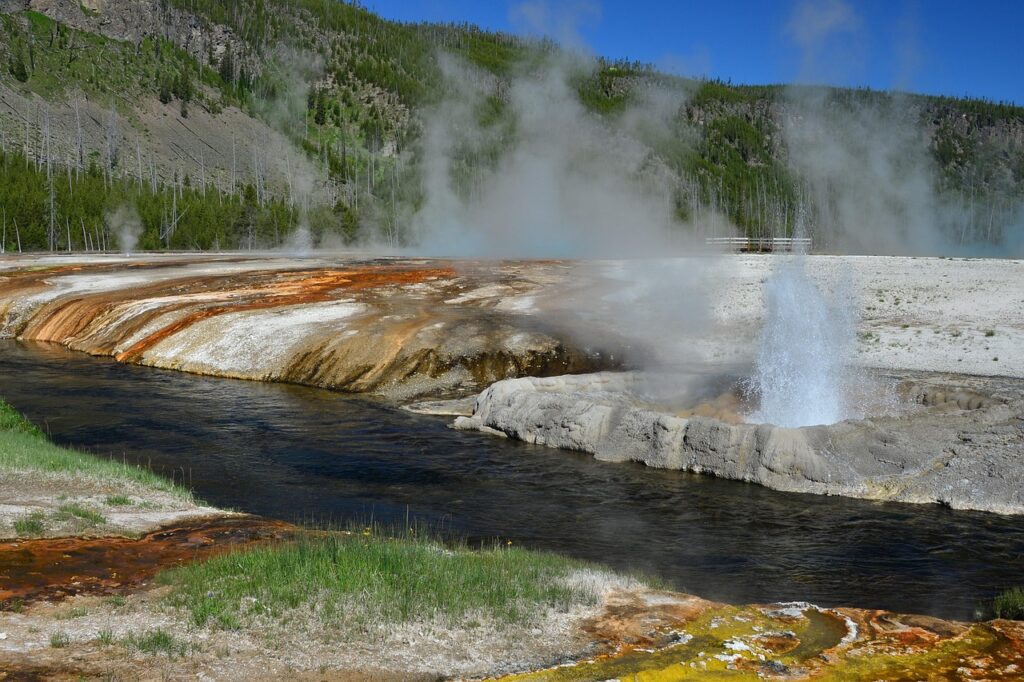

Geologists from Arizona State University and the University of Illinois have identified the specific geological mechanisms that triggered the Lava Creek Tuff eruption at Yellowstone National Park 640,000 years ago. By analyzing chemical signatures within ancient crystals, researchers discovered that a massive influx of fresh, hot magma into the shallow crustal reservoir destabilized the system, ultimately leading to one of the largest volcanic events in Earth’s history.
The Geological Context of Yellowstone
Yellowstone National Park sits atop one of the world’s largest supervolcanoes, a system defined by its massive caldera and complex network of subterranean magma chambers. The 640,000-year-old event, known as the Lava Creek Tuff eruption, ejected approximately 1,000 cubic kilometers of debris, covering vast swathes of North America in volcanic ash and permanently altering the local landscape.
For decades, volcanologists have struggled to pinpoint exactly what caused the system to transition from a dormant state to a catastrophic explosion. Previous theories suggested gradual pressure buildup, but new high-resolution analysis of mineral zoning within volcanic crystals provides a more dynamic explanation.
New Evidence from Crystal Analysis
The research team utilized advanced mass spectrometry to examine the growth rings of quartz crystals found in the volcanic ash. These crystals act as geological time capsules, recording changes in temperature and chemical composition within the magma chamber prior to the eruption.
The data revealed that the final stages leading to the eruption occurred in a remarkably short timeframe—likely just decades or even years. This suggests that the supervolcano was not simmering in a state of near-eruption for millennia, but rather experienced a sudden, violent injection of new, volatile-rich magma from deep within the Earth’s mantle. This rapid recharge process disrupted the existing stable magma, causing a chain reaction of pressure release and fragmentation.
Expert Perspectives and Implications
“This research shifts our understanding of how these systems prepare for eruption,” says Dr. Hannah B, a lead investigator on the project. “It proves that the trigger is often a physical injection of new material rather than a slow, internal chemical evolution.”
Data points from the study indicate that the temperature fluctuations recorded in the crystals correlate with increased seismic activity and ground deformation patterns seen in modern, smaller-scale volcanic systems. By identifying these chemical markers, scientists can better interpret the “early warning” signs of volcanic unrest in active systems around the globe.
Future Monitoring and Industry Impact
For the scientific community, these findings provide a blueprint for monitoring active supervolcanoes with greater precision. The ability to distinguish between harmless magma cooling and the dangerous influx of new, deep-source material is critical for hazard mitigation and public safety protocols.
Looking ahead, researchers are applying these crystal-dating techniques to other volcanic provinces, such as the Taupō Volcanic Zone in New Zealand and the Campi Flegrei in Italy. As technology continues to improve, the focus will shift toward real-time seismic and gas-emission tracking that mirrors the chemical signatures identified in this study to better predict the timing and intensity of future volcanic episodes.