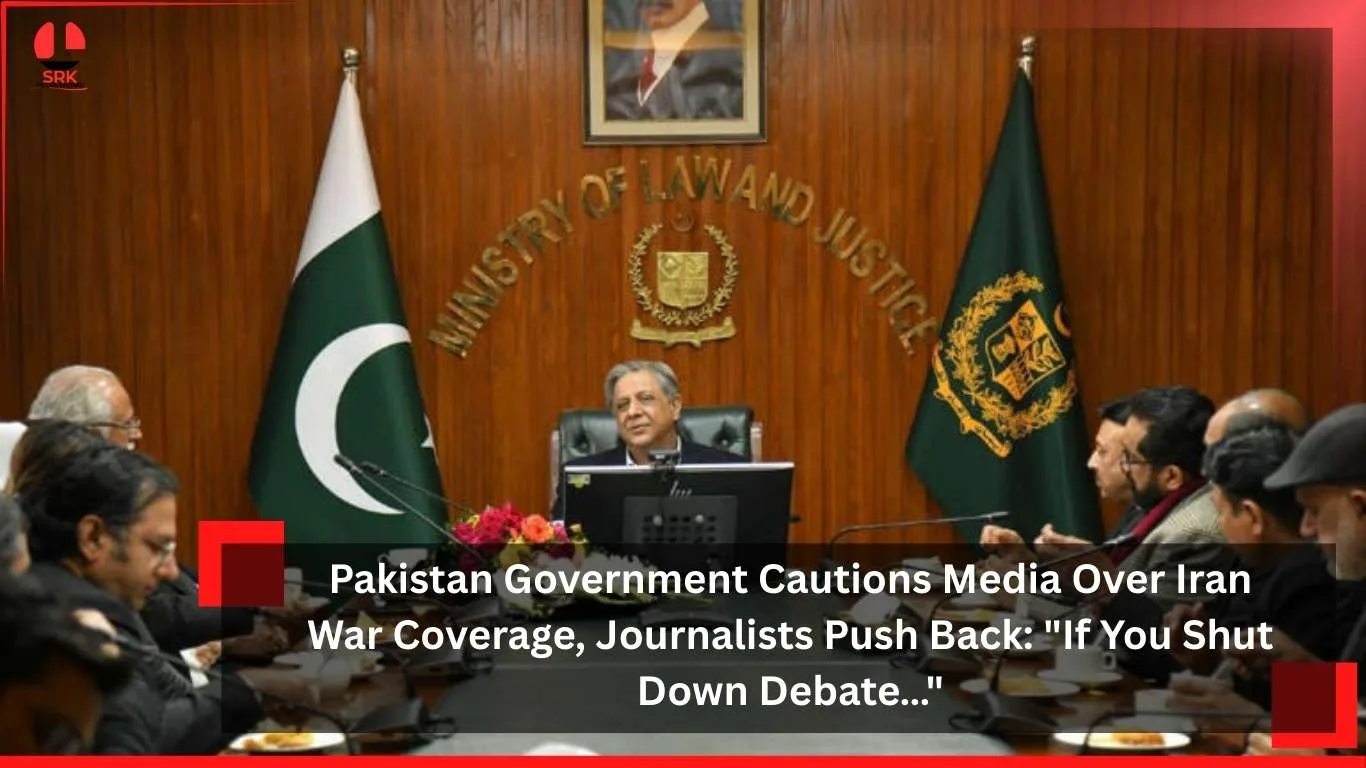
The Pakistan government has issued a cautionary directive to media outlets regarding their coverage of the escalating Iran war situation. Officials have urged broadcasters and publishers to exercise restraint, avoid sensationalism, and ensure national interests are not compromised in reporting. However, the move has sparked strong reactions from journalists and press associations, who argue that restricting debate undermines democratic values and the public’s right to information.
Government’s Directive
The Ministry of Information and Broadcasting emphasized that media coverage should remain balanced and avoid narratives that could inflame tensions or misrepresent Pakistan’s stance.
- National Security Concerns: Authorities fear that unchecked reporting could harm diplomatic relations.
- Media Guidelines: Outlets are advised to avoid speculative commentary and unverified claims.
- Focus on Neutrality: The government insists Pakistan must maintain a neutral position in the Iran conflict.
Media’s Response
Journalists and press associations have strongly criticized the directive, framing it as an attempt to stifle free speech.
- Freedom of Expression: Media representatives argue that open debate is essential in a democracy.
- Public’s Right to Know: Restricting coverage denies citizens access to diverse perspectives.
- Pushback Statement: “If you shut down debate, you shut down democracy,” one leading journalist remarked.
Comparative Analysis of Positions
| Aspect | Government’s Position | Media’s Position |
|---|---|---|
| Coverage of Iran War | Must be cautious, avoid sensationalism | Should be open, critical, and diverse |
| National Security | Protect diplomatic interests | Transparency strengthens democracy |
| Freedom of Expression | Secondary to stability | Fundamental right of citizens |
| Role of Media | Inform responsibly | Question authority, foster debate |
Historical Context of Media-Government Relations in Pakistan
Pakistan has a complex history of media regulation and government oversight.
- Military Regimes: Periods of strict censorship and control.
- Democratic Transitions: Greater freedom but recurring tensions.
- Digital Era: Social media amplifies voices, making regulation harder.
Pivot Analysis of Strategic Approaches
| Strategy Focus | Government Approach | Media Approach |
|---|---|---|
| National Security | Restrict coverage to avoid diplomatic fallout | Highlight risks of secrecy and lack of transparency |
| Public Engagement | Controlled narratives | Encourage debate and diverse viewpoints |
| International Relations | Maintain neutrality | Expose geopolitical realities |
| Domestic Politics | Preserve stability | Hold leaders accountable |
Regional and Global Implications
The Iran war coverage is not just a domestic issue—it has regional and global consequences.
- Regional Stability: Pakistan’s stance could influence relations with Iran, Saudi Arabia, and other neighbors.
- Global Perception: International observers watch closely to assess Pakistan’s commitment to press freedom.
- Diplomatic Balance: Pakistan must balance neutrality with transparency to maintain credibility.
Economic and Social Dimensions
Media restrictions also have economic and social implications.
- Advertising Revenue: Sensational coverage often drives viewership, restrictions may reduce income.
- Public Trust: Citizens may lose faith in media if they perceive censorship.
- Social Media Impact: Online platforms may bypass restrictions, creating parallel narratives.
Public Reaction
The directive has sparked debate among citizens, activists, and academics.
- Supporters of Government: Argue that national security must come first.
- Critics: Warn that censorship erodes democracy and accountability.
- Neutral Voices: Call for balanced reporting without silencing dissent.
Conclusion
The clash between Pakistan’s government and media over Iran war coverage highlights the delicate balance between national security and freedom of expression. While authorities stress the need for caution, journalists insist that open debate is the lifeblood of democracy. The outcome of this confrontation will shape not only Pakistan’s media landscape but also its global reputation as a democratic state.
Disclaimer
This article is based on publicly available information and commentary from political and media stakeholders. It does not endorse any position or confirm the accuracy of claims. Readers are encouraged to follow official statements and independent reporting for verified updates.