




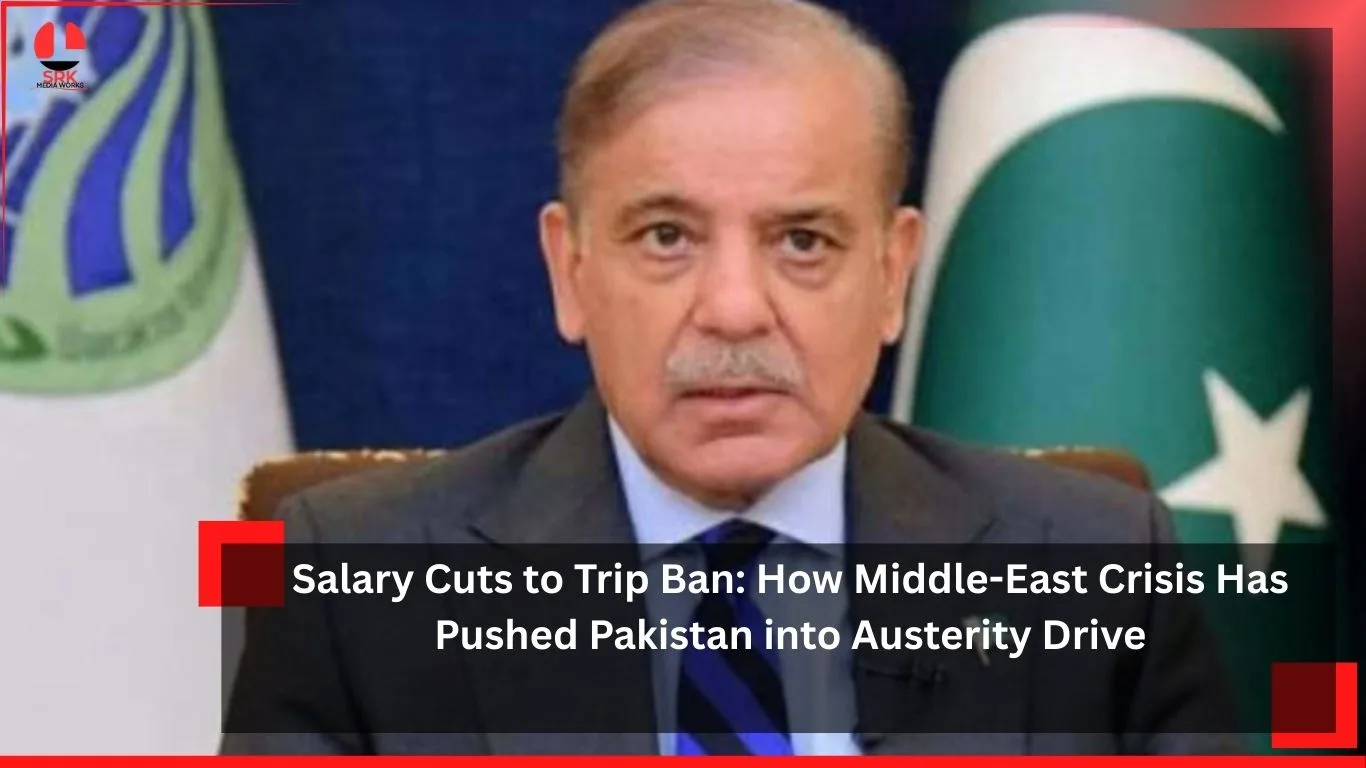
Pakistan is facing one of its toughest economic challenges in recent years, as the ongoing Middle-East crisis has forced the country into a sweeping austerity drive. From salary cuts for government employees to restrictions on official foreign trips, Islamabad is tightening its belt to cope with dwindling remittances, rising energy costs, and declining foreign reserves.
The Middle-East Crisis and Its Ripple Effect
The Middle-East has long been a lifeline for Pakistan’s economy, especially through remittances sent by millions of Pakistani workers employed in Gulf countries. The recent crisis, marked by geopolitical tensions, reduced oil production, and stricter labor policies, has directly impacted Pakistan’s inflow of foreign currency.
- Remittances Decline: A sharp drop in remittances has reduced Pakistan’s ability to stabilize its currency.
- Energy Prices Surge: Rising oil prices have increased Pakistan’s import bill, worsening inflation.
- Employment Challenges: Many Pakistani workers in the Gulf face job insecurity, reducing household incomes back home.
Government’s Austerity Measures
To counter the economic strain, Pakistan has rolled out a series of austerity measures:
- Salary Cuts: Government employees, especially in higher grades, are facing pay reductions.
- Trip Ban: Official foreign trips have been banned unless deemed absolutely essential.
- Fuel Restrictions: Ministries and departments have been instructed to reduce fuel consumption.
- Luxury Imports Ban: Non-essential imports, including luxury goods, have been restricted.
- Energy Conservation: Offices are required to cut electricity usage, with strict monitoring.
Political and Social Reactions
The austerity drive has triggered mixed reactions across society:
| Stakeholder Group | Reaction Type | Key Observations |
|---|---|---|
| Government Employees | Opposition | Salary cuts seen as unfair burden |
| Business Community | Concern | Fear of reduced consumer spending |
| General Public | Frustration | Rising inflation and reduced opportunities |
| Political Opposition | Criticism | Accuses government of mismanagement |
This shows that while austerity is seen as necessary, its social acceptance remains limited.
Comparative Analysis with Past Austerity Drives
Pakistan has implemented austerity measures before, but the current drive is more comprehensive due to external shocks from the Middle-East crisis.
| Year | Trigger Event | Key Measures Implemented | Outcome |
|---|---|---|---|
| 1998 | Nuclear Sanctions | Salary freezes, import restrictions | Short-term relief, long-term instability |
| 2008 | Global Financial Crisis | IMF bailout, subsidy cuts | Inflation spike, political unrest |
| 2020 | COVID-19 Pandemic | Budget cuts, reduced development spending | Economic slowdown, recovery challenges |
| 2026 | Middle-East Crisis | Salary cuts, trip bans, import restrictions | Severe austerity, uncertain future |
This comparison highlights that the 2026 austerity drive is among the harshest Pakistan has faced.
Economic Implications
The austerity measures are expected to have several consequences:
- Short-Term Relief: Reduced government spending may temporarily ease fiscal pressure.
- Long-Term Risks: Salary cuts and restrictions could dampen economic growth and reduce productivity.
- Public Discontent: Social unrest may rise if inflation continues unchecked.
- Foreign Relations: Pakistan’s reliance on Middle-East economies makes recovery dependent on regional stability.
International Perspective
Global financial institutions are closely monitoring Pakistan’s situation. While austerity is seen as a necessary step, experts warn that without structural reforms, Pakistan may face recurring crises. International lenders may demand further cuts and privatization measures as conditions for financial support.
Public Sentiment
Public opinion reflects growing frustration. Citizens are struggling with rising food and fuel prices, while salary cuts add to household stress. Social media platforms are filled with debates, with many questioning whether austerity alone can solve Pakistan’s economic woes.
Future Outlook
The success of Pakistan’s austerity drive depends on several factors:
- Middle-East Stability: A resolution of the crisis could restore remittance flows.
- Domestic Reforms: Structural changes in taxation, energy, and governance are essential.
- Global Support: Assistance from international institutions may provide temporary relief.
- Public Cooperation: Without public support, austerity measures may face resistance.
Conclusion
Pakistan’s austerity drive, triggered by the Middle-East crisis, reflects the country’s vulnerability to external shocks. Salary cuts, trip bans, and restrictions on imports are immediate measures, but long-term solutions require deeper reforms. The coming months will determine whether Pakistan can navigate this crisis or whether austerity will lead to further instability.
Disclaimer
This article is based on analytical perspectives and available information. It does not confirm or deny government policy outcomes and should not be interpreted as financial advice. Readers are encouraged to follow official government notifications and credible economic reports for verified updates.