



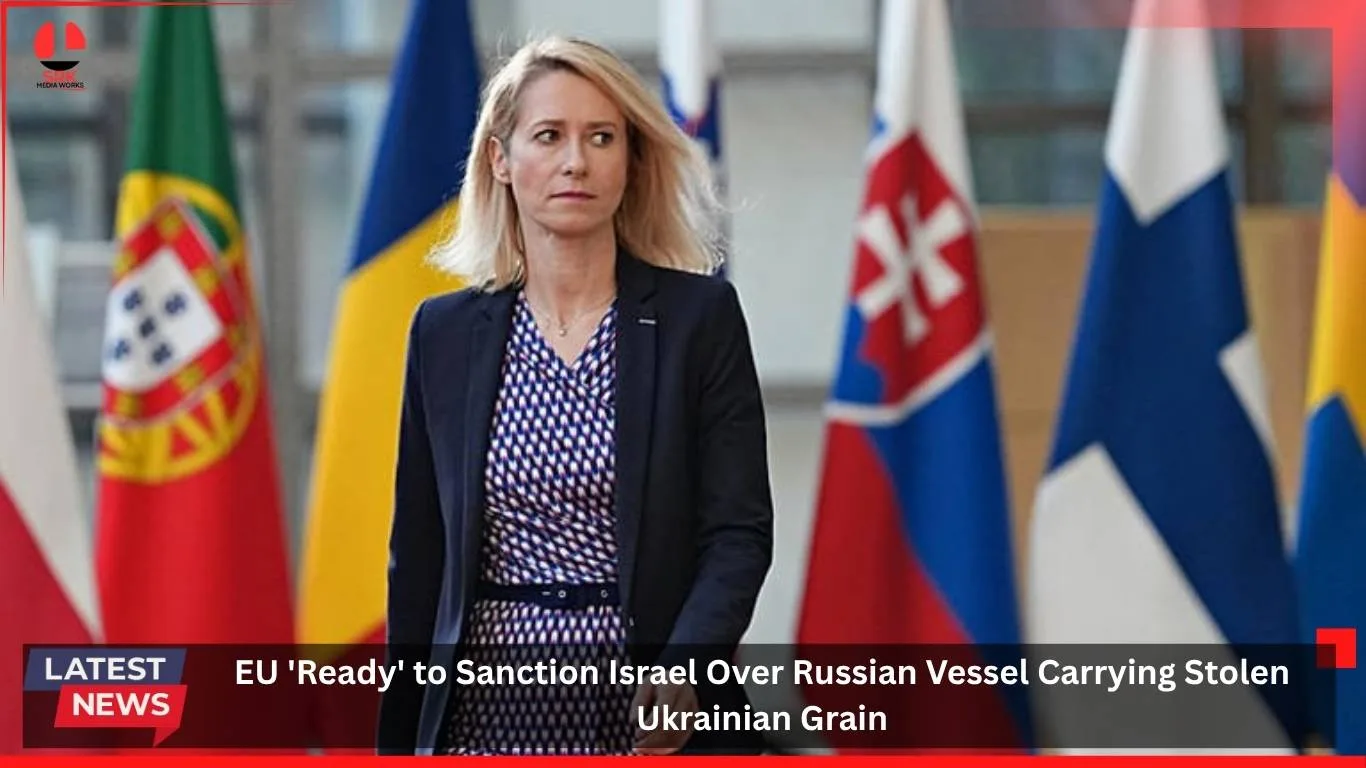
The European Union has signaled its readiness to impose sanctions on Israel following reports that a Russian vessel carrying stolen Ukrainian grain docked at an Israeli port. This development has sparked intense diplomatic discussions, raising questions about accountability, international law, and the broader geopolitical implications of the ongoing Russia-Ukraine conflict.
Background of the Controversy
The controversy stems from allegations that Russia has been transporting grain taken from occupied Ukrainian territories. Reports suggest that one such vessel recently arrived in Israel, prompting criticism from Kyiv and concern among EU member states. The EU has long condemned Russia’s actions in Ukraine, including the seizure of agricultural resources, which are vital to Ukraine’s economy and global food supply chains.
Israel’s acceptance of the vessel has drawn scrutiny, with EU officials warning that such actions could undermine collective efforts to hold Russia accountable. The possibility of sanctions against Israel reflects the seriousness with which the EU views the matter.
EU’s Position on Sanctions
EU leaders have emphasized that sanctions are a tool to enforce international norms and discourage complicity in illegal activities. By signaling readiness to sanction Israel, the EU is sending a strong message that it will not tolerate actions that indirectly support Russia’s war efforts.
Officials have noted that sanctions could target trade, diplomatic relations, or specific sectors, depending on Israel’s response. The move underscores the EU’s commitment to supporting Ukraine and maintaining pressure on Russia.
Israel’s Response
Israel has not yet issued a detailed response to the EU’s warning. However, the situation places Israel in a delicate position, balancing its diplomatic ties with Russia, Ukraine, and the EU. Israel has historically maintained cautious neutrality in the Russia-Ukraine conflict, but the docking of a vessel carrying allegedly stolen grain has intensified scrutiny.
Observers suggest that Israel may need to clarify its stance to avoid potential sanctions and preserve its relations with the EU, which is a significant trade partner.
Ukraine’s Reaction
Ukraine has strongly condemned the incident, accusing Russia of looting its resources and calling on the international community to take decisive action. Ukrainian officials have urged the EU and other allies to hold accountable not only Russia but also any nation that facilitates the transport or purchase of stolen goods.
For Ukraine, the issue is not only economic but symbolic, as grain represents both livelihood and sovereignty. The incident has further fueled calls for stronger global solidarity against Russia’s aggression.
Global Implications
The controversy has broader implications for international trade and diplomacy. Grain exports are critical to global food security, and disruptions caused by the Russia-Ukraine conflict have already impacted markets worldwide. If nations are perceived as complicit in the transport of stolen grain, it could undermine trust in international trade systems.
The EU’s readiness to sanction Israel also highlights the evolving nature of global alliances. As the Russia-Ukraine war continues, countries are being forced to take clearer positions, with neutrality becoming increasingly difficult to maintain.
Political Reactions Within the EU
EU member states have expressed varying degrees of support for sanctions against Israel. Some countries have emphasized the importance of maintaining a united front against Russia, while others have cautioned against escalating tensions with Israel.
The debate reflects the complexity of balancing geopolitical interests, economic ties, and moral obligations. However, the overall consensus appears to lean toward holding accountable any nation that indirectly supports Russia’s actions.
Media and Public Discourse
Media coverage of the incident has been extensive, with headlines focusing on the potential sanctions and their implications. Public opinion within the EU appears divided, with some citizens supporting strong measures against Israel, while others question whether sanctions would be effective or fair.
Social media platforms have amplified the debate, with discussions around international law, food security, and the role of neutral states in global conflicts.
Conclusion
The EU’s readiness to sanction Israel over the docking of a Russian vessel carrying stolen Ukrainian grain marks a significant moment in international diplomacy. It underscores the seriousness of the Russia-Ukraine conflict and the global effort to hold accountable those who support or enable Russia’s actions.
As the situation unfolds, Israel faces a critical decision: clarify its position and avoid sanctions or risk straining relations with the EU. For Ukraine, the incident reinforces the importance of global solidarity in defending its sovereignty and resources.
Disclaimer
This article is a comprehensive news analysis based on publicly available information and diplomatic discussions. It is intended for informational and journalistic purposes only. The content does not represent personal opinions or endorsements. Readers are encouraged to verify details independently before forming conclusions.