








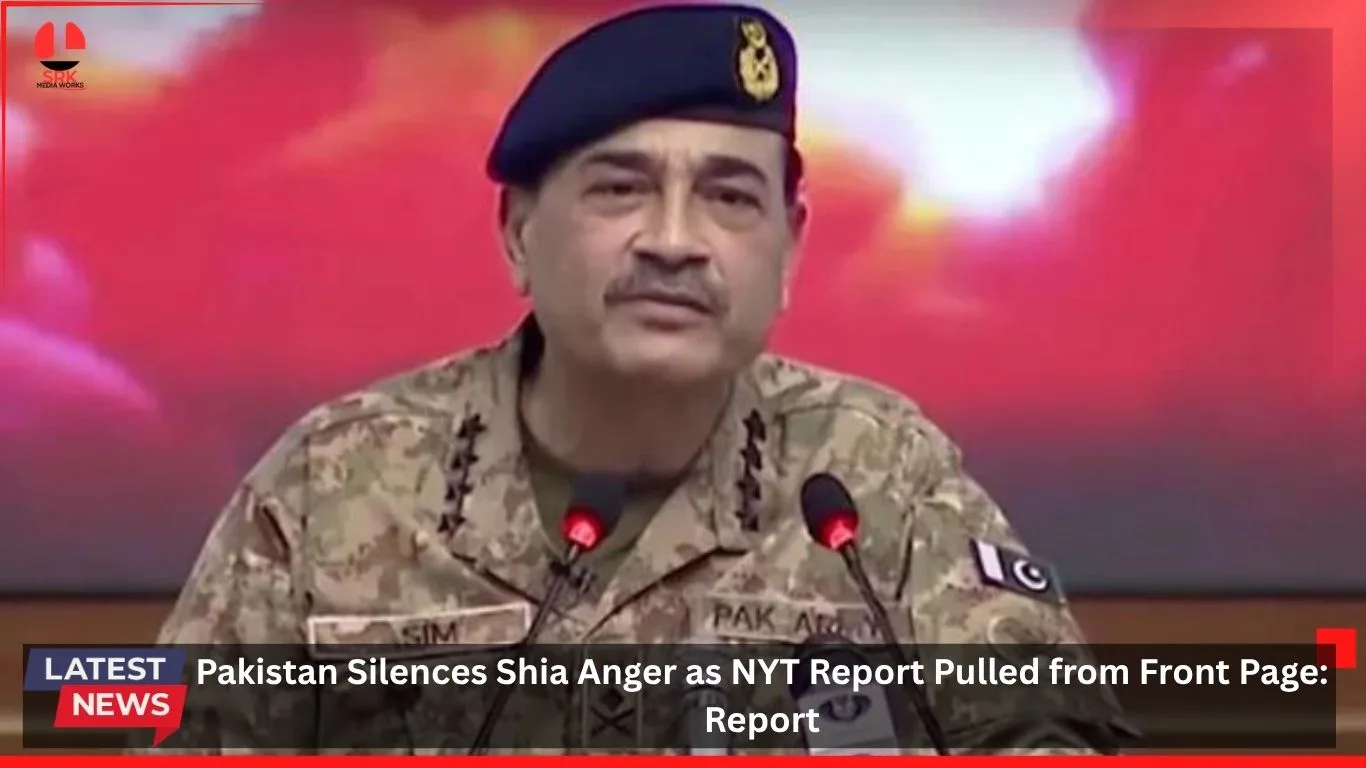
A recent report has suggested that Pakistan has sought to suppress rising Shia anger by ensuring that a critical New York Times (NYT) article was pulled from its front page. The development highlights the sensitive sectarian dynamics within Pakistan and the government’s efforts to manage international narratives while containing domestic unrest.
Key Highlights
- NYT Report Pulled: The article, which reportedly focused on Shia grievances, was removed from the front page.
- Sectarian Tensions: Shia communities in Pakistan have long expressed concerns about discrimination and violence.
- Government Strategy: Authorities appear to be managing both domestic dissent and international perceptions.
- Global Attention: The incident has drawn attention to Pakistan’s handling of minority rights and media narratives.
Comparative Analysis of Sectarian Dynamics
| Community | Key Concerns | Government Response | International Perception |
|---|---|---|---|
| Shia Muslims | Discrimination, targeted violence | Limited protection, suppression of dissent | Highlighted in global media |
| Sunni Majority | Political dominance | State-backed support | Seen as mainstream voice |
| Other Minorities | Religious freedom, safety | Marginal recognition | Often overlooked |
This table illustrates how Shia grievances stand out in Pakistan’s sectarian landscape, drawing global scrutiny.
Expert Opinions
Analysts argue that Pakistan’s decision to pressure international media reflects its sensitivity to narratives that could inflame sectarian divisions. Experts note that while the government seeks to maintain stability, suppressing coverage may deepen mistrust among minority communities.
Public Reactions
- Shia Voices: Express frustration at being silenced, calling for greater recognition of their concerns.
- Government Supporters: Defend the move as necessary to protect national image.
- Neutral Observers: Warn that suppressing dissent could worsen sectarian divides.
Historical Context
Sectarian tensions in Pakistan have persisted for decades, with Shia communities often targeted by extremist groups. International media coverage has periodically highlighted these issues, sometimes prompting government pushback. The NYT incident fits into a broader pattern of managing narratives to avoid global criticism.
Challenges Ahead
- Sectarian Violence: Continued attacks on Shia communities remain a pressing concern.
- Media Freedom: Suppression of critical reporting raises questions about press independence.
- International Relations: Global scrutiny of minority rights could affect Pakistan’s diplomatic standing.
- Domestic Stability: Silencing dissent risks fueling further unrest.
Future Outlook
Observers believe Pakistan will continue to balance domestic control with international image management. However, long-term stability will require addressing sectarian grievances rather than suppressing them. Greater inclusivity and protection of minority rights could reduce tensions and improve Pakistan’s global reputation.
Conclusion
The reported removal of the NYT article from its front page underscores Pakistan’s delicate handling of sectarian issues and international narratives. While the move may temporarily silence Shia anger, it raises broader questions about media freedom, minority rights, and the sustainability of such strategies. The incident highlights the need for genuine engagement with marginalized communities to ensure lasting stability.
Disclaimer
This article is a political and social news analysis created for informational and educational purposes. It is based on expert opinions, historical context, and publicly available information. The content does not represent official statements from governments, institutions, or individuals. Readers are advised to consult multiple sources for a comprehensive understanding of the subject.