









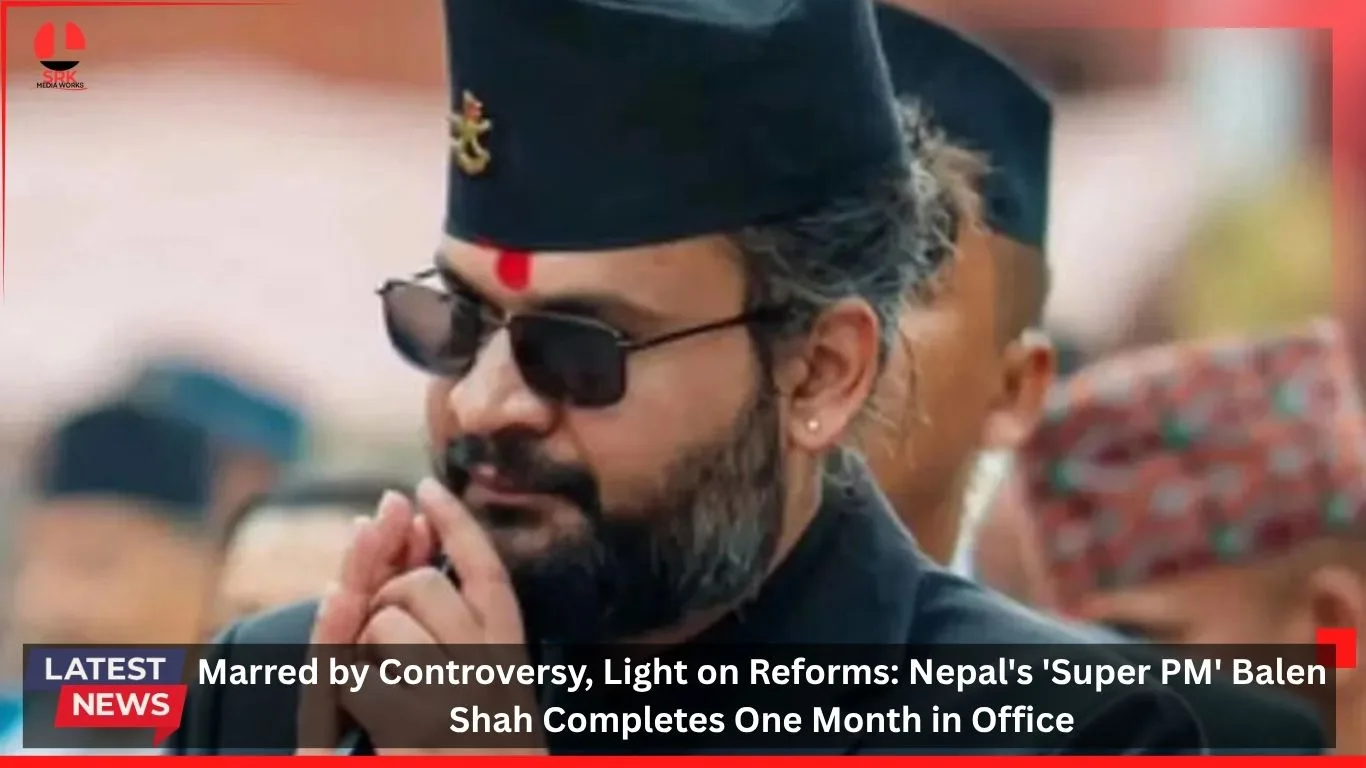
Nepal’s newly appointed Prime Minister Balen Shah, often dubbed the “super PM” by his supporters, has completed one month in office. His tenure so far has been marked by controversy, bold rhetoric, and limited reforms, raising questions about his ability to deliver on promises of transformation.
Key Highlights
- Tenure: One month in office as Prime Minister.
- Public Image: Popular among youth, but criticized for confrontational style.
- Reforms: Few concrete policy changes implemented so far.
- Controversies: Frequent clashes with opposition, judiciary, and bureaucracy.
- Expectations: High hopes for governance reforms, anti-corruption measures, and urban development.
Why Balen Shah Is Called “Super PM”
Balen Shah rose to prominence as Kathmandu’s mayor, where his unconventional style and direct communication appealed to younger voters. His elevation to Prime Minister was seen as a break from Nepal’s traditional political elite.
- Youth Appeal: Seen as a symbol of change.
- Direct Governance: Prefers executive orders over lengthy parliamentary debates.
- Media Presence: Strong social media engagement, projecting himself as a reformist leader.
Snapshot of First Month in Office
| Category | Details |
|---|---|
| Tenure Completed | 1 month |
| Major Reforms | Limited |
| Controversies | Judiciary clashes, opposition protests |
| Public Sentiment | Mixed – youth supportive, elites skeptical |
| Governance Style | Direct, confrontational |
Controversies
Balen Shah’s first month has been marred by disputes:
- Judiciary Tensions: Criticized court rulings, raising concerns about separation of powers.
- Opposition Clashes: Accused rivals of blocking reforms.
- Bureaucratic Resistance: Civil servants complain of unilateral decision-making.
- Policy Delays: Promised reforms in education and healthcare remain pending.
Limited Reforms
Despite promises of sweeping changes, Shah’s government has delivered few tangible reforms.
- Urban Development: Plans for infrastructure upgrades announced but not implemented.
- Anti-Corruption Drive: No major investigations launched.
- Economic Policy: Focus remains unclear, with no new fiscal measures.
- Social Programs: Youth employment schemes yet to take shape.
Reform Status Overview
| Sector | Promised Action | Current Status |
|---|---|---|
| Education | Curriculum overhaul | Pending |
| Healthcare | Free basic care | Not implemented |
| Infrastructure | Urban transport upgrades | Announced only |
| Anti-Corruption | Crackdown on graft | No major cases |
Public Sentiment
Public opinion remains divided:
- Supporters: Praise his boldness and willingness to challenge elites.
- Critics: Argue his confrontational style undermines institutions.
- Neutral Observers: Await concrete reforms before passing judgment.
Regional and Global Context
Shah’s rise reflects a broader trend in South Asia where populist leaders challenge traditional elites. His ability to balance rhetoric with governance will determine Nepal’s political stability.
Comparative Snapshot of Populist Leaders
| Country | Leader | Style | Outcome |
|---|---|---|---|
| India | Arvind Kejriwal | Anti-corruption | Sustained governance |
| Pakistan | Imran Khan | Populist rhetoric | Political instability |
| Nepal | Balen Shah | Confrontational | Uncertain trajectory |
Conclusion
Balen Shah’s first month as Nepal’s “super PM” has been marred by controversy and light on reforms. While his popularity among youth remains strong, his confrontational style and lack of concrete policy achievements raise doubts about his long-term effectiveness.
Disclaimer
This article is a political news analysis created for informational purposes only. It reflects reported updates and interpretations of Balen Shah’s first month in office. Official policy outcomes, reforms, and political developments are subject to confirmation by Nepal’s government and relevant authorities.