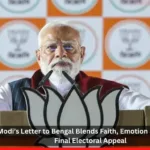


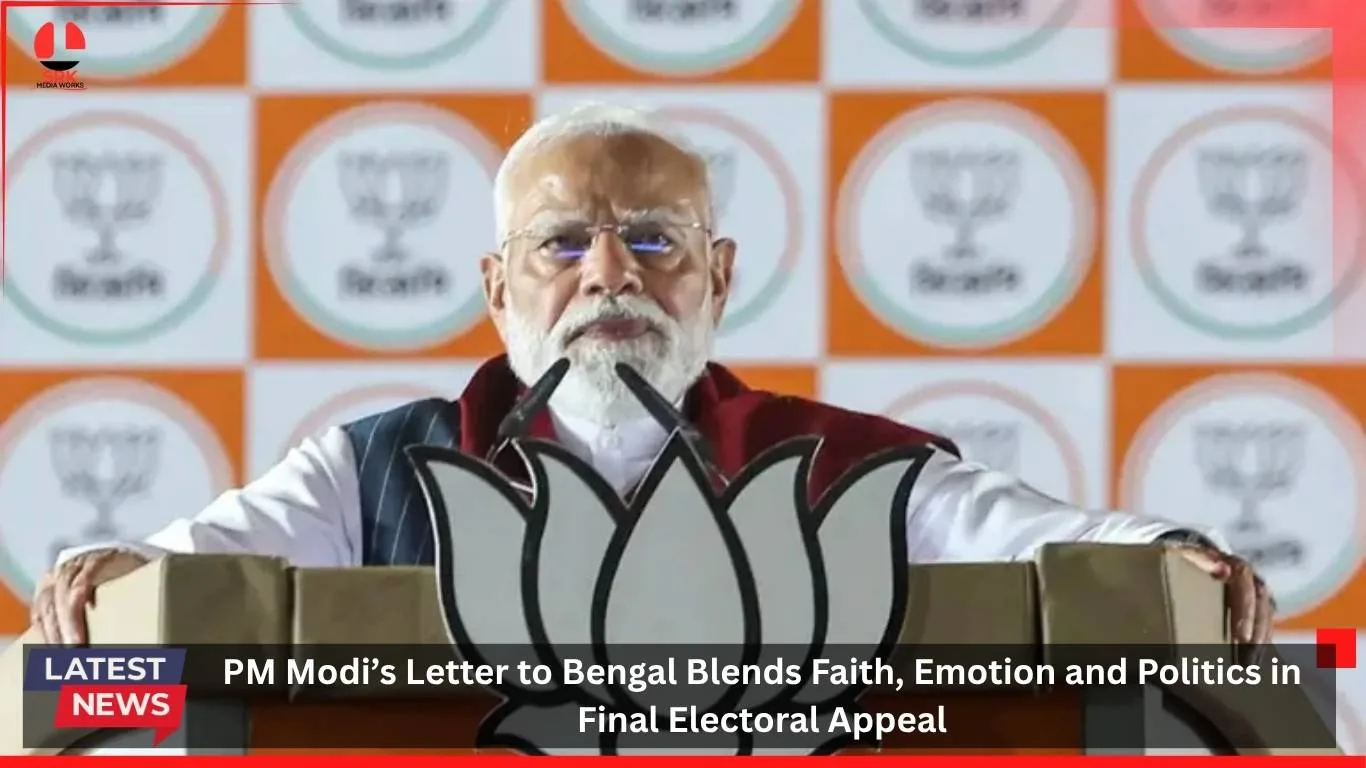
Prime Minister Narendra Modi has written a heartfelt letter to the people of West Bengal, blending faith, emotion, and politics in what is being described as his final electoral appeal before the state votes. The letter reflects Modi’s attempt to connect deeply with Bengal’s cultural identity, spiritual traditions, and political aspirations, while urging voters to support the BJP’s vision for the state.
Key Highlights
- Tone of the Letter: Emotional, invoking Bengal’s spiritual heritage and cultural pride.
- Political Message: Strong appeal for change, criticizing the ruling party’s governance.
- Faith and Tradition: References to Bengal’s saints, poets, and reformers.
- Electoral Timing: Released just before the final phase of voting.
Modi’s Blend of Faith and Politics
The letter draws heavily on Bengal’s spiritual and cultural icons, including Swami Vivekananda, Rabindranath Tagore, and Ramakrishna Paramhansa, to emphasize values of unity, devotion, and reform. Modi’s appeal intertwines these references with political promises, presenting BJP as the custodian of Bengal’s future.
- Faith: Invoking Bengal’s spiritual leaders to inspire voters.
- Emotion: Expressing gratitude and empathy for Bengal’s struggles.
- Politics: Criticizing corruption and violence under the current regime.
Snapshot of Modi’s Electoral Appeal
| Category | Details |
|---|---|
| Audience | People of West Bengal |
| Themes | Faith, emotion, politics |
| Cultural References | Vivekananda, Tagore, Ramakrishna |
| Political Message | Call for change, BJP’s vision |
| Timing | Final phase of elections |
Political Context
The letter comes at a crucial time, as Bengal heads into the final phase of voting. Modi’s appeal is designed to consolidate BJP’s support base and sway undecided voters.
- Opposition Challenge: The ruling party in Bengal has emphasized regional pride and welfare schemes.
- BJP Strategy: Positioning itself as both a national force and a protector of Bengal’s heritage.
- Electoral Stakes: Bengal remains a key battleground in shaping India’s political future.
Emotional Undertones
Modi’s letter is not just political—it carries strong emotional undertones:
- Empathy: Acknowledging Bengal’s struggles with unemployment and violence.
- Hope: Promising a new dawn of development and peace.
- Unity: Calling for harmony across communities.
Emotional Themes Overview
| Theme | Modi’s Message |
|---|---|
| Empathy | Recognizing Bengal’s pain |
| Hope | Promise of development |
| Unity | Harmony across communities |
| Gratitude | Thanking Bengal for cultural contributions |
Faith and Cultural References
The letter highlights Bengal’s role in shaping India’s spiritual and cultural identity:
- Swami Vivekananda: Symbol of youth empowerment and spiritual awakening.
- Rabindranath Tagore: Inspiration for cultural pride and reform.
- Ramakrishna Paramhansa: Emblem of devotion and unity.
By invoking these figures, Modi seeks to align BJP’s vision with Bengal’s cultural ethos.
Opposition’s Response
The ruling party in Bengal has dismissed Modi’s letter as political theatre, arguing that faith and culture are being used for electoral gains. Opposition leaders claim that BJP’s promises lack substance and fail to address Bengal’s immediate needs.
Voter Sentiment
Public reaction to the letter has been mixed:
- Supporters: Applaud Modi’s emotional and cultural appeal.
- Critics: Question the timing and political intent.
- Neutral Observers: See it as a strategic move to consolidate votes.
Conclusion
Prime Minister Modi’s letter to Bengal blends faith, emotion, and politics in a final electoral appeal aimed at swaying voters before the last phase of polling. By invoking Bengal’s spiritual icons and cultural pride, Modi seeks to present BJP as both a national force and a custodian of Bengal’s heritage.
Disclaimer
This article is a political news analysis created for informational purposes only. It reflects reported updates and interpretations of Prime Minister Modi’s electoral appeal in West Bengal. Official election results, voter responses, and policy outcomes are subject to confirmation by the Election Commission of India and relevant authorities.