



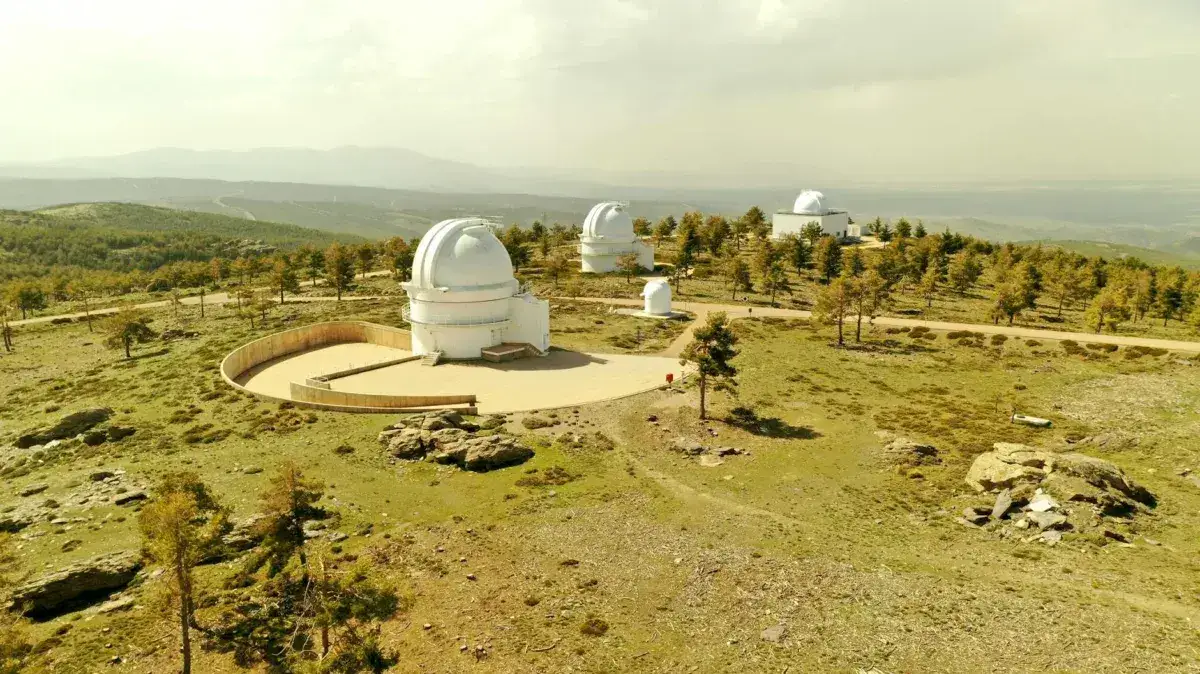
Andhra University in Visakhapatnam officially inaugurated its state-of-the-art Centre for Advanced Research and Training (C-ART) observatory on Monday, a facility funded with ₹180 crore. The inauguration coincided with a stark warning from M. Ravichandran, Secretary of the Ministry of Earth Sciences, regarding developing El Niño conditions and the forecast of a below-normal monsoon season for India, with potential impacts expected from July-August.
Context: Monsoon’s Critical Role and El Niño’s Influence
India’s economy and agricultural sector are heavily reliant on the annual monsoon rains, which typically occur from June to September. These rains are crucial for irrigating crops, replenishing water reservoirs, and sustaining the livelihoods of millions of farmers. Any significant deviation from the normal monsoon pattern can have widespread economic and social repercussions.
El Niño, a climate pattern characterized by unusually warm surface waters in the eastern tropical Pacific Ocean, is known to disrupt global weather patterns. Historically, El Niño events have been associated with weaker monsoon seasons in India, leading to droughts and reduced agricultural yields. The development of El Niño conditions earlier than anticipated this year raises significant concerns for the upcoming monsoon.
New Observatory Boosts Climate Research Capabilities
The newly established C-ART observatory at Andhra University represents a significant leap forward in India’s capacity for climate research. The ₹180-crore facility is equipped with advanced instrumentation and computational resources designed to monitor, analyze, and predict climate-related phenomena with greater precision.
This observatory will enable researchers to study complex atmospheric processes, track climate change impacts, and develop more accurate models for weather forecasting. The focus will be on understanding regional climate variations and their effects on crucial sectors like agriculture, water resources, and disaster management.
“The C-ART observatory will be a hub for cutting-edge research in atmospheric science, climate modeling, and Earth system science,” stated a university spokesperson. “It will foster collaboration between national and international research institutions, accelerating our understanding of climate dynamics.”
The facility is expected to play a pivotal role in training the next generation of climate scientists and researchers, equipping them with the skills needed to address pressing environmental challenges.
Monsoon Forecast: Below Normal and El Niño Warning
M. Ravichandran, Secretary of the Ministry of Earth Sciences, delivered a sobering assessment of the upcoming monsoon season. He indicated that current observations suggest the monsoon is likely to be below normal. This forecast is largely attributed to the developing El Niño conditions.
Ravichandran noted that the El Niño conditions appeared to be developing earlier than the usual seasonal expectations. This early onset suggests that its influence on the Indian monsoon could be more pronounced and potentially begin impacting weather patterns by July or August.
“We are closely monitoring the sea surface temperatures in the Pacific Ocean,” Ravichandran said during a press briefing. “The developing El Niño is a significant factor we are considering in our monsoon outlook.”
The India Meteorological Department (IMD) will release its first official long-range forecast for the monsoon later in April, which will provide more detailed predictions based on a comprehensive analysis of various climatic factors.
Expert Perspectives and Data
The concerns raised by the Ministry of Earth Sciences are supported by a growing body of scientific evidence and historical data. Studies have consistently shown a correlation between El Niño events and deficient monsoon rainfall in India.
For instance, a 2019 study published in the journal ‘Nature Climate Change’ analyzed monsoon rainfall data over several decades and found a statistically significant tendency for reduced rainfall during El Niño years. The intensity of the El Niño event often correlates with the severity of the monsoon deficit.
Dr. D.S. Pai, a senior scientist at the IMD, previously stated that while not every El Niño year results in a drought, the probability of below-normal rainfall increases considerably. “El Niño is a major driver, but other factors like the Indian Ocean Dipole (IOD) also play a role,” he remarked, emphasizing the complexity of monsoon prediction.
The development of a positive IOD, which involves warmer sea surface temperatures in the western Indian Ocean and cooler temperatures in the eastern part, can sometimes counteract the drying effect of El Niño. However, current indications suggest that the influence of El Niño might be dominant.
Implications for India: Agriculture, Water, and Economy
A below-normal monsoon has profound implications for India. The agricultural sector, which employs a significant portion of the population and contributes substantially to the GDP, is particularly vulnerable.
Reduced rainfall can lead to crop failures, lower yields, and increased irrigation costs. This can result in higher food prices, impacting inflation and the overall cost of living for consumers. Farmers may face financial distress, potentially leading to increased debt and reduced investment in future agricultural activities.
Water security is another major concern. Many parts of India depend on monsoon rains to replenish reservoirs, groundwater, and rivers. A deficient monsoon can lead to water shortages, affecting drinking water supply, industrial use, and hydropower generation.
The economic impact extends beyond agriculture. Reduced agricultural output can affect allied industries such as food processing, transportation, and retail. Government policies may need to be adjusted to mitigate the effects of drought, including providing relief to affected farmers and managing water resources more stringently.
The new C-ART observatory is expected to contribute valuable data and research to help policymakers prepare for such eventualities. By improving the accuracy of forecasts and understanding the localized impacts of climate variability, the observatory can aid in developing more effective adaptation and mitigation strategies.
What to Watch Next
All eyes will be on the India Meteorological Department’s official monsoon forecast, expected later this month. This will provide a more concrete outlook on the expected rainfall distribution across the country.
Furthermore, the performance and early findings from the C-ART observatory will be closely watched. Its ability to provide real-time data and advanced modeling will be crucial in refining monsoon predictions and understanding the evolving climate scenario.
The development of the El Niño pattern and its interaction with other oceanic and atmospheric phenomena, such as the Indian Ocean Dipole, will continue to be a key area of monitoring. How these factors combine will determine the ultimate impact on India’s monsoon and, consequently, its agricultural output and economy.