









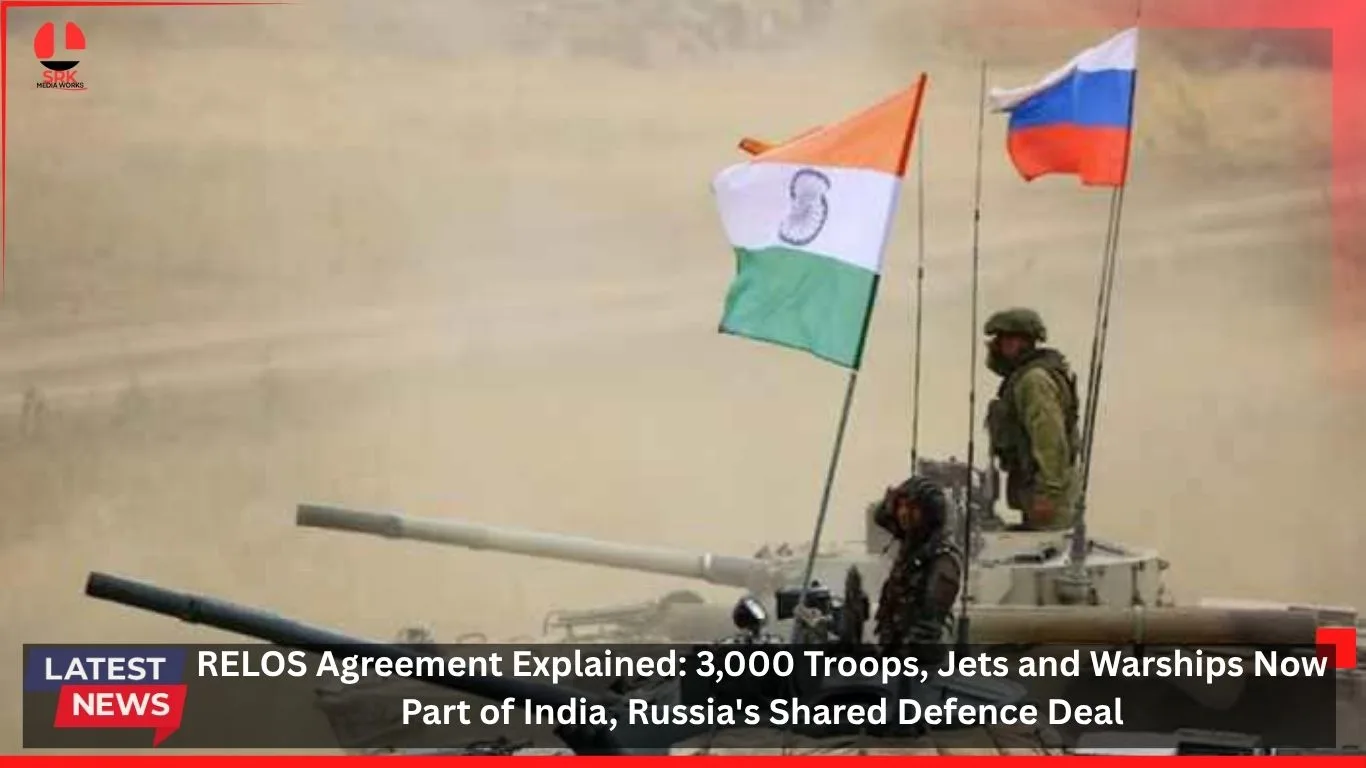
India and Russia have taken a significant step in strengthening their military partnership with the signing of the Reciprocal Exchange of Logistics Support (RELOS) agreement. This landmark deal allows both nations to share military facilities, logistics, and resources, effectively integrating 3,000 troops, advanced fighter jets, and warships into a joint framework. The agreement is being hailed as a major boost to strategic cooperation, with implications for regional security, global power balance, and defence preparedness.
What is the RELOS Agreement?
The RELOS agreement is a bilateral defence pact that enables India and Russia to access each other’s military bases, ports, and logistics infrastructure. It is designed to enhance operational efficiency, reduce costs, and strengthen interoperability between the armed forces of both nations.
Key Features:
- Reciprocal access to military bases and facilities.
- Shared logistics support for troops, aircraft, and naval vessels.
- Deployment of 3,000 troops under joint exercises and missions.
- Integration of fighter jets and warships into cooperative defence strategies.
Strategic Importance
The agreement comes at a time when global geopolitics is shifting rapidly. India’s growing defence ties with Russia provide a counterbalance to Western alliances and strengthen its position in the Indo-Pacific region. For Russia, the deal reinforces its presence in South Asia and enhances its ability to project power globally.
| Strategic Area | India’s Benefit | Russia’s Benefit | Regional Impact |
|---|---|---|---|
| Military Bases | Access to Arctic and European facilities | Access to Indian Ocean bases | Expanded reach |
| Logistics | Reduced costs, faster deployment | Streamlined support for missions | Enhanced readiness |
| Troops | Joint training, combat experience | Strengthened cooperation | Regional deterrence |
| Naval Power | Access to Russian ports | Access to Indian naval bases | Maritime security |
Pivot Analysis of Defence Cooperation
| Domain | India’s Role | Russia’s Role | Outcome |
|---|---|---|---|
| Troops | 3,000 personnel in joint missions | Training and support | Enhanced interoperability |
| Air Power | Deployment of fighter jets | Maintenance and upgrades | Stronger aerial defence |
| Naval Power | Warships in Indian Ocean | Warships in Arctic | Global maritime presence |
| Technology | Indigenous defence projects | Advanced systems transfer | Mutual innovation |
Military Implications
The RELOS agreement significantly boosts India’s military capabilities by providing access to Russian bases in Europe and the Arctic. Similarly, Russia gains access to Indian facilities in the Indian Ocean, allowing both nations to extend their operational reach.
Military Highlights:
- Joint exercises involving 3,000 troops.
- Deployment of advanced fighter jets for cooperative missions.
- Warships integrated into shared naval operations.
- Enhanced logistics support for long-range missions.
Economic Dimensions
Beyond military cooperation, the RELOS agreement has economic implications. Defence industries in both countries stand to benefit from increased collaboration, joint production, and technology transfer.
| Sector | India’s Gain | Russia’s Gain | Global Effect |
|---|---|---|---|
| Defence Manufacturing | Access to Russian technology | Expansion into Indian market | Boost in defence trade |
| Energy Security | Support for Arctic exploration | Access to Indian energy routes | Strengthened supply chains |
| Infrastructure | Shared logistics facilities | Investment opportunities | Economic integration |
Diplomatic Significance
The RELOS agreement underscores the deepening diplomatic ties between India and Russia. It signals a commitment to long-term strategic cooperation, even as India balances its relationships with Western powers and Russia navigates global sanctions.
Diplomatic Highlights:
- Reinforcement of India-Russia strategic partnership.
- Counterbalance to Western military alliances.
- Strengthened role in multilateral forums like BRICS and SCO.
- Enhanced credibility in global defence diplomacy.
Historical Context
India and Russia have shared a strong defence relationship since the Cold War era. Russia has been a key supplier of military equipment to India, including fighter jets, submarines, and missile systems. The RELOS agreement builds on this legacy, taking cooperation to a new level by integrating logistics and operational support.
Possible Outcomes
- Enhanced Defence Readiness: Faster deployment of troops and equipment in crisis situations.
- Expanded Global Reach: Access to bases across continents strengthens both nations’ military presence.
- Economic Boost: Defence industries benefit from joint projects and technology transfer.
- Geopolitical Balance: India and Russia strengthen their positions in global power dynamics.
Conclusion
The RELOS agreement marks a turning point in India-Russia defence cooperation. With 3,000 troops, fighter jets, and warships now part of a shared framework, the pact enhances military readiness, economic collaboration, and diplomatic ties. It reflects the evolving nature of global alliances and underscores the importance of strategic partnerships in ensuring security and stability.
Disclaimer
This article is an analytical overview of the RELOS agreement between India and Russia. It is based on current developments and historical context, and does not represent official government positions. Readers should follow authoritative updates for the latest information on defence and diplomatic policies.


