





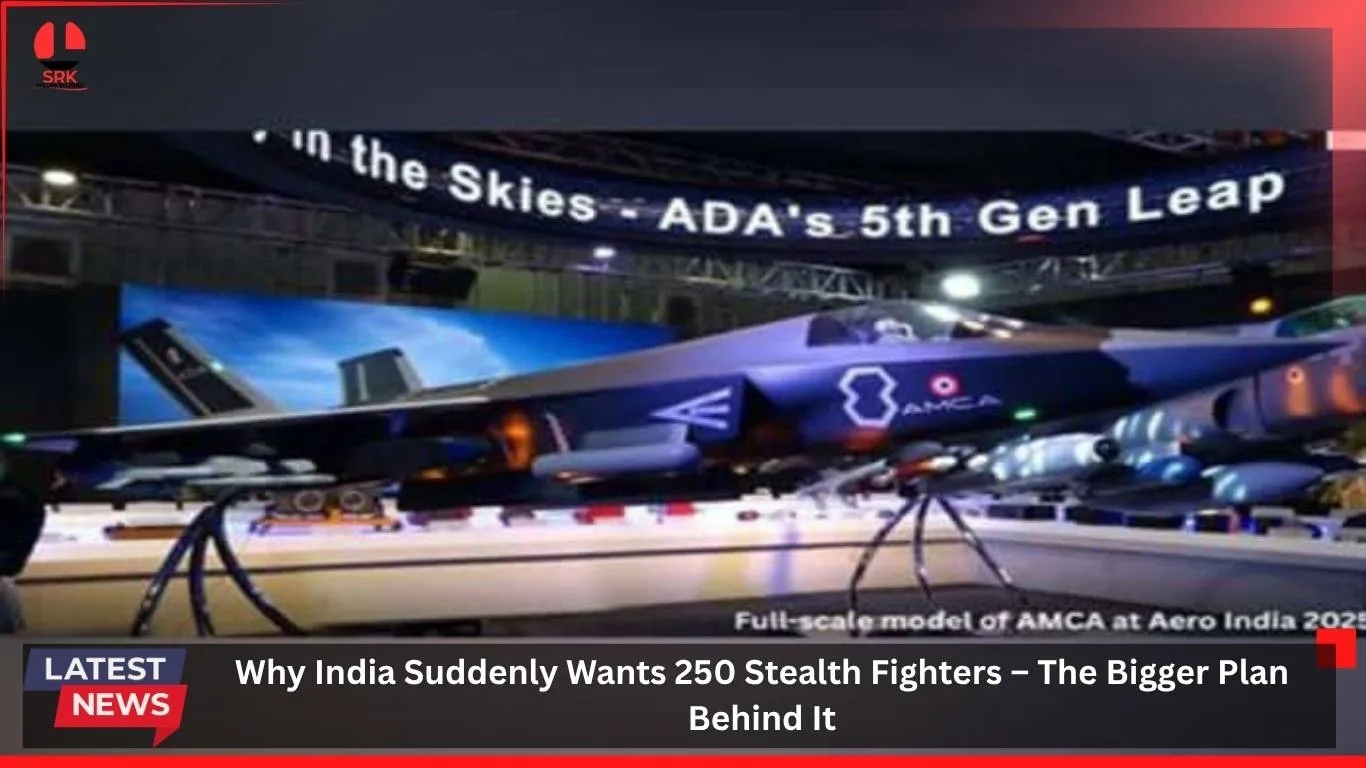
India has expanded its Advanced Medium Combat Aircraft (AMCA) programme from 120–130 jets to a massive fleet of 250 stealth fighters, aiming to counter China’s growing J-20 fleet and prepare for simultaneous threats from China and Pakistan. This expansion is tied to the retirement of Su-30MKI jets in the 2040s and India’s push for indigenous defence capability.
Why the Sudden Expansion?
- Original Plan: India had cleared about 120–130 AMCA stealth fighters in 2024, enough for seven squadrons.
- New Target: The Indian Air Force (IAF) now aims for 250 aircraft, nearly doubling the original plan.
- Reason:
- Retirement of Su-30MKI fleet in the 2040s.
- China’s rapid expansion of J-20 stealth fighters, now estimated at 300 aircraft.
- Need to maintain air superiority in contested zones along both northern and western borders.
Phased Rollout of AMCA
- AMCA Mark-1 (40 jets)
- Engine: GE F414-INS6 (98 kN thrust).
- Role: Training, early deployment, familiarisation with stealth systems.
- AMCA Mark-2 (100 jets)
- Engine: New Indo-French 110–120 kN thrust engine.
- Features: Supercruise capability (sustained supersonic flight without afterburners), advanced sensor fusion.
- AMCA Mark-2+ (110 jets)
- Engine: 120–140 kN thrust class.
- Role: Replacement for Su-30MKI fleet in mid-2040s.
- Enhanced avionics, sensor systems, and strike capabilities.
Strategic Role in Future Conflicts
- Suppression of Enemy Air Defenses (SEAD/DEAD): AMCA squadrons will neutralize advanced systems like China’s HQ-9.
- Opening Corridors: Stealth fighters will clear paths for non-stealth aircraft (Su-30MKIs, Tejas Mk2) to deliver heavier payloads.
- Two-Front Doctrine: Dedicated squadrons for simultaneous operations against China and Pakistan.
- Operational Flexibility: Ability to conduct high-intensity missions in contested airspace.
Indigenous Defence Push
- Distributed Manufacturing Model: Involves HAL, Tata Advanced Systems, L&T, Bharat Forge.
- Funding: ₹15,000 crore development contract for five prototypes.
- Timeline: First prototype expected by 2028.
- Goal: Avoid delays seen in past programmes and strengthen India’s defence industry.
Bigger Plan Behind 250 Fighters
- Parity with China: Matching China’s J-20 fleet to ensure deterrence.
- Future-Proofing: Preparing for 2040s and beyond, when legacy aircraft retire.
- Regional Balance: Ensuring India can project power across South Asia and counter threats in Ladakh, Arunachal Pradesh, and western borders.
- Doctrinal Flexibility: Ability to dedicate entire wings to specific missions without compromising other sectors.
Conclusion
India’s decision to expand its AMCA programme to 250 stealth fighters is not just about numbers—it reflects a long-term strategic vision to maintain air superiority, counter regional threats, and strengthen indigenous defence production. With phased rollout, advanced engines, and private sector involvement, India is positioning itself for a future where stealth capability will be central to air combat operations.
Disclaimer
This article is a detailed news analysis based on publicly available defence reports and strategic discussions. It is intended for informational and journalistic purposes only. The content does not represent personal opinions or endorsements. Readers are encouraged to verify details independently before forming conclusions.