






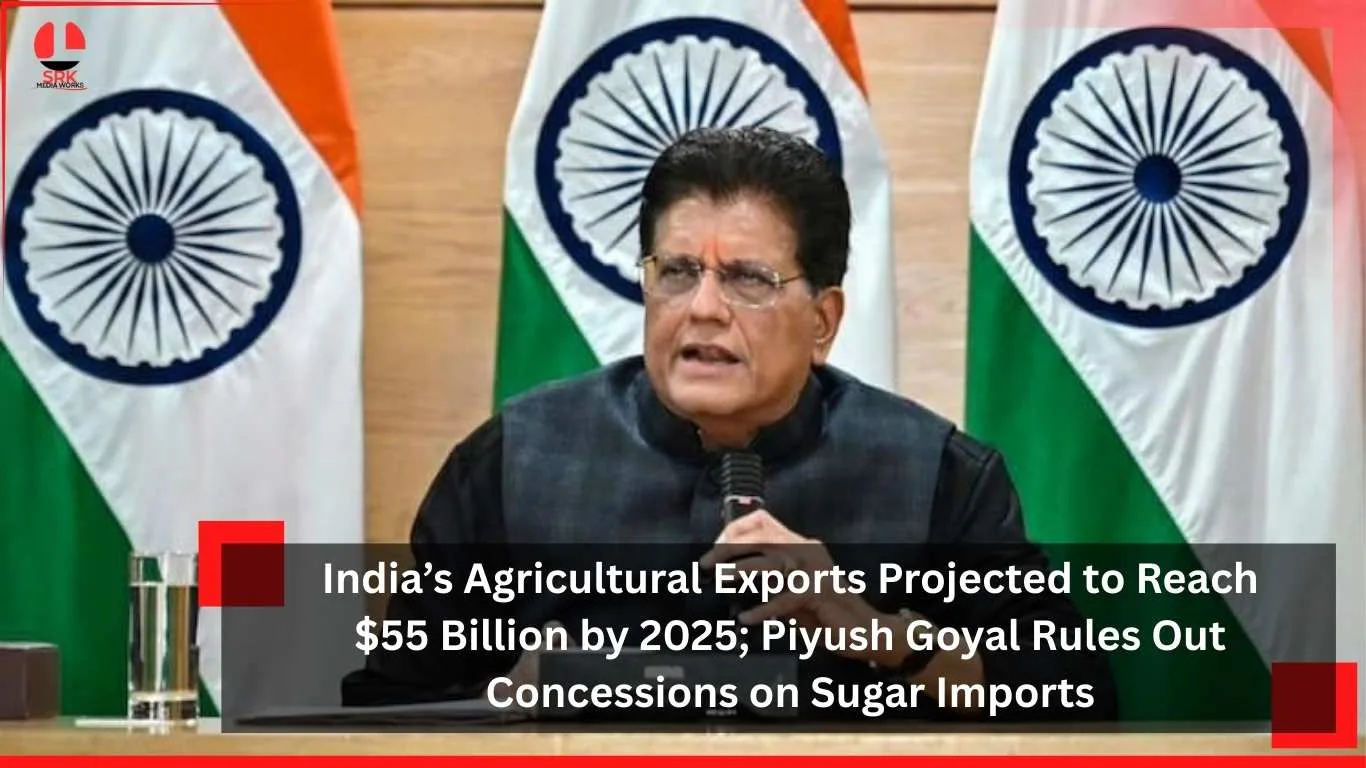
India’s agricultural sector is poised for a significant leap forward, with Union Commerce and Industry Minister Piyush Goyal announcing that agricultural exports are expected to touch $55 billion by 2025. This ambitious target reflects the government’s confidence in the resilience of Indian farmers, the strength of agro-based industries, and the growing global demand for Indian produce. At the same time, Goyal made it clear that no concessions will be offered on sugar imports, reinforcing India’s commitment to protecting domestic producers and ensuring self-reliance in critical commodities.
Agricultural Exports: A Growth Story
India has steadily emerged as a global agricultural powerhouse. From rice and wheat to spices, tea, coffee, and marine products, the country’s diverse agricultural output has found markets across continents. The projection of $55 billion by 2025 is not just a number—it represents a strategic vision to position India as a reliable supplier of high-quality agricultural goods.
The government’s focus on value-added exports, improved logistics, and better access to international markets has already shown results. In recent years, India has expanded its footprint in regions such as Africa, the Middle East, and Southeast Asia, while strengthening its presence in traditional markets like the United States and Europe.
Piyush Goyal’s Stand on Sugar Imports
While India is keen to expand exports, Goyal’s categorical statement that there will be no concessions on sugar imports highlights the government’s protective stance toward domestic industries. India is one of the largest producers of sugar, and the sector supports millions of farmers, especially in states like Maharashtra, Uttar Pradesh, and Karnataka. Allowing concessions on imports could undermine local producers, destabilize prices, and affect rural livelihoods.
By ruling out concessions, the government is signaling its commitment to safeguarding farmer interests while balancing trade policies with domestic priorities.
Key Drivers of Export Growth
Several factors are driving India’s agricultural export growth:
- Diversification of Products – India is not limited to traditional staples; it is increasingly exporting processed foods, organic produce, and nutraceuticals.
- Government Initiatives – Policies such as the Agricultural Export Policy (AEP) and incentives for exporters have created a favorable environment.
- Global Demand – Rising demand for healthy, organic, and plant-based foods has boosted India’s export potential.
- Improved Infrastructure – Better cold storage, logistics, and port facilities are reducing wastage and ensuring timely deliveries.
- Farmer Empowerment – Training programs and digital platforms are helping farmers access global markets directly.
Comparative Export Performance
| Year | Agricultural Export Value (USD Billion) | Growth Rate (%) |
|---|---|---|
| 2020 | 41 | 5.2 |
| 2021 | 43.5 | 6.1 |
| 2022 | 47 | 8.0 |
| 2023 | 50 | 6.4 |
| 2025 (Projected) | 55 | 10.0 |
This trajectory shows consistent growth, with the 2025 projection marking a significant milestone.
Sector-Wise Contribution to Exports
| Sector | Contribution (%) | Key Products Exported |
|---|---|---|
| Cereals | 25 | Rice, wheat, maize |
| Marine Products | 20 | Shrimp, fish, crab |
| Spices | 15 | Pepper, cardamom, turmeric |
| Fruits & Vegetables | 12 | Mangoes, bananas, onions |
| Tea & Coffee | 10 | Assam tea, Arabica coffee |
| Sugar & Confectionery | 8 | Raw sugar, processed sugar products |
| Others | 10 | Organic produce, processed foods |
Policy Implications
The government’s dual stance—promoting exports while restricting sugar imports—reflects a nuanced approach to trade policy. On one hand, India is aggressively pursuing global markets to boost foreign exchange earnings; on the other, it is ensuring that domestic industries remain competitive and protected.
This balance is crucial for sustaining rural economies, where agriculture remains the backbone of livelihoods. By prioritizing farmer welfare, India is aligning trade policy with social and economic objectives.
Global Positioning
India’s agricultural exports are not just about numbers—they are about positioning the country as a trusted global supplier. With rising concerns about food security worldwide, India’s ability to deliver consistent, high-quality produce enhances its reputation. The focus on sustainability, organic farming, and environmentally friendly practices further strengthens India’s appeal in international markets.
Challenges Ahead
Despite the optimistic projections, challenges remain:
- Climate Change: Erratic weather patterns can affect crop yields.
- Global Competition: Countries like Brazil, Vietnam, and Thailand are strong competitors in certain commodities.
- Logistics Bottlenecks: While infrastructure has improved, further investments are needed.
- Quality Standards: Meeting stringent international standards requires continuous monitoring and innovation.
Analytical Perspective
India’s agricultural export target of $55 billion by 2025 is ambitious but achievable. The government’s proactive policies, combined with the entrepreneurial spirit of Indian farmers and exporters, provide a strong foundation. However, success will depend on addressing challenges, ensuring quality, and maintaining competitiveness in global markets.
Conclusion
India’s agricultural export journey is entering a new phase, with the $55 billion target symbolizing confidence and ambition. Piyush Goyal’s firm stance on sugar imports underscores the government’s commitment to protecting domestic industries while expanding global trade. Together, these policies reflect a vision of balanced growth—one that empowers farmers, strengthens rural economies, and enhances India’s global standing.
Disclaimer
This article is an analytical news feature based on publicly available information and government statements. It is intended for informational purposes only and does not represent financial or trade advice. Readers are encouraged to interpret the content as part of ongoing economic discourse rather than a definitive forecast.