

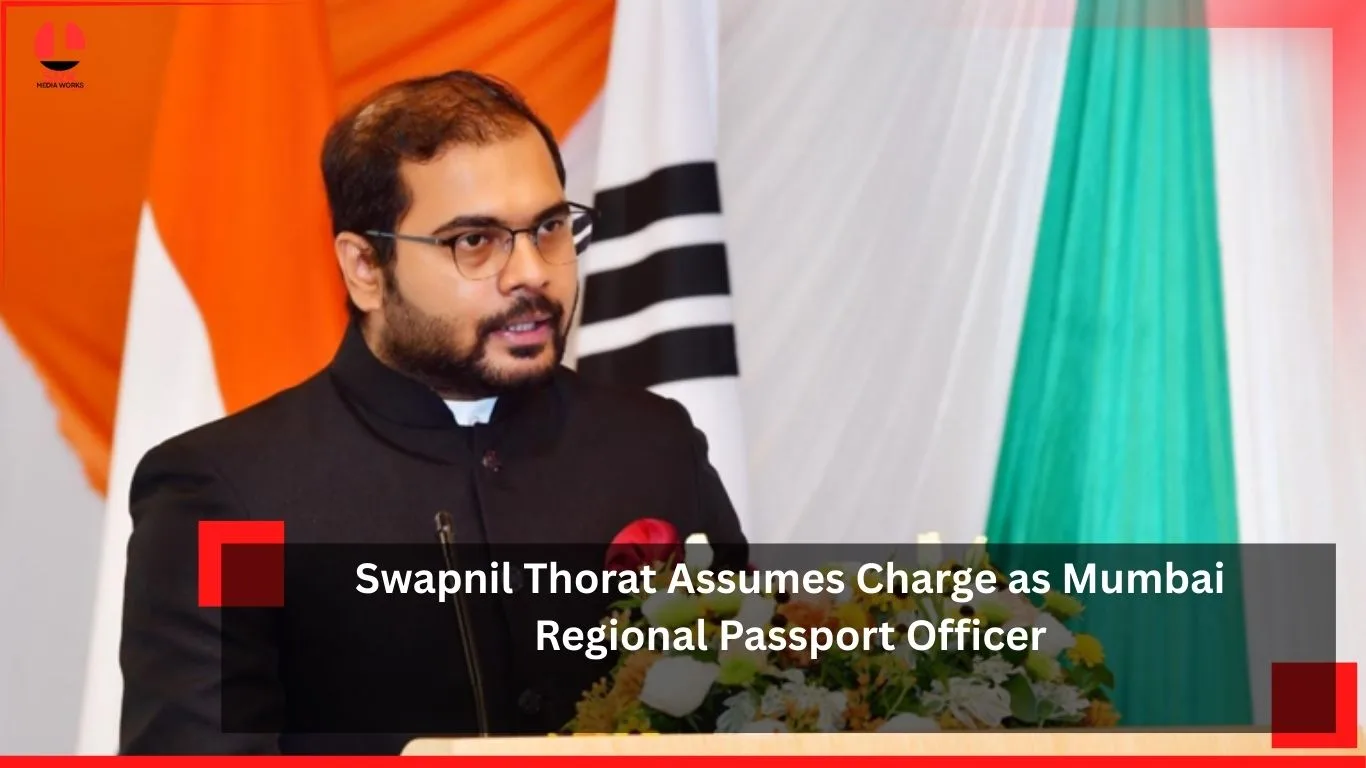
Mumbai has welcomed a new leadership appointment in its passport administration as Swapnil Thorat officially assumed charge as the Regional Passport Officer (RPO). This development is significant for the city, which handles one of the highest volumes of passport applications in India. Thorat’s appointment is expected to bring renewed focus on efficiency, transparency, and citizen-centric services.
Importance of the Regional Passport Office in Mumbai
The Mumbai Regional Passport Office plays a crucial role in processing thousands of applications every month. As India’s financial capital and a hub for international travel, the demand for passports in Mumbai is consistently high. The office not only caters to residents of the city but also to applicants from surrounding regions.
With Thorat taking charge, expectations are high for improved service delivery, reduced processing times, and enhanced grievance redressal mechanisms.
Thorat’s Vision for Passport Services
Swapnil Thorat has emphasized his commitment to:
- Efficiency in Processing – Streamlining procedures to reduce delays.
- Digital Integration – Expanding online services for faster application handling.
- Transparency – Ensuring applicants have clear information about requirements and timelines.
- Citizen-Centric Approach – Prioritizing convenience and accessibility for applicants.
- Security and Compliance – Strengthening verification processes to maintain integrity.
Comparative Analysis of Passport Offices
| City | Average Applications per Month | Key Initiatives Introduced |
|---|---|---|
| Mumbai | 70,000+ | Digital integration, grievance redressal |
| Delhi | 65,000+ | Fast-track services, Tatkal efficiency |
| Bengaluru | 50,000+ | Online appointment system |
| Chennai | 45,000+ | Enhanced verification protocols |
This comparison highlights Mumbai’s unique challenge of handling the highest volume of applications, making Thorat’s role particularly critical.
Public Expectations
Citizens and travel agencies have expressed optimism about Thorat’s appointment. Many believe that his leadership will help address common issues such as:
- Long waiting times for appointments.
- Delays in document verification.
- Need for better grievance handling.
- Expansion of passport seva kendras in suburban areas.
Analytical Perspective
From an analytical standpoint, Thorat’s appointment reflects the government’s focus on strengthening administrative leadership in high-demand regions. His emphasis on efficiency and transparency aligns with broader national goals of digital governance and citizen empowerment.
Key Themes Emerging
| Theme | Explanation |
|---|---|
| Administrative Leadership | Thorat’s appointment strengthens passport governance in Mumbai. |
| Citizen-Centric Services | Focus on convenience and accessibility for applicants. |
| Digital Transformation | Integration of online systems to reduce delays. |
| Regional Importance | Mumbai’s high demand makes the RPO role strategically significant. |
Future Outlook
Under Thorat’s leadership, the Mumbai Regional Passport Office is expected to:
- Expand digital services for faster processing.
- Introduce more citizen-friendly initiatives.
- Strengthen coordination with police and verification agencies.
- Reduce backlog and improve Tatkal services.
- Enhance transparency in grievance redressal.
Conclusion
Swapnil Thorat’s assumption of charge as Mumbai’s Regional Passport Officer marks a new chapter in the city’s passport administration. With a focus on efficiency, transparency, and citizen-centric services, his leadership is expected to significantly improve the experience of applicants. As Mumbai continues to be a gateway for international travel, Thorat’s role will be pivotal in ensuring smooth and reliable passport services.
Disclaimer
This article is a journalistic analysis based on publicly available information and official announcements. It is intended for informational purposes only and does not represent endorsement of any individual or government department. Readers should interpret the content as part of ongoing administrative developments rather than a definitive evaluation.