




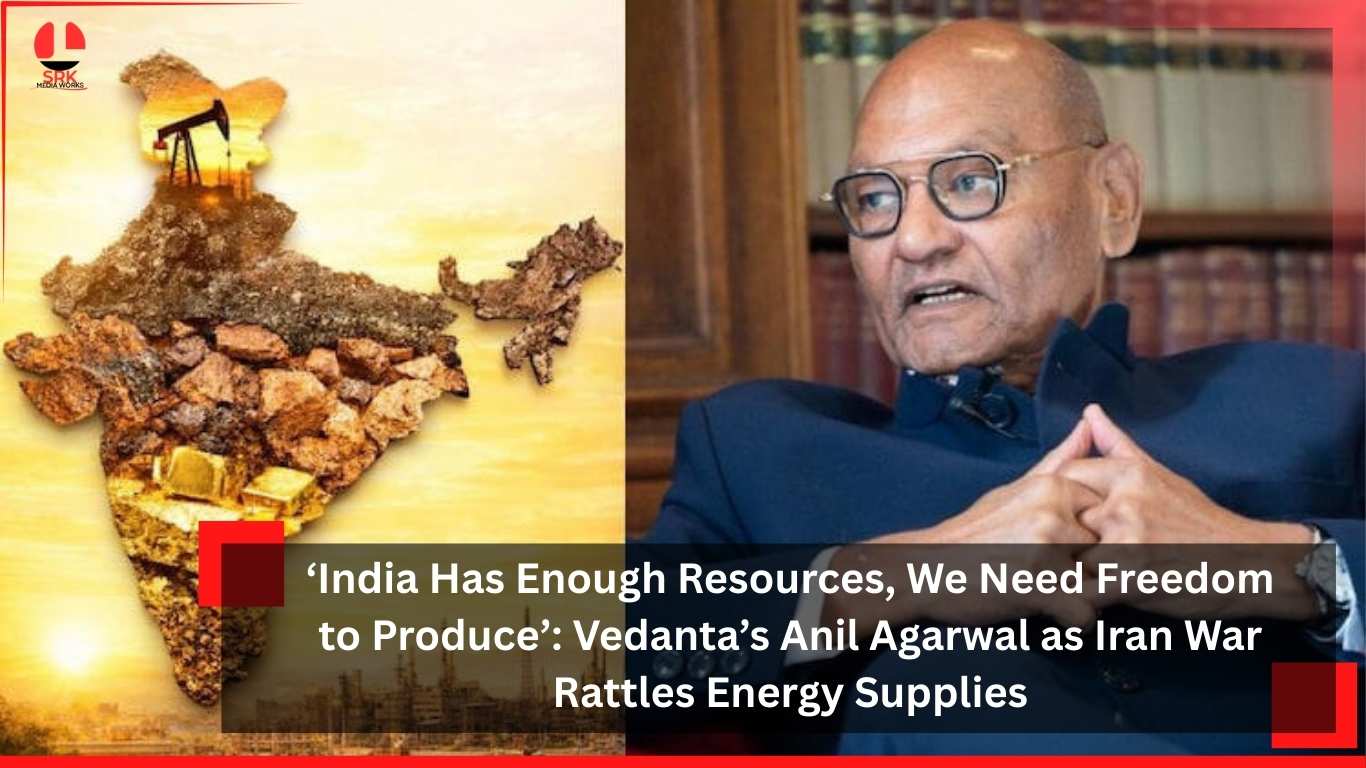
Vedanta Chairman Anil Agarwal has made a strong statement on India’s energy independence, asserting that the country has “enough resources” to meet its needs but requires greater freedom to produce. His remarks come at a time when the ongoing Iran war has disrupted global energy supplies, leading to volatility in oil and gas markets worldwide. Agarwal’s comments highlight the urgent need for India to unlock its domestic potential in natural resources, energy, and mining to reduce reliance on imports.
Context: Global Energy Disruptions
The Iran war has rattled global energy markets, causing supply chain disruptions and price fluctuations. Countries dependent on imports are facing challenges in securing affordable energy. India, as one of the largest energy consumers, has been significantly impacted by rising costs and supply uncertainties. Agarwal’s statement underscores the importance of self-reliance in energy production to shield the economy from external shocks.
Anil Agarwal’s Call for Freedom to Produce
Agarwal emphasized that India possesses abundant reserves of coal, oil, gas, and minerals. However, regulatory hurdles, bureaucratic delays, and restrictive policies often prevent full-scale production. He argued that granting companies greater freedom to explore and produce resources would not only strengthen energy security but also boost employment, industrial growth, and economic resilience.
Comparative Analysis of Energy Dependence
| Country | Domestic Resource Availability | Import Dependence (%) | Strategic Approach |
|---|---|---|---|
| India | High (coal, minerals, oil reserves) | 80+ | Calls for freedom to produce domestically |
| China | Moderate | 70 | Aggressive overseas investments |
| USA | High (shale oil, gas) | 20 | Energy independence through domestic output |
| Japan | Low | 95 | Heavy reliance on imports |
This comparison highlights India’s paradox—abundant resources but high import dependence due to limited domestic production freedom.
Economic Impact of Energy Independence
If India were to fully utilize its domestic resources, the benefits could include:
- Reduced Import Bill: Saving billions of dollars annually on oil and gas imports.
- Job Creation: Mining and energy sectors could generate millions of jobs.
- Industrial Growth: Affordable energy would boost manufacturing and infrastructure.
- Strategic Autonomy: Less dependence on volatile global markets.
Vedanta’s Role in Resource Development
Vedanta has been a key player in India’s mining and energy sector. Under Agarwal’s leadership, the company has invested in oil exploration, metals, and minerals. His call for freedom to produce reflects Vedanta’s vision of unlocking India’s resource potential to drive economic growth.
Analytical Perspective
From an analytical standpoint, Agarwal’s statement is both a critique and a vision. It critiques the regulatory bottlenecks that hinder resource production while presenting a vision of self-reliance. In the context of the Iran war, his remarks gain urgency as India faces rising energy costs and supply uncertainties.
Key Themes Emerging
| Theme | Explanation |
|---|---|
| Resource Abundance | India has sufficient reserves to meet energy needs. |
| Regulatory Freedom | Greater production freedom is needed to unlock potential. |
| Energy Security | Domestic production reduces vulnerability to global crises. |
| Economic Growth | Resource utilization can drive jobs and industrial expansion. |
Public and Policy Reactions
Agarwal’s statement has sparked discussions among policymakers, industry leaders, and economists. Many agree that India must reduce its dependence on imports, while others caution that environmental sustainability and regulatory oversight must not be compromised. The debate reflects the balance between economic growth and ecological responsibility.
Future Outlook
India’s path to energy independence will depend on:
- Policy reforms to ease exploration and production.
- Investments in technology and infrastructure.
- Balancing resource utilization with environmental sustainability.
- Strengthening partnerships between government and private sector.
Conclusion
Anil Agarwal’s assertion that “India has enough resources, we need freedom to produce” is a powerful reminder of the country’s untapped potential. As the Iran war rattles global energy supplies, India’s reliance on imports exposes its vulnerability. Unlocking domestic resources through policy reforms and production freedom could transform India into a self-reliant energy powerhouse, ensuring stability, growth, and strategic autonomy.
Disclaimer
This article is a journalistic analysis based on publicly available information and industry statements. It is intended for informational purposes only and does not represent endorsement of any company or government policy. Readers should interpret the content as part of ongoing economic and energy discourse rather than a definitive evaluation.