





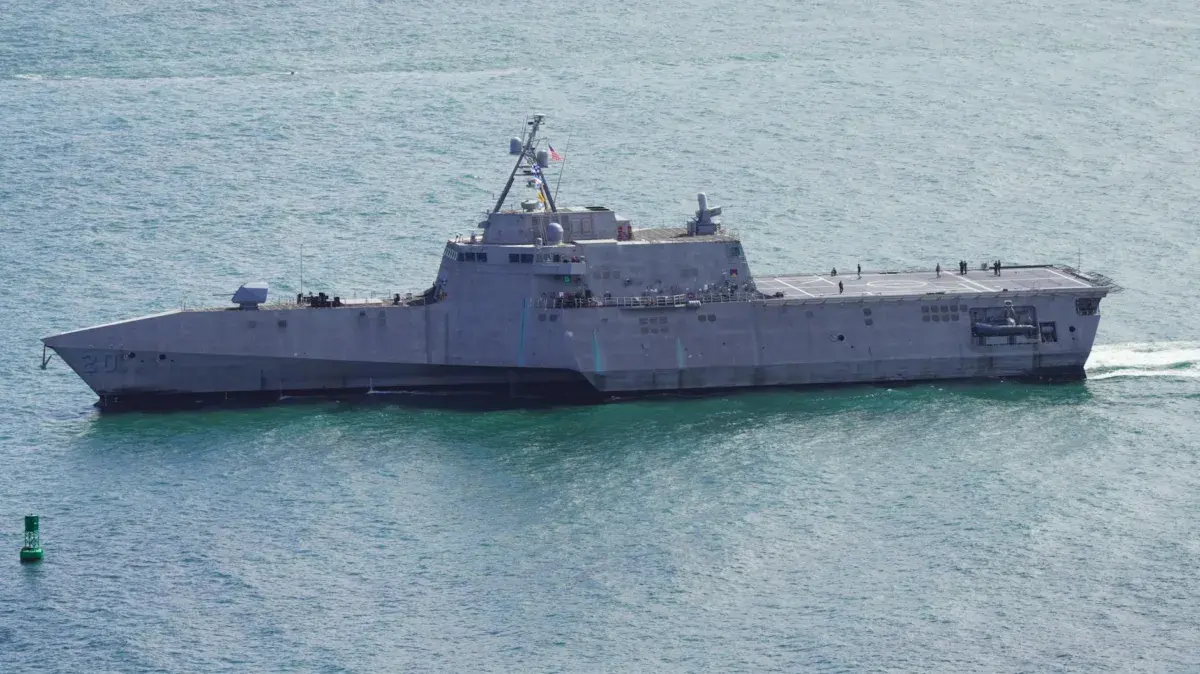
The Indian Navy has officially accepted the delivery of the INS Mahendragiri, a state-of-the-art stealth frigate, on Thursday, marking a significant milestone in the nation’s indigenous warship-building capabilities. Built by Mazagon Dock Shipbuilders Limited (MDSL) in Mumbai, the vessel boasts an impressive 75% indigenous content and represents a substantial leap in enhancing India’s maritime defense prowess.
A New Era of Indigenous Naval Power
The INS Mahendragiri is the last of the P17A frigates, a class of advanced stealth warships designed to operate in multi-threat environments. Its induction into the Indian Navy underscores the nation’s growing self-reliance in defense manufacturing and its commitment to modernizing its naval fleet.
The P17A project, comprising seven advanced frigates, aims to equip the Indian Navy with cutting-edge platforms capable of undertaking a wide spectrum of naval operations. The INS Mahendragiri, named after a prominent peak in the Eastern Ghats, embodies the culmination of years of research, development, and manufacturing expertise.
Technological Prowess and Stealth Capabilities
Designed by the Indian Navy’s Warship Design Bureau, the P17A frigates feature advanced stealth technology, reducing their radar cross-section and making them harder to detect. This stealth capability is crucial for modern naval warfare, allowing ships to operate with greater survivability and surprise.
The Mahendragiri is equipped with a potent weapon system, though specific details remain classified for strategic reasons. However, its design incorporates advanced sensors, communication systems, and electronic warfare suites, enabling it to engage multiple threats simultaneously.
Key features include advanced sonar systems, indigenous missile systems, and medium-range gun systems, all integrated to provide comprehensive combat effectiveness. The frigate’s sophisticated command and control systems allow for seamless coordination with other naval assets.
Boosting the ‘Make in India’ Initiative
The construction of the INS Mahendragiri has been a significant boost to the ‘Make in India’ initiative, particularly in the defense sector. MDSL has involved over 200 Micro, Small, and Medium Enterprises (MSMEs) in the supply chain for this project.
This extensive collaboration with MSMEs has not only ensured the high indigenous content but has also fostered the growth of ancillary industries and specialized manufacturing capabilities within India. The project has generated direct employment for approximately 4,000 personnel, contributing to economic development and skill enhancement.
MDSL’s role as the builder highlights its critical position in India’s defense industrial complex. The successful completion and delivery of the Mahendragiri are a testament to the shipyard’s engineering capabilities and project management skills.
Strategic Implications for Maritime Security
The induction of the INS Mahendragiri significantly enhances the Indian Navy’s operational reach and capability. As a stealth frigate, it can conduct surveillance, anti-submarine warfare, anti-surface warfare, and air defense missions with greater efficiency and reduced risk.
India’s maritime interests span a vast coastline and extend into the Indian Ocean Region (IOR), a critical global trade route. Advanced platforms like the Mahendragiri are essential for maintaining sea lane security, projecting power, and responding to evolving geopolitical challenges in the region.
The P17A class frigates are designed to be multi-mission capable, allowing them to adapt to various operational requirements, from humanitarian assistance and disaster relief to high-intensity combat operations.
Expert Views and Future Outlook
Defense analysts have widely lauded the delivery of the Mahendragiri as a crucial step towards naval self-sufficiency. “The P17A project, and the Mahendragiri specifically, showcase India’s maturation in complex warship design and construction,” commented a retired naval commodore. “Achieving 75% indigenous content is not just a number; it signifies a deep integration of our industrial base with our defense needs.”
Data from the Ministry of Defence indicates a steady increase in the indigenous content of naval platforms over the past decade. This trend is expected to accelerate with future projects, further reducing reliance on foreign suppliers and boosting export potential.
The successful execution of the P17A program sets a precedent for future indigenous naval projects, including the upcoming P17A follow-on or potentially larger destroyers and aircraft carriers. The expertise gained by MDSL and its partner MSMEs is invaluable for these future endeavors.
What to Watch Next
The immediate focus will be on the operationalization of the INS Mahendragiri and its integration into the Indian Navy’s fleet. Observers will watch its performance during upcoming naval exercises and deployments.
Furthermore, the success of the P17A program is likely to influence the design and procurement strategies for future naval vessels. The emphasis on stealth, indigenous systems, and multi-mission capabilities will continue to shape the Indian Navy’s modernization trajectory.
The ongoing development and integration of advanced indigenous technologies, including AI-driven systems and next-generation weaponry, will also be critical areas to monitor as India continues to build a formidable and self-reliant navy for the 21st century.