





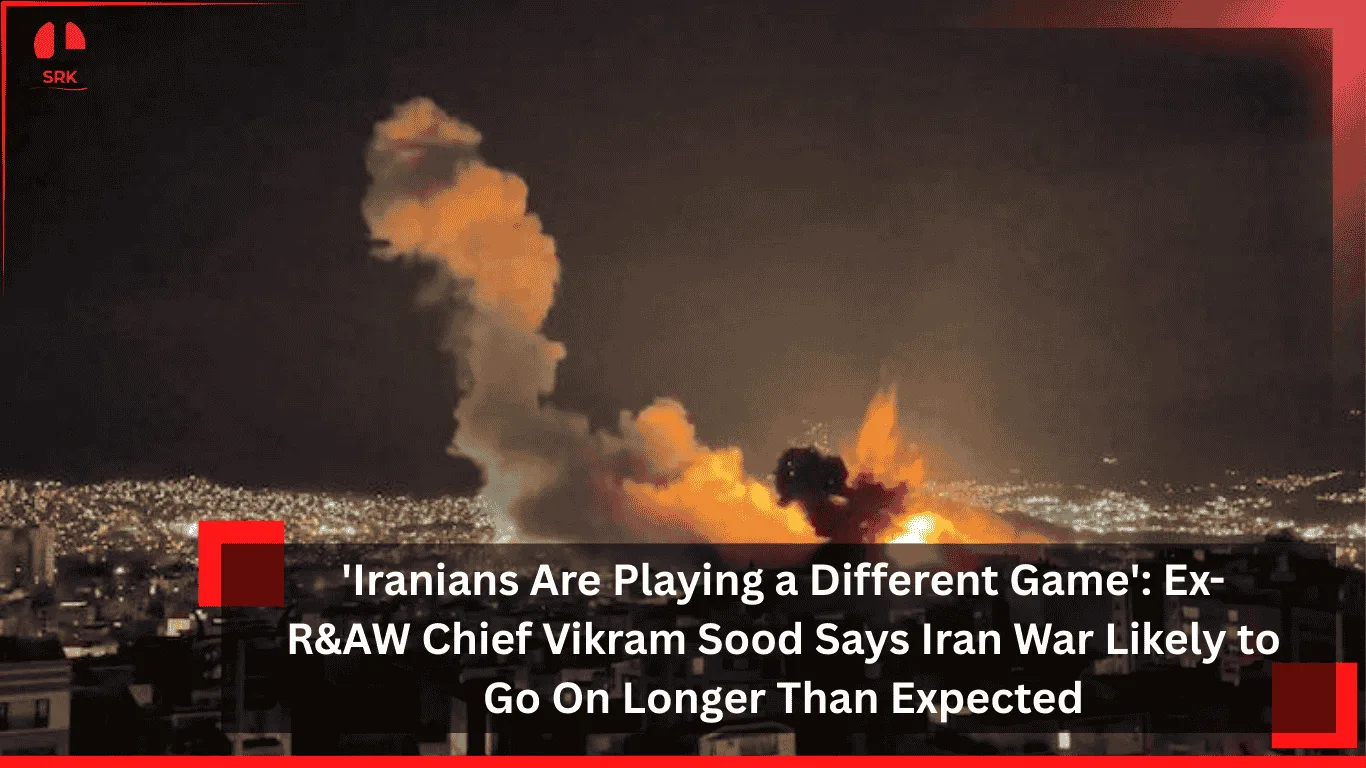
Former Research and Analysis Wing (R&AW) chief Vikram Sood has made a striking observation about the ongoing conflict involving Iran, stating that “Iranians are playing a different game” and that the war is likely to continue for longer than many had anticipated. His remarks shed light on the complexities of the geopolitical landscape in the Middle East and the strategic maneuvers that Iran is employing to sustain its position.
Background of the Statement
Vikram Sood, who served as the head of India’s external intelligence agency, has often provided insights into global conflicts and intelligence strategies. His latest comments suggest that Iran’s approach to the war is not conventional but rather calculated to prolong the conflict, thereby increasing pressure on adversaries and reshaping regional dynamics.
Iran’s Strategy in the Conflict
Iran has historically relied on asymmetric warfare, proxy networks, and strategic patience. According to Sood, this war is not just about direct military confrontation but about leveraging time, resources, and alliances.
Key Elements of Iran’s Strategy
- Proxy Warfare: Using allied groups across the Middle East to extend influence.
- Economic Resilience: Despite sanctions, Iran continues to sustain its economy through alternative trade routes.
- Diplomatic Maneuvers: Building ties with countries like Russia and China to counter Western pressure.
- Psychological Warfare: Prolonging conflict to exhaust adversaries and shift global narratives.
Comparative Analysis of Regional Powers
| Country | Military Strength | Strategic Approach | Current Focus |
|---|---|---|---|
| Iran | Moderate, relies on proxies | Asymmetric warfare | Sustaining conflict |
| US | Superior global military | Direct intervention | Containment of Iran |
| Israel | Advanced regional power | Precision strikes | Neutralizing threats |
| Saudi Arabia | Strong conventional force | Coalition building | Protecting oil interests |
This comparison highlights Iran’s reliance on unconventional tactics compared to its rivals’ conventional military strategies.
Why the War May Last Longer
Sood’s assessment points to several reasons why the conflict could be prolonged:
- Iran’s Patience: Unlike Western powers, Iran is willing to endure long-term struggles.
- Proxy Networks: Iran’s allies across Lebanon, Syria, Iraq, and Yemen ensure the conflict remains multi-front.
- Global Power Play: The involvement of Russia and China complicates resolution efforts.
- Economic Adaptability: Iran’s ability to bypass sanctions allows it to sustain war efforts.
Historical Context of Prolonged Conflicts
| Year | Conflict | Duration | Outcome |
|---|---|---|---|
| 1980-1988 | Iran-Iraq War | 8 years | Stalemate, heavy losses |
| 2003-2011 | Iraq War | 8 years | US withdrawal, instability |
| 2011-present | Syrian Civil War | 15+ years | Ongoing conflict |
| 2026 | Current Iran war | Uncertain | Likely prolonged |
This timeline shows that Middle Eastern conflicts often last longer than expected due to complex regional dynamics.
Expert Opinions
- Defense Analysts: Agree that Iran’s unconventional strategy makes quick resolution unlikely.
- Diplomatic Experts: Stress that negotiations will be difficult given Iran’s alliances.
- Economic Observers: Point out that Iran’s resilience against sanctions is a key factor in prolonging the war.
Global Implications
The prolongation of the Iran war has consequences beyond the Middle East:
- Energy Security: Oil markets remain vulnerable to instability.
- Global Alliances: Countries may be forced to choose sides, deepening divisions.
- Military Readiness: US and allied forces may face extended deployments.
- Diplomatic Fallout: Peace initiatives could be delayed or derailed.
India’s Perspective
India, as a major importer of Middle Eastern oil and a country with strategic interests in the region, closely monitors the situation. Sood’s remarks highlight the importance of India maintaining a balanced diplomatic approach while safeguarding its energy and security interests.
Conclusion
Vikram Sood’s statement that “Iranians are playing a different game” underscores the complexity of the ongoing conflict. Unlike conventional wars, Iran’s strategy is designed to prolong the struggle, exhaust adversaries, and reshape regional power balances.
The likelihood of a longer war raises concerns for global stability, energy security, and diplomatic relations. As history has shown, conflicts in the Middle East rarely end quickly, and Iran’s calculated approach suggests this war will be no exception.
Disclaimer
This article is based on expert analysis and publicly available information. The details of the conflict are evolving, and official confirmations from involved nations are awaited. Readers are advised to treat the content as informational and not as definitive geopolitical guidance.