









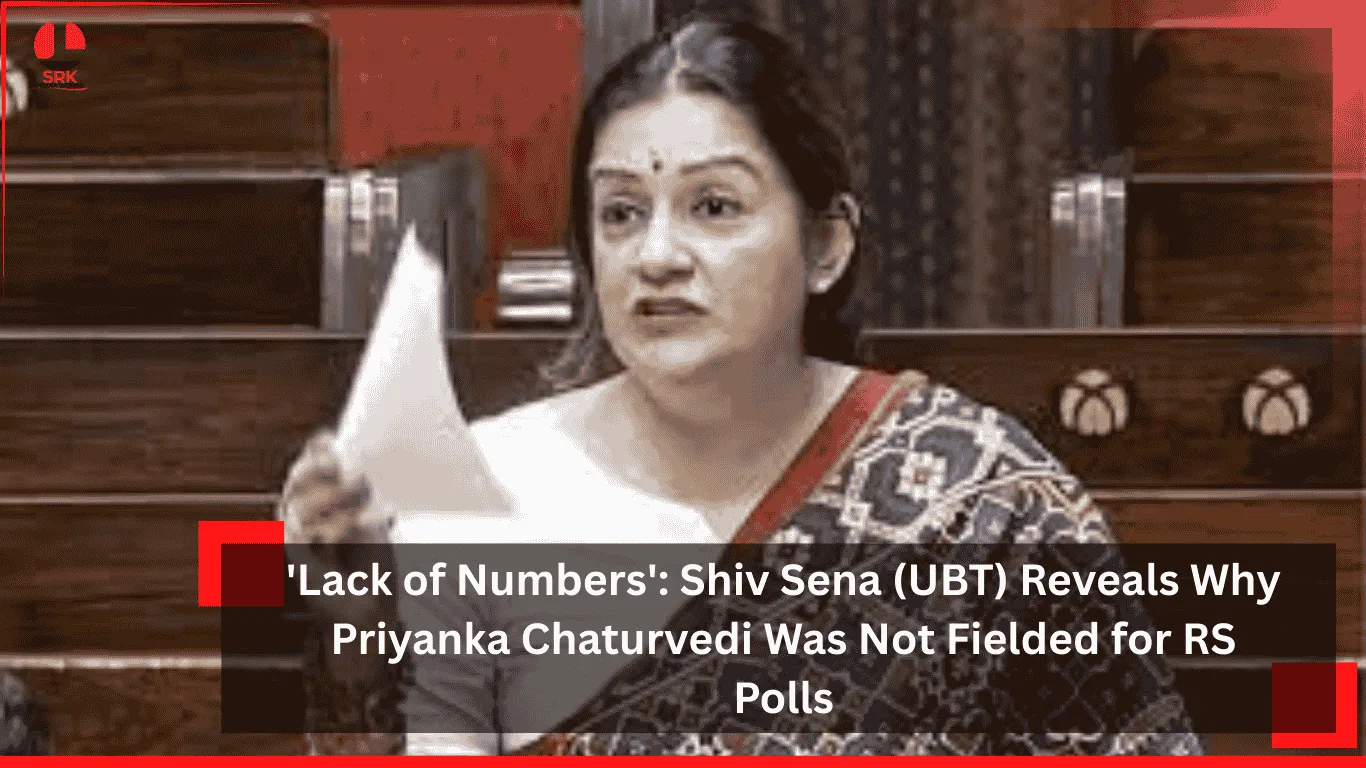
In a candid revelation, the Shiv Sena (Uddhav Balasaheb Thackeray faction) explained why senior leader Priyanka Chaturvedi was not fielded as a candidate for the recent Rajya Sabha (RS) elections. The party admitted that the decision was driven by a “lack of numbers,” highlighting the challenges faced by opposition parties in securing seats in the upper house of Parliament.
Background of the Decision
Priyanka Chaturvedi, a prominent face of Shiv Sena (UBT), has been a vocal critic of the ruling establishment and an active participant in parliamentary debates. Many expected her renomination for the RS polls. However, the party leadership clarified that the arithmetic of votes did not favor her candidature.
The Rajya Sabha elections are determined by proportional representation through single transferable votes, making numbers crucial. Without adequate support from allies or independents, Shiv Sena (UBT) found it difficult to ensure victory.
Rajya Sabha Elections: How Numbers Matter
The Rajya Sabha elections are not direct polls but are based on votes of elected MLAs in state assemblies. Each party’s strength in the assembly determines how many candidates it can successfully field.
Key Factors in RS Elections
- Assembly Strength: Number of MLAs directly impacts RS seat allocation.
- Alliances: Coalition partners can transfer votes to ensure victory.
- Independent MLAs: Often play a decisive role in close contests.
- Mathematical Calculations: Parties must ensure minimum quota of votes to secure a seat.
Comparative Analysis of Party Strength
| Party/Alliance | Assembly Strength | RS Seats Likely | Strategy |
|---|---|---|---|
| BJP | Strong majority | Multiple seats | Field maximum candidates |
| Shiv Sena (UBT) | Limited numbers | Difficult to secure | Relied on allies |
| Congress | Moderate presence | Possible seat | Strategic nominations |
| NCP (SP) | Smaller strength | Limited chances | Focused on alliances |
This table highlights why Shiv Sena (UBT) faced difficulty in fielding Priyanka Chaturvedi.
Shiv Sena (UBT)’s Official Stand
The party clarified that while Chaturvedi remains a valued leader, the decision was purely strategic. Fielding her without assured numbers would have risked defeat, which could have been politically damaging.
Party leaders emphasized that she continues to play a vital role in organizational and parliamentary activities, and her exclusion from the RS polls does not diminish her importance within the party.
Reactions from Political Circles
- Supporters of Chaturvedi: Expressed disappointment but acknowledged the arithmetic challenge.
- Opposition Leaders: Criticized the ruling party’s dominance, which makes it difficult for smaller factions to secure representation.
- Analysts: Pointed out that the decision reflects the broader struggle of opposition parties in the current political climate.
Historical Context of RS Polls and Numbers Game
| Year | Party Affected | Reason | Outcome |
|---|---|---|---|
| 2014 | Congress | Declining assembly strength | Lost multiple RS seats |
| 2019 | Regional parties | Lack of alliances | Failed to secure representation |
| 2024 | Opposition bloc | BJP dominance | Limited RS presence |
| 2026 | Shiv Sena (UBT) | Lack of numbers | Did not field Chaturvedi |
This timeline shows how numbers have consistently shaped RS outcomes.
Role of Priyanka Chaturvedi in Party Politics
Despite not being fielded, Chaturvedi remains a key spokesperson and strategist for Shiv Sena (UBT).
- Media Presence: Known for her articulate debates and strong media presence.
- Parliamentary Contributions: Actively participates in discussions on governance, economy, and social issues.
- Party Strategy: Plays a role in shaping the party’s communication and outreach.
Broader Implications
- Opposition Challenges: Smaller parties face increasing difficulty in securing RS seats.
- Dominance of Majority Party: BJP’s strong numbers continue to overshadow opposition representation.
- Future Strategy: Opposition factions may need stronger alliances to counter numerical disadvantages.
- Impact on Leadership: Leaders like Chaturvedi may focus more on organizational roles until numbers improve.
Expert Opinions
- Political Analysts: Stress that RS elections are purely mathematical, leaving little room for symbolic nominations.
- Constitutional Experts: Highlight the importance of proportional representation in maintaining balance.
- Party Insiders: Suggest that Chaturvedi may be fielded in future elections when numbers are favorable.
Conclusion
The Shiv Sena (UBT)’s admission that Priyanka Chaturvedi was not fielded due to “lack of numbers” underscores the harsh realities of Rajya Sabha elections. While her exclusion may disappoint supporters, it reflects the party’s pragmatic approach to avoid defeat in a numbers-driven contest.
Chaturvedi’s role within the party remains significant, and her political journey is far from over. The incident highlights the broader challenge faced by opposition parties in India’s current political landscape, where numerical strength in assemblies dictates representation in the upper house.
Disclaimer
This article is based on publicly available information and expert analysis. The details of political decisions are subject to change with evolving circumstances. Readers are advised to treat the content as informational and not as definitive political guidance.