

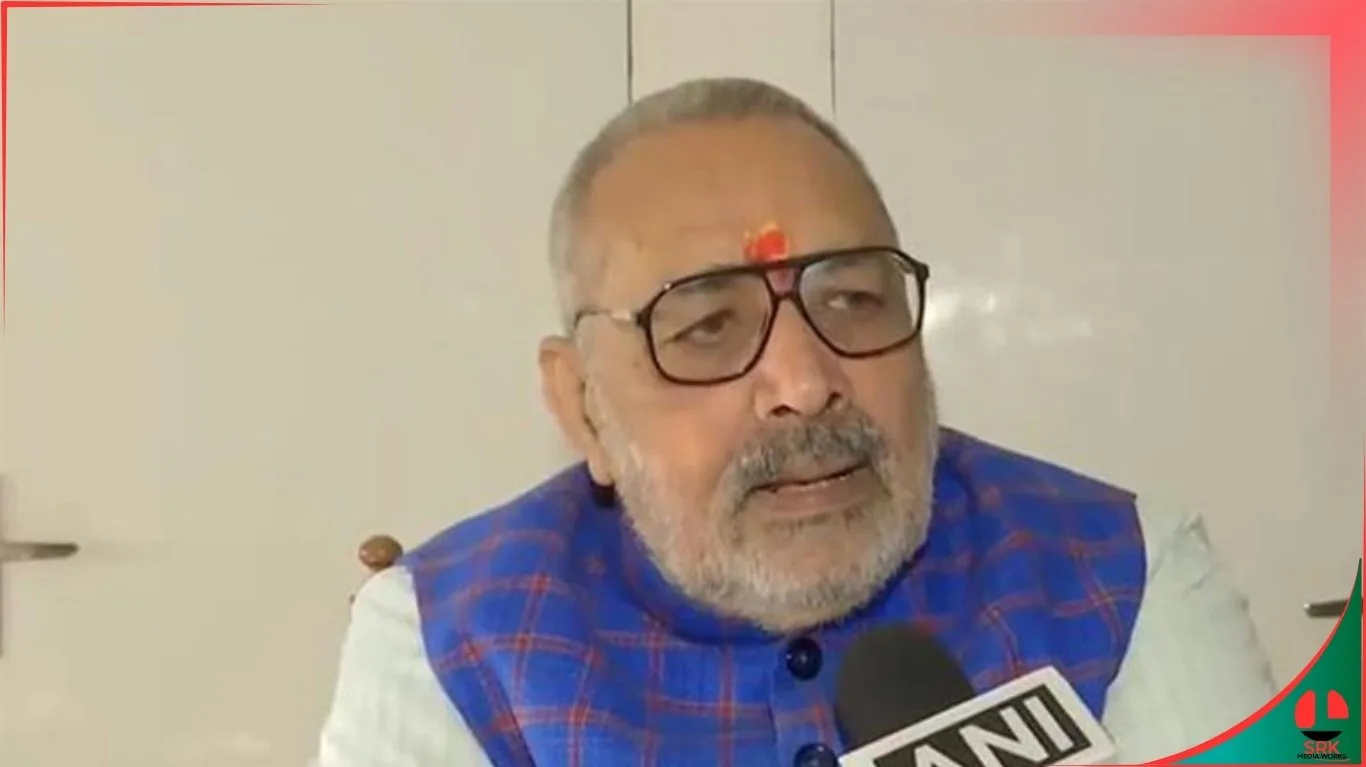
In a sharp political exchange ahead of crucial electoral battles, Union Minister Giriraj Singh has alleged that West Bengal Chief Minister Mamata Banerjee’s protest is designed to benefit illegal immigrants. His remarks have sparked intense debate across political circles, with the BJP and Trinamool Congress (TMC) trading accusations over governance, national security, and electoral strategy.
Background of the Controversy
- Mamata’s Protest: The West Bengal Chief Minister recently staged a protest against central government policies, claiming they undermine the rights of state residents.
- Giriraj Singh’s Allegation: Singh countered by alleging that the protest was not about protecting citizens but about safeguarding the interests of illegal immigrants.
- Political Context: The remarks come at a time when both BJP and TMC are preparing for upcoming elections, making the issue highly sensitive.
BJP’s Position
- National Security Concerns: BJP leaders argue that unchecked illegal immigration poses risks to national security.
- Electoral Strategy: The party claims Mamata’s stance is politically motivated to secure votes from specific communities.
- Policy Enforcement: BJP emphasizes the need for strict implementation of citizenship and border control laws.
TMC’s Counter-Argument
- Protecting Residents: Mamata Banerjee insists her protest is about safeguarding the rights of genuine residents of West Bengal.
- Accusations of Polarization: TMC leaders accuse BJP of using the issue to polarize voters along communal lines.
- Federal Rights: The party argues that central policies undermine the federal structure and state autonomy.
Comparative Analysis of Political Positions
| Party | Position on Protest | Key Argument | Electoral Impact |
|---|---|---|---|
| BJP | Protest benefits illegal immigrants | National security, citizenship enforcement | Strengthens BJP’s narrative on security |
| TMC | Protest protects residents | Federal rights, welfare of citizens | Reinforces Mamata’s image as protector of state |
| Neutral Analysts | Protest is politically charged | Both parties leveraging issue for votes | Could influence swing voters |
Implications of the Allegation
- Electoral Polarization: The issue could deepen divisions among voters ahead of elections.
- Policy Debate: Sparks renewed discussion on citizenship laws, border control, and federal rights.
- Public Sentiment: Citizens may be influenced by competing narratives of security versus welfare.
- Media Attention: The controversy ensures that immigration and governance remain central campaign themes.
Public and Expert Reaction
- Citizens: Opinions remain divided, with some supporting BJP’s security concerns and others backing Mamata’s welfare stance.
- Analysts: Highlight that both parties are using the issue strategically to mobilize their voter bases.
- Opposition Parties: Other regional and national parties have weighed in, calling for balanced policies that protect both security and humanitarian values.
Lessons from the Debate
- Political Messaging Matters: Allegations and counter-allegations shape voter perceptions.
- Security vs. Welfare: Balancing national security with citizen welfare is a recurring challenge.
- Federal Dynamics: Conflicts between state and central policies highlight the complexities of India’s federal system.
- Electoral Strategy: Both BJP and TMC are leveraging the issue to consolidate their respective voter bases.
Conclusion
Giriraj Singh’s claim that Mamata Banerjee’s protest benefits illegal immigrants has added a new dimension to West Bengal’s political discourse. While BJP frames the issue around national security, TMC positions it as a fight for residents’ rights and federal autonomy. As elections approach, the controversy is likely to intensify, shaping narratives and influencing voter sentiment across the state.
Disclaimer
This article is based on publicly available information and aims to highlight the political debate surrounding Giriraj Singh’s remarks on Mamata Banerjee’s protest. It does not intend to criticize or promote any individual, party, or organization. The content is for informational and educational purposes only, reflecting broader issues in governance, electoral strategy, and public discourse.