








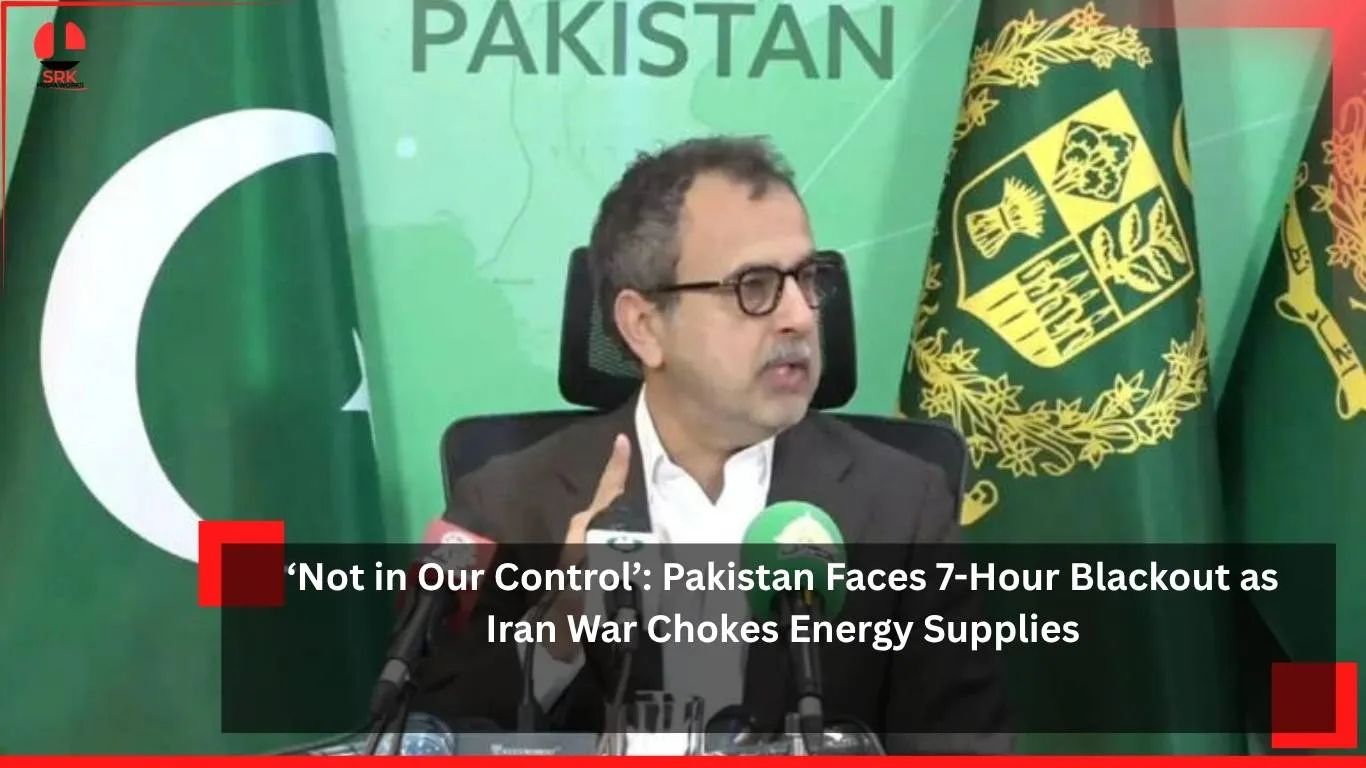
Pakistan has endured a crippling seven-hour nationwide blackout, with officials attributing the disruption to the ongoing conflict in Iran that has severely impacted energy supplies. The government described the situation as “not in our control,” highlighting the vulnerability of Pakistan’s power grid to external shocks and regional instability. The blackout affected millions of households, industries, and essential services, underscoring the urgent need for energy diversification and resilience.
Scale of the Blackout
The blackout, one of the longest in recent years, disrupted electricity across major cities including Karachi, Lahore, Islamabad, and Quetta. Hospitals, airports, and communication networks were forced to rely on backup generators, while industries reported significant production losses.
Key Highlights
| Aspect | Details |
|---|---|
| Duration | 7 hours |
| Cause | Energy supply disruption due to Iran war |
| Impacted Areas | Nationwide, including major cities |
| Government Statement | “Not in our control” |
| Public Reaction | Frustration, calls for energy reforms |
Government’s Response
Officials from Pakistan’s Ministry of Energy stated that the blackout was triggered by interruptions in imported electricity from Iran, which supplies a significant portion of power to Pakistan’s southwestern regions. The war in Iran has disrupted transmission lines and supply chains, leaving Pakistan with few immediate alternatives.
- Emergency Measures: Authorities restored power gradually after seven hours.
- Public Communication: Government emphasized external causes, distancing itself from responsibility.
- Future Plans: Officials pledged to accelerate domestic energy projects to reduce reliance on imports.
Economic Impact
The blackout has had wide-ranging economic consequences. Industries reported losses in production, while small businesses struggled to cope with prolonged outages. The agricultural sector, dependent on electricity for irrigation and processing, also faced setbacks.
Estimated Economic Losses
| Sector | Impact |
|---|---|
| Manufacturing | Production halted, financial losses |
| Agriculture | Irrigation disrupted, crop damage risk |
| Services | Communication and IT affected |
| Retail | Sales dropped due to outages |
Public Sentiment
Citizens expressed frustration over repeated energy crises, criticizing the government for failing to secure reliable power sources. Social media platforms were flooded with complaints, with many demanding long-term reforms to stabilize the energy sector.
- Urban Residents: Anger over disruption of daily life.
- Rural Communities: Concerns about agricultural losses.
- Youth Voices: Calls for renewable energy adoption.
Regional Context
Pakistan’s reliance on Iranian electricity has long been a point of vulnerability. The ongoing war in Iran has disrupted not only energy supplies but also regional trade routes, compounding Pakistan’s challenges.
Comparative Analysis of Energy Dependence
| Country | Source of Imported Energy | Vulnerability |
|---|---|---|
| Pakistan | Iran electricity imports | High |
| India | Diversified imports (Middle East, Africa) | Moderate |
| Bangladesh | LNG imports | Moderate |
| Afghanistan | Dependent on neighbors | High |
This comparison highlights Pakistan’s unique exposure to external shocks due to its reliance on a single source.
Strategic Challenges
The blackout underscores broader strategic challenges for Pakistan’s energy sector:
- Overdependence on Imports: Heavy reliance on Iranian electricity.
- Infrastructure Weakness: Outdated transmission systems prone to collapse.
- Geopolitical Risks: Regional conflicts directly impact energy security.
- Limited Renewable Adoption: Slow progress in solar and wind projects.
Future Outlook
Pakistan’s government has pledged to accelerate domestic energy projects, including hydropower, solar, and wind initiatives. However, experts warn that without structural reforms and investment, the country will remain vulnerable to external shocks.
Key Priorities Ahead
| Priority | Expected Outcome |
|---|---|
| Diversification of Sources | Reduced reliance on imports |
| Renewable Energy Expansion | Sustainable long-term supply |
| Infrastructure Modernization | Improved grid stability |
| Regional Cooperation | Enhanced resilience through shared resources |
Conclusion
Pakistan’s seven-hour blackout, triggered by disruptions in Iranian energy supplies due to war, has exposed the fragility of its power sector. While the government insists the crisis was “not in our control,” the incident highlights the urgent need for diversification, modernization, and investment in renewable energy. Without decisive action, Pakistan risks facing repeated crises that undermine economic growth and public confidence.
Disclaimer
This article is a comprehensive analytical report based on publicly available information and regional developments. It is intended for informational purposes only and does not constitute legal, financial, or policy advice. Readers are encouraged to verify facts independently and consider multiple perspectives before forming conclusions.