








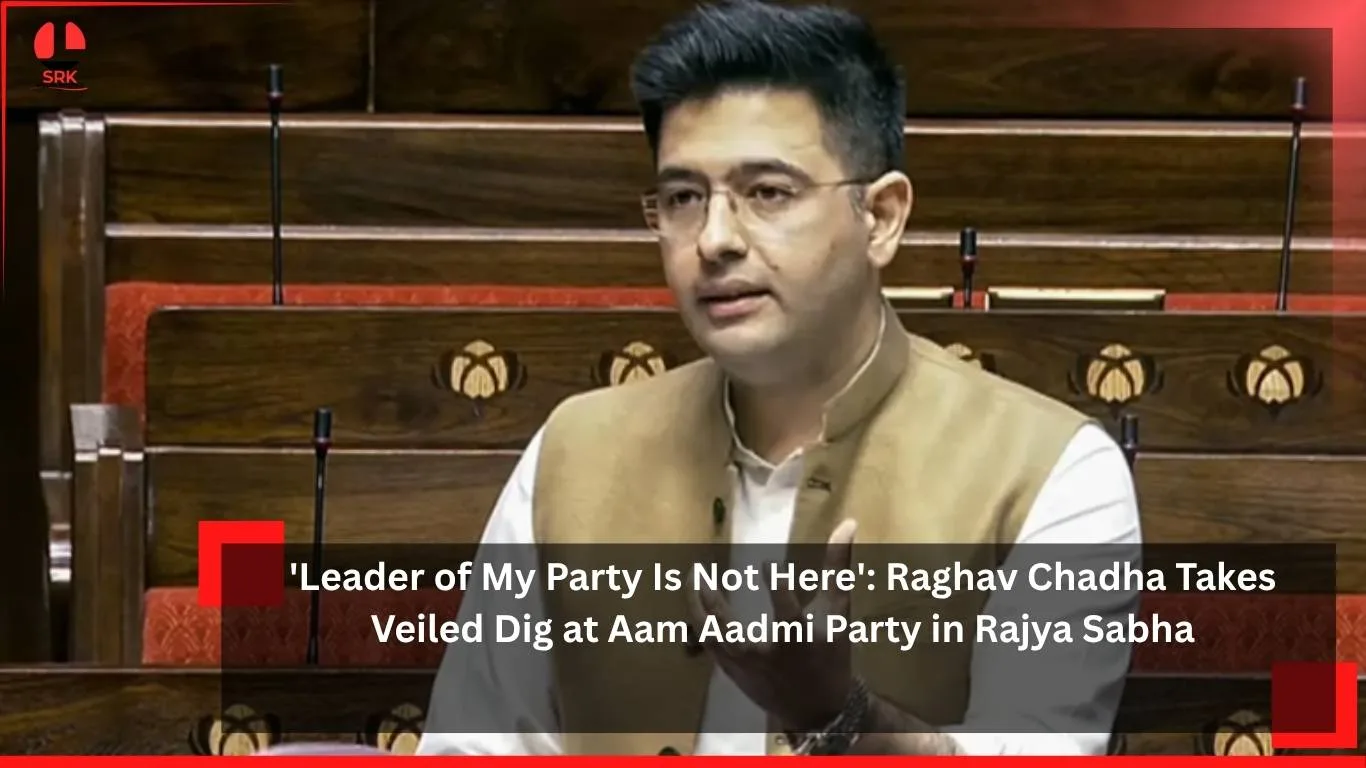
In a striking moment during a Rajya Sabha session, Aam Aadmi Party (AAP) leader Raghav Chadha made a veiled remark that has sparked political debate across India. His statement, “Leader of my party is not here,” was interpreted by many as a subtle dig at the AAP’s leadership, raising questions about internal dynamics within the party and its future trajectory in national politics.
Context of the Remark
Raghav Chadha, known for his articulate interventions in Parliament, was addressing issues related to governance and representation when he made the comment. The remark came at a time when AAP is facing scrutiny over its leadership structure and the absence of its top leaders in crucial parliamentary debates. Observers noted that Chadha’s words carried undertones of dissatisfaction, possibly hinting at internal disagreements.
Key Highlights of the Statement
| Aspect | Details |
|---|---|
| Speaker | Raghav Chadha |
| Venue | Rajya Sabha |
| Remark | “Leader of my party is not here” |
| Interpretation | Veiled dig at AAP leadership |
| Political Impact | Sparks debate on party unity |
Political Reactions
The remark has triggered a wave of responses across the political spectrum:
- Opposition Parties: Leaders from BJP and Congress seized the opportunity to highlight alleged cracks within AAP, suggesting that Chadha’s statement reflects deeper discontent.
- AAP Leadership: Officially, the party has downplayed the remark, calling it a “misinterpretation” and emphasizing unity.
- Political Analysts: Experts argue that the statement could be a strategic move to signal Chadha’s growing influence within the party.
Implications for AAP
The incident raises important questions about AAP’s internal cohesion and its ability to project a united front in national politics. With upcoming elections and increasing scrutiny, the party’s leadership will need to address perceptions of discord.
Possible Outcomes
| Scenario | Impact |
|---|---|
| Internal Reconciliation | Strengthens party unity |
| Continued Discord | Weakens AAP’s national image |
| Leadership Restructuring | Potential shift in party dynamics |
| Strategic Silence | Avoids immediate controversy but leaves questions unanswered |
Historical Context of AAP’s Leadership Challenges
AAP has faced leadership controversies in the past, with debates over centralization of power and the role of regional leaders. Chadha’s remark adds to this narrative, suggesting that the party continues to grapple with balancing individual voices and collective leadership.
Timeline of Leadership Tensions
| Year | Event |
|---|---|
| 2015 | Internal rift leading to expulsion of senior leaders |
| 2019 | Criticism over centralized decision-making |
| 2023 | Questions raised about national expansion strategy |
| 2026 | Chadha’s veiled remark in Rajya Sabha |
This timeline illustrates that leadership challenges are not new to AAP, and the latest incident fits into a broader pattern.
Broader Political Impact
The remark has implications beyond AAP, as it reflects the challenges faced by regional parties in maintaining cohesion while expanding nationally. It also highlights the role of young leaders like Chadha in shaping political discourse.
- Youth Leadership: Chadha represents a new generation of politicians who are assertive and willing to challenge established norms.
- Parliamentary Dynamics: His statement underscores the importance of active participation by party leaders in national debates.
- Public Perception: The incident may influence how voters perceive AAP’s unity and credibility.
Comparative Analysis of Party Leadership Remarks
| Leader | Party | Remark | Impact |
|---|---|---|---|
| Raghav Chadha | AAP | “Leader of my party is not here” | Sparks debate on unity |
| Rahul Gandhi | Congress | Criticized party’s organizational weaknesses | Led to calls for reform |
| Sharad Pawar | NCP | Highlighted generational shift | Strengthened youth leadership |
| Akhilesh Yadav | SP | Asserted independence from elders | Consolidated control |
This comparison shows that remarks on leadership often carry significant political weight, shaping narratives within and outside parties.
Public Sentiment
Social media platforms have been abuzz with discussions about Chadha’s remark. Supporters argue that he is raising valid concerns about leadership accountability, while critics accuse him of undermining party unity. The incident has become a trending topic, reflecting its resonance with the public.
Future Outlook
The AAP leadership will need to manage the fallout carefully. Whether Chadha’s remark leads to internal reforms or remains a passing controversy will depend on how the party addresses the issue in the coming weeks.
Key Factors to Watch
| Factor | Potential Outcome |
|---|---|
| AAP’s Official Response | Could mitigate or escalate controversy |
| Chadha’s Position | May strengthen his influence within the party |
| Media Coverage | Shapes public perception of unity or discord |
| Electoral Impact | Could affect AAP’s performance in upcoming polls |
Conclusion
Raghav Chadha’s veiled dig in the Rajya Sabha has opened a new chapter in AAP’s political journey. While the party insists on unity, the remark has exposed underlying tensions that could shape its future. As India’s political landscape evolves, the incident serves as a reminder of the challenges faced by parties in balancing leadership, representation, and public perception.
Disclaimer
This article is a detailed analytical report based on publicly available information and parliamentary developments. It is intended for informational purposes only and does not constitute political advice or endorsement. Readers are encouraged to verify facts independently and consider multiple perspectives before forming conclusions.