









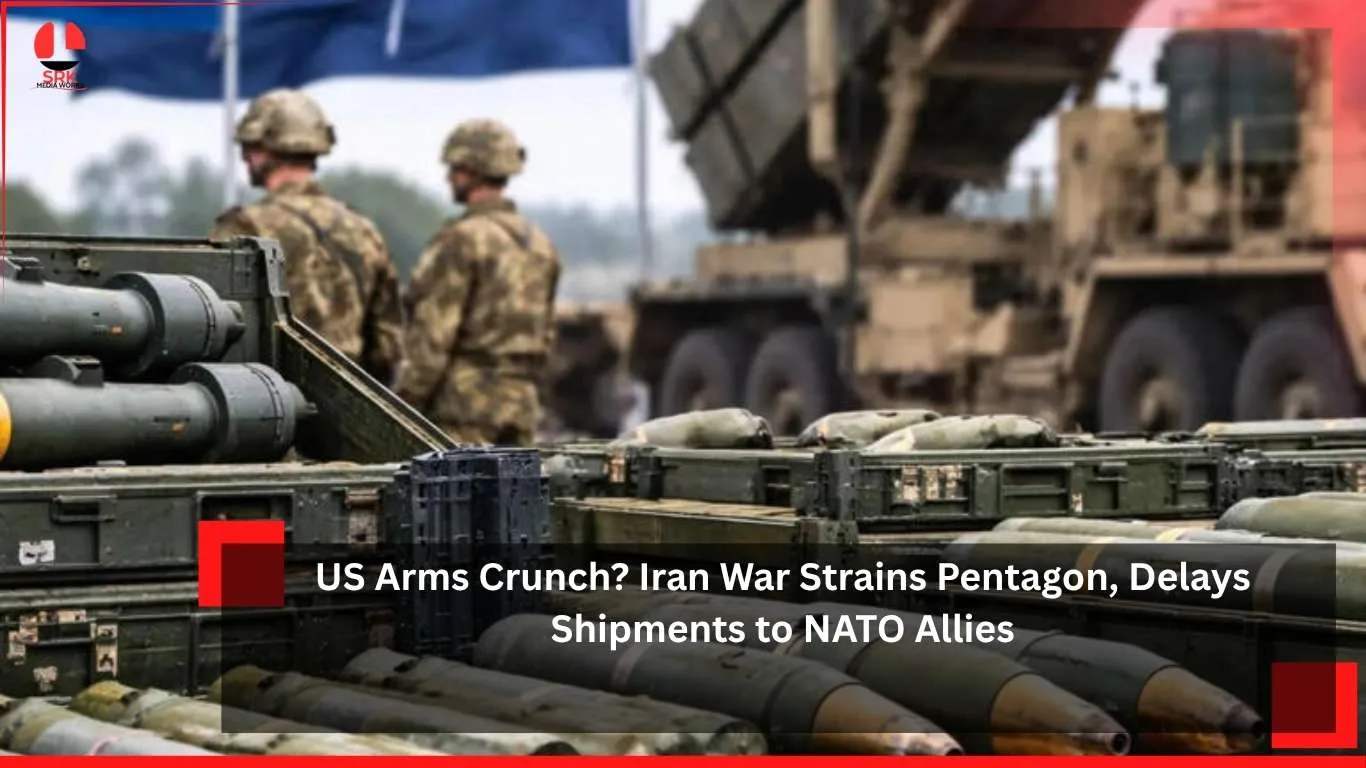
The Pentagon is facing mounting pressure as the ongoing war in Iran strains America’s defense supply chains, leading to delays in arms shipments to NATO allies. Officials have acknowledged that the conflict has disrupted production schedules, logistics, and procurement, creating what some analysts describe as an “arms crunch.” This development has raised concerns about the United States’ ability to meet alliance commitments while simultaneously managing its own military operations in the Middle East.
Pentagon’s Statement
Senior defense officials confirmed that the war in Iran has forced the Pentagon to prioritize immediate operational needs over scheduled deliveries to NATO partners. While the US remains committed to supporting its allies, logistical bottlenecks and production delays have slowed the pace of shipments.
- Operational Priority: Supplies are being redirected to US forces engaged in the Middle East.
- Delayed Shipments: NATO allies are experiencing longer wait times for critical equipment.
- Government Assurance: Pentagon insists delays are temporary and manageable.
Key Highlights
| Aspect | Details |
|---|---|
| Cause | Iran war disrupting supply chains |
| Impact | Delays in arms shipments to NATO allies |
| Pentagon Response | Prioritizing US operational needs |
| NATO Reaction | Concern over readiness and commitments |
| Global Implication | Questions about US defense capacity |
NATO Allies’ Concerns
NATO allies have expressed unease over the delays, particularly those in Eastern Europe who rely heavily on US military support to deter regional threats. Countries such as Poland, Romania, and the Baltic states are reportedly facing delays in receiving advanced weaponry, including air defense systems and precision-guided munitions.
- Eastern Europe: Heightened concern due to proximity to conflict zones.
- Western Europe: Calls for greater self-reliance in defense production.
- Alliance Cohesion: Questions raised about the reliability of US commitments.
Economic and Industrial Impact
The arms crunch is not only a military issue but also an industrial one. US defense contractors are struggling to meet demand as supply chains are disrupted by the war. Shortages of raw materials, transportation bottlenecks, and increased demand have created significant challenges.
Defense Industry Challenges
| Challenge | Impact |
|---|---|
| Raw Material Shortages | Slows production of weapons systems |
| Logistics Disruptions | Delays in global shipments |
| Increased Demand | Strains manufacturing capacity |
| Workforce Limitations | Limits ability to scale production |
Historical Context
The US has faced similar challenges in past conflicts, where immediate operational needs strained its ability to support allies. However, the scale of the current disruption is notable given the complexity of modern defense systems and the global nature of supply chains.
Comparative Analysis of Past Conflicts
| Conflict | Impact on Arms Supply | Outcome |
|---|---|---|
| Vietnam War | Strained domestic production | Allies managed with limited support |
| Iraq War | Temporary delays in shipments | Production scaled up quickly |
| Afghanistan War | Logistics bottlenecks | NATO allies received delayed equipment |
| Iran War (Current) | Significant disruption | Pending resolution |
Strategic Implications
The delays raise important strategic questions about the US role in NATO and its ability to balance global commitments. Analysts warn that prolonged disruptions could weaken deterrence in Europe and embolden adversaries.
- Deterrence Risk: Delays may reduce NATO’s readiness.
- Alliance Trust: Allies may question US reliability.
- Global Balance: Rivals could exploit perceived weaknesses.
Public and Political Reactions
In the US, political leaders are divided over the Pentagon’s handling of the situation. Some argue that prioritizing immediate operational needs is necessary, while others warn that neglecting NATO commitments could have long-term consequences.
- Supporters: Emphasize the importance of securing US forces first.
- Critics: Warn of weakening alliances and credibility.
- Public Opinion: Mixed, with concerns about both national security and global commitments.
Future Outlook
The Pentagon is working to stabilize supply chains and reassure allies. Efforts include ramping up domestic production, exploring alternative suppliers, and enhancing logistical coordination. However, experts caution that recovery may take months.
Key Priorities Ahead
| Priority | Expected Outcome |
|---|---|
| Ramp Up Production | Increase supply capacity |
| Diversify Suppliers | Reduce reliance on vulnerable sources |
| Strengthen Logistics | Improve shipment reliability |
| Reassure Allies | Maintain alliance cohesion |
Conclusion
The Iran war has exposed vulnerabilities in the US defense supply chain, leading to delays in arms shipments to NATO allies. While the Pentagon insists the situation is under control, the arms crunch raises serious questions about America’s ability to balance immediate operational needs with long-term alliance commitments. The coming months will be critical in determining whether the US can restore confidence among its allies and maintain its role as the cornerstone of NATO’s defense strategy.
Disclaimer
This article is a detailed analytical report based on publicly available information and defense developments. It is intended for informational purposes only and does not constitute military, political, or economic advice. Readers are encouraged to verify facts independently and consider multiple perspectives before forming conclusions.